
Carl Jung Biography Quotes 49 Report mistakes
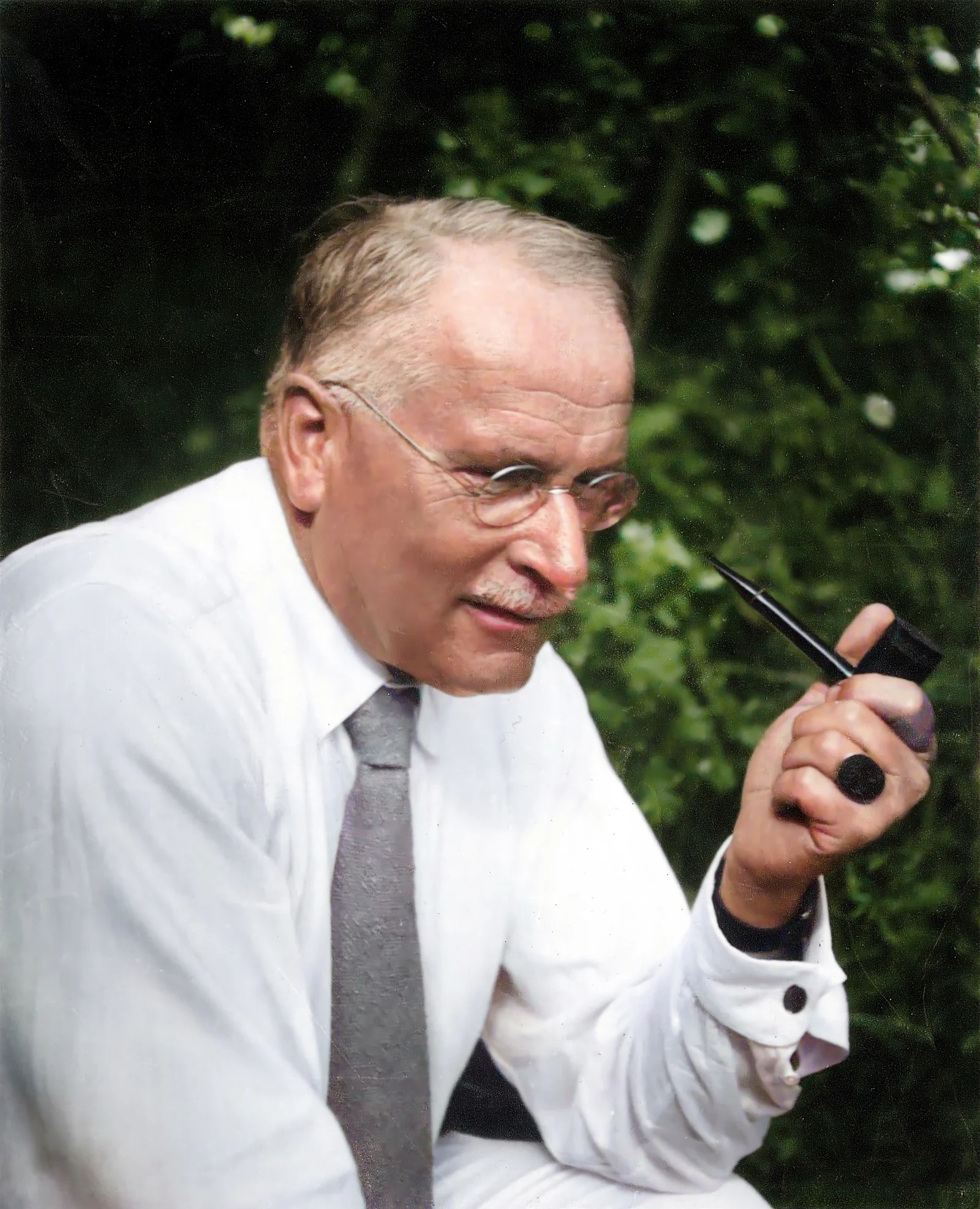
| 49 Quotes | |
| Born as | Carl Gustav Jung |
| Occup. | Psychologist |
| From | Switzerland |
| Spouse | Emma Rauschenbach |
| Born | July 26, 1875 Kesswil, Thurgau, Switzerland |
| Died | June 6, 1961 Küsnacht, Zurich, Switzerland |
| Cause | Natural Causes |
| Aged | 85 years |
| Cite | |
Citation Formats
APA Style (7th ed.)
Carl jung biography, facts and quotes. (2026, February 1). FixQuotes. https://fixquotes.com/authors/carl-jung/
Chicago Style
"Carl Jung biography, facts and quotes." FixQuotes. February 1, 2026. https://fixquotes.com/authors/carl-jung/.
MLA Style (9th ed.)
"Carl Jung biography, facts and quotes." FixQuotes, 1 Feb. 2026, https://fixquotes.com/authors/carl-jung/. Accessed 6 Mar. 2026.
Early Life and Background
Carl Gustav Jung was born on July 26, 1875, in Kesswil on Lake Constance, Switzerland, the son of Paul Jung, a Reformed pastor, and Emilie Preiswerk. The household carried a double inheritance: a public language of Protestant duty and a private atmosphere of visions, moods, and family stories that reached into clerical respectability on one side and the occult-tinged folklore of Basel on the other. From the beginning Jung learned to live with divided registers of reality, a habit that later became both his clinical tool and his personal burden.Raised in the Swiss cantons and shaped by the late-19th-century crisis of faith, he was a solitary, intensely imaginative boy who found institutions constricting but symbolism inexhaustible. He later described early experiences of inner figures, dreams, and a stern sense of an inner "other" self, alongside the ordinary demands of school and church life. That tension between the visible Swiss order and the invisible life of psyche became his lifelong subject: what a culture calls rationality and what the soul insists on saying anyway.
Education and Formative Influences
Jung studied medicine at the University of Basel, gravitating toward psychiatry at a moment when the field was struggling to define itself between neurology, asylum management, and the emerging science of the unconscious. He read philosophers and mystics alongside laboratory texts, and his early doctoral work on so-called occult phenomena reflected both family lore and an empirical urge to observe altered states without easy dismissal. In 1900 he joined the Burgholzli psychiatric hospital in Zurich under Eugen Bleuler, where careful observation of schizophrenia and the new diagnostic language of "complexes" gave him a rigorous base for his later symbolic explorations.Career, Major Works, and Turning Points
At Burgholzli Jung conducted word-association experiments that helped map affect-laden complexes, and he became an early supporter of Sigmund Freud, visiting him in Vienna in 1907 and rapidly rising as Freud's heir apparent in the international psychoanalytic movement. Yet by 1912, with Wandlungen und Symbole der Libido (later translated as Symbols of Transformation), Jung's widening view of libido as general psychic energy, his insistence on religious symbolism, and his independent temperament brought the break. The separation precipitated years of inner crisis and creative work recorded in his private journals and later distilled into conceptual pillars: the collective unconscious, archetypes, individuation, psychological types, and the compensatory intelligence of dreams. In the 1920s and 1930s he traveled to North Africa, the American Southwest, and East Africa, studied alchemy and comparative religion, founded the Psychological Club in Zurich, and produced major works including Psychological Types (1921), Two Essays on Analytical Psychology, Aion, Psychology and Alchemy, and Answer to Job, while his collaborations and controversies unfolded against the background of European upheaval, war, and the political seductions of mass ideology.Philosophy, Style, and Themes
Jung wrote as a clinician with a mythographer's ear. His prose moves from case material to folklore, from dreams to dogma, because he treated psyche as a living system that speaks in images when literal speech fails. The defining aim was individuation: not self-improvement as a slogan, but a costly integration of shadow, instinct, and spirit into a workable wholeness. His own psychology was marked by suspicion of collective contagion and by the conviction that personal structure is the only defense against mass possession: “Resistance to the organized mass can be effected only by the man who is as well organized in his individuality as the mass itself”. In an era when crowds and ideologies promised salvation, he tried to show how the unconscious makes such promises irresistible.His therapy emphasized relationship as transformation rather than instruction, a stance rooted in his awareness that analyst and patient co-create the field: “The meeting of two personalities is like the contact of two chemical substances: if there is any reaction, both are transformed”. That is not sentimentality but a psychological ethic, and it helps explain Jung's readiness to risk proximity to symbolic material that more cautious clinicians would bracket off. Even when he sounded optimistic about meaning, he framed it as a hard-won ordering principle emerging from inner contradiction: “In all chaos there is a cosmos, in all disorder a secret order”. Across typology, dream interpretation, and his late studies of alchemy and synchronicity, the recurring theme is that the psyche is not merely personal biography but a deep historical organ, carrying inherited patterns that modernity forgets at its peril.
Legacy and Influence
Jung died on June 6, 1961, in Kusnacht, leaving a school of analytical psychology that reshaped psychotherapy, religious studies, literary criticism, and the arts, while also attracting critique for speculative reach and cultural generalizations. Concepts like introversion and extraversion entered popular language; archetypes became tools for understanding narrative and identity; and individuation remained a counterpoint to both mechanistic psychology and political mass-thinking. His enduring influence lies less in a single doctrine than in a method: treat dreams, symbols, and moral conflict as data, and insist that modern people cannot outgrow the mythic mind - they can only learn to relate to it responsibly.Our collection contains 49 quotes written by Carl, under the main topics: Ethics & Morality - Wisdom - Art - Music - Deep.
Other people related to Carl: Ursula K. Le Guin (Writer), Joseph Campbell (Author), Hermann Hesse (Novelist), Etty Hillesum (Lawyer), David Cronenberg (Director), Mihaly Csikszentmihalyi (Psychologist), James G. Frazer (Scientist), Michael Tippett (Composer), Karl Abraham (Psychologist), Otto Rank (Psychologist)
Source / external links