
Carl Rogers Biography Quotes 10 Report mistakes
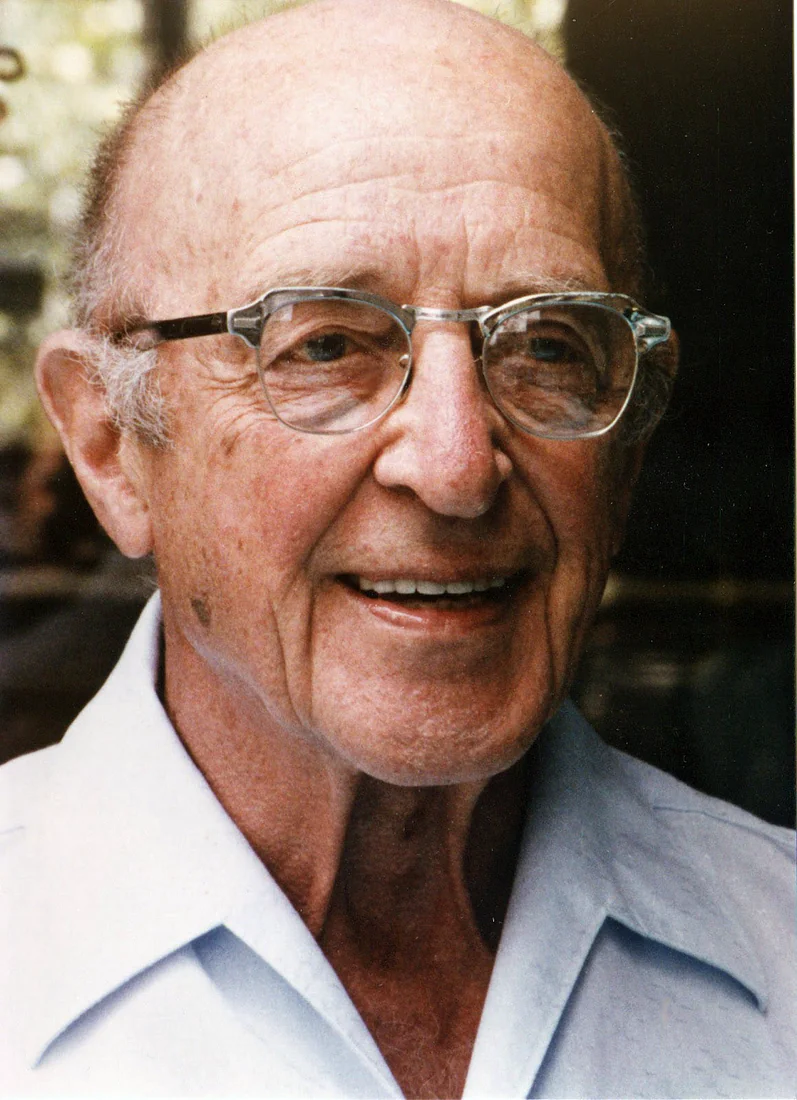
Attr: Nick Redmark
| 10 Quotes | |
| Born as | Carl Ransom Rogers |
| Occup. | Psychologist |
| From | USA |
| Born | January 8, 1902 Oak Park, Illinois |
| Died | February 4, 1987 La Jolla, California |
| Cause | heart attack |
| Aged | 85 years |
| Cite | |
Citation Formats
APA Style (7th ed.)
Carl rogers biography, facts and quotes. (2026, February 1). FixQuotes. https://fixquotes.com/authors/carl-rogers/
Chicago Style
"Carl Rogers biography, facts and quotes." FixQuotes. February 1, 2026. https://fixquotes.com/authors/carl-rogers/.
MLA Style (9th ed.)
"Carl Rogers biography, facts and quotes." FixQuotes, 1 Feb. 2026, https://fixquotes.com/authors/carl-rogers/. Accessed 26 Mar. 2026.
Early Life and Background
Carl Ransom Rogers was born on January 8, 1902, in Oak Park, Illinois, a prosperous Chicago suburb shaped by Protestant reform, civic order, and the era's confidence in progress. He was the fourth of six children in a close-knit family; his father, Walter A. Rogers, was a civil engineer and contractor, and his mother, Julia Cushing Rogers, brought a devout, moral seriousness that framed daily life in terms of duty, temperance, and self-scrutiny.In 1904 the family moved to a farm near Glen Ellyn, Illinois, where Rogers grew up amid hard work, seasonal rhythms, and relative social isolation. That combination - protection from the city's temptations, plus immersion in practical problem-solving - cultivated two enduring traits: a private inner life that leaned toward observation and reflection, and a respect for reality-testing that later anchored his clinical empiricism. The tension between strict standards and a young man's emerging autonomy became a psychological pressure point he would later translate into theory: people wilt under conditions of worth, and unfold when met without coercion.
Education and Formative Influences
Rogers entered the University of Wisconsin-Madison in 1919, initially studying agriculture and then history, before shifting toward religion; he attended the 1922 Christian student conference in Beijing, an experience that widened his cultural frame and quietly loosened inherited certainties. He enrolled at Union Theological Seminary in New York (1924), but after taking courses at Teachers College, Columbia University, he migrated from ministry to psychology, earning an MA (1928) and PhD (1931). The intellectual climate around Columbia - measurement, child study, and the early mental hygiene movement - met, and tempered, his increasingly humanistic conviction that careful listening could be as transformative as instruction.Career, Major Works, and Turning Points
Rogers began at the Society for the Prevention of Cruelty to Children in Rochester, New York (1928-1940), where daily encounters with distressed children and families pushed him away from authoritative diagnosis and toward collaboration; he distilled this shift in Counseling and Psychotherapy (1942) and Client-Centered Therapy (1951). At Ohio State (1940-1945) he gained a national platform, then at the University of Chicago (1945-1957) he helped build a counseling center and produced the research-rich On Becoming a Person (1961). His later years at the University of Wisconsin-Madison and, from 1964, at the Western Behavioral Sciences Institute and the Center for Studies of the Person in La Jolla, extended his work into encounter groups, education, and conflict resolution, including efforts related to Northern Ireland and South Africa. Across decades, he defended psychotherapy as a relationship with measurable effects, not a charismatic art immune to evidence.Philosophy, Style, and Themes
Rogers' signature idea was disarmingly simple: personality change is most likely when a person is met with congruence (genuineness), empathic understanding, and unconditional positive regard. His own psychological journey runs through his most famous reframing of the therapist's role: “In my early professional years I was asking the question: How can I treat, or cure, or change this person? Now I would phrase the question in this way: How can I provide a relationship which this person may use for his own personal growth?” Underneath is an ethic of restraint - the clinician's power is real and therefore dangerous - paired with a radical bet on the organism's self-righting capacities when defensiveness can soften.That bet was not naive optimism but a disciplined stance forged against the century's darker evidence. Rogers could admit, “When I look at the world I'm pessimistic, but when I look at people I am optimistic”. His method aimed to create the conditions in which self-deception becomes unnecessary, and then change becomes possible: “The curious paradox is that when I accept myself just as I am, then I can change”. Even his phrase "the good life" avoided triumphal endpoints; it described an ongoing movement toward openness to experience, flexibility, and a self that is lived rather than performed - a psychology built for an era of rapid social change, mass institutions, and the anxiety of being evaluated.
Legacy and Influence
Rogers helped found humanistic psychology and permanently altered counseling, social work, pastoral care, and education by centering the quality of relationship as both moral practice and clinical mechanism. His "core conditions" became a standard vocabulary for therapists across schools, while his insistence on research - recording sessions, measuring outcomes, testing hypotheses - helped bring psychotherapy into modern scientific conversation. In a culture often split between hard systems and private suffering, Rogers offered a third way: rigorous attention to evidence joined to respect for the person's lived experience, leaving an influence that endures wherever helping professions choose listening over control and growth over compliance.Our collection contains 10 quotes written by Carl, under the main topics: Witty One-Liners - Truth - Art - Learning - Meaning of Life.
Other people related to Carl: Otto Rank (Psychologist), Morton Hunt (Writer)