
Carl Sandburg Biography Quotes 60 Report mistakes
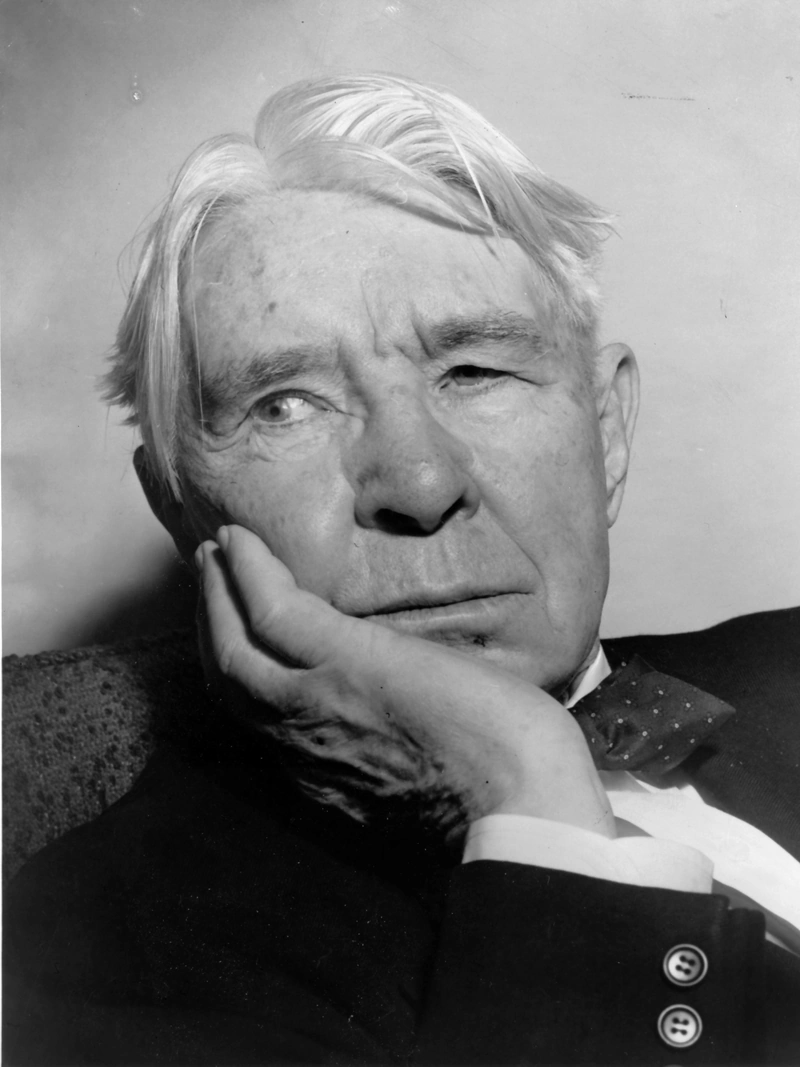
Attr: Al Ravenna
| 60 Quotes | |
| Born as | Carl August Sandburg |
| Occup. | Poet |
| From | USA |
| Born | January 6, 1878 Galesburg, Illinois, United States |
| Died | July 22, 1967 Flat Rock, North Carolina, United States |
| Aged | 89 years |
| Cite | |
Citation Formats
APA Style (7th ed.)
Carl sandburg biography, facts and quotes. (2026, February 11). FixQuotes. https://fixquotes.com/authors/carl-sandburg/
Chicago Style
"Carl Sandburg biography, facts and quotes." FixQuotes. February 11, 2026. https://fixquotes.com/authors/carl-sandburg/.
MLA Style (9th ed.)
"Carl Sandburg biography, facts and quotes." FixQuotes, 11 Feb. 2026, https://fixquotes.com/authors/carl-sandburg/. Accessed 23 Mar. 2026.
Early Life and Background
Carl August Sandburg was born on January 6, 1878, in Galesburg, Illinois, a railroad town whose soot, whistles, and immigrant neighborhoods formed his first vocabulary. His parents, August Sandburg and Clara Anderson, were Swedish immigrants; the household ethic was work before words, and money was scarce. Sandburg left school in the eighth grade to take jobs that kept the family afloat - milk route, barber shop, hotel work, brick yard - and he learned early how speech changes when it is spoken by laborers, not by lecturers.That apprenticeship in ordinary talk was also an apprenticeship in American contradiction: pride and poverty, democracy and hierarchy, piety and appetite. The young Sandburg absorbed the rough music of the street and the moral weather of the Midwest, where industrial expansion promised mobility but delivered exhaustion. Long before he wrote of Chicago "stormy, husky, brawling", he had already lived inside the human engine that made such cities roar.
Education and Formative Influences
In 1898 Sandburg enlisted in the U.S. Army and served in Puerto Rico during the Spanish-American War, an experience that widened his sense of nation and empire while deepening his suspicion of official rhetoric. After returning, he attended Lombard College in Galesburg (1898-1902) without taking a degree, editing student publications and reading Whitman, the Bible, and populist journalism; he also began writing and performing poems. The combination - a working-class ear, a soldier's disillusion, and a Midwestern liberal arts education - helped set his lifelong aim: to make poetry sound like America talking to itself.Career, Major Works, and Turning Points
Sandburg moved into professional journalism and politics in the Midwest, working as a reporter and as a speechwriter and organizer for Milwaukee's Social Democratic movement, including Mayor Emil Seidel. In 1908 he married Lillian Steichen (sister of photographer Edward Steichen), whose steadiness and editorial intelligence anchored a peripatetic life. His breakthrough came with "Chicago Poems" (1916) and "Cornhuskers" (1918), books that made industrial modernity a poetic subject without polishing away its grime. He expanded into sweeping cultural projects: "The American Songbag" (1927) gathered folk songs as democratic archives; the monumental "Abraham Lincoln: The Prairie Years" (1926) and "The War Years" (1939) turned biography into national mythmaking, with "The War Years" winning the 1940 Pulitzer Prize for History. In later decades he lived for long stretches in North Carolina, continuing to publish, lecture, and embody a public role rare for poets - both celebrity and custodian of collective memory - until his death on July 22, 1967.Philosophy, Style, and Themes
Sandburg's art was built on the belief that truth rides in the speaking voice, not in aristocratic refinement. He favored free verse, catalogs, and blunt nouns, trusting accumulation over ornament and letting the line break mimic a breath from the shop floor or the depot platform. His sympathy ran toward immigrants, workers, and the anonymous many; his suspicion aimed at cant, especially political cant, which he could puncture with a folk comedian's timing. Yet his populism was not naive. He watched the 20th century harden - war, propaganda, boom-and-bust - and he kept asking what survives when grand narratives fail.Psychologically, Sandburg often framed himself as divided, driven by competing hungers that made him both prolific and restive. “There is an eagle in me that wants to soar, and there is a hippopotamus in me that wants to wallow in the mud”. That split helps explain the range: soaring public epics of Lincoln alongside intimate, homely meditations; civic anger beside lullaby tenderness. His method was also self-protective, a working writer's pragmatism that treated drafts as fuel, not relics: “There was always the consolation that if I didn't like what I wrote I could throw it away or burn it”. And beneath the hard-boiled humor sat an almost religious faith in continuance, in the stubborn fact of birth and renewal: “A baby is God's opinion that life should go on”. In poem after poem, the nation is noisy, imperfect, and worth listening to anyway.
Legacy and Influence
Sandburg helped legitimate a distinctly American free verse that could carry slang, labor, and folklore without apology, widening the audience for poetry in the age of mass media. He shaped how generations pictured Lincoln - less marble statue than prairie-grown conscience - while his song collecting preserved vernacular traditions that might have slipped beneath commercial culture. As a public poet he modeled a role midway between journalist and bard, showing that literature could be both art and civic instrument; his best work remains a record of how the United States sounded, argued, and hoped while it was becoming modern.Our collection contains 60 quotes written by Carl, under the main topics: Witty One-Liners - Motivational - Ethics & Morality - Wisdom - Art.
Other people related to Carl: Lukas Foss (Composer), Mary Calderone (Scientist)
Carl Sandburg Famous Works
- 1948 Remembrance Rock (Novel)
- 1939 Abraham Lincoln: The War Years (Biography)
- 1936 The People, Yes (Poetry)
- 1927 The American Songbag (Collection)
- 1926 Abraham Lincoln: The Prairie Years (Biography)
- 1923 Honey and Salt (Poetry)
- 1922 Rootabaga Stories (Children's book)
- 1922 Slabs of the Sunburnt West (Poetry)
- 1920 Smoke and Steel (Poetry)
- 1918 Cornhuskers (Poetry)
- 1916 Chicago Poems (Poetry)