
Carlo Goldoni Biography Quotes 8 Report mistakes
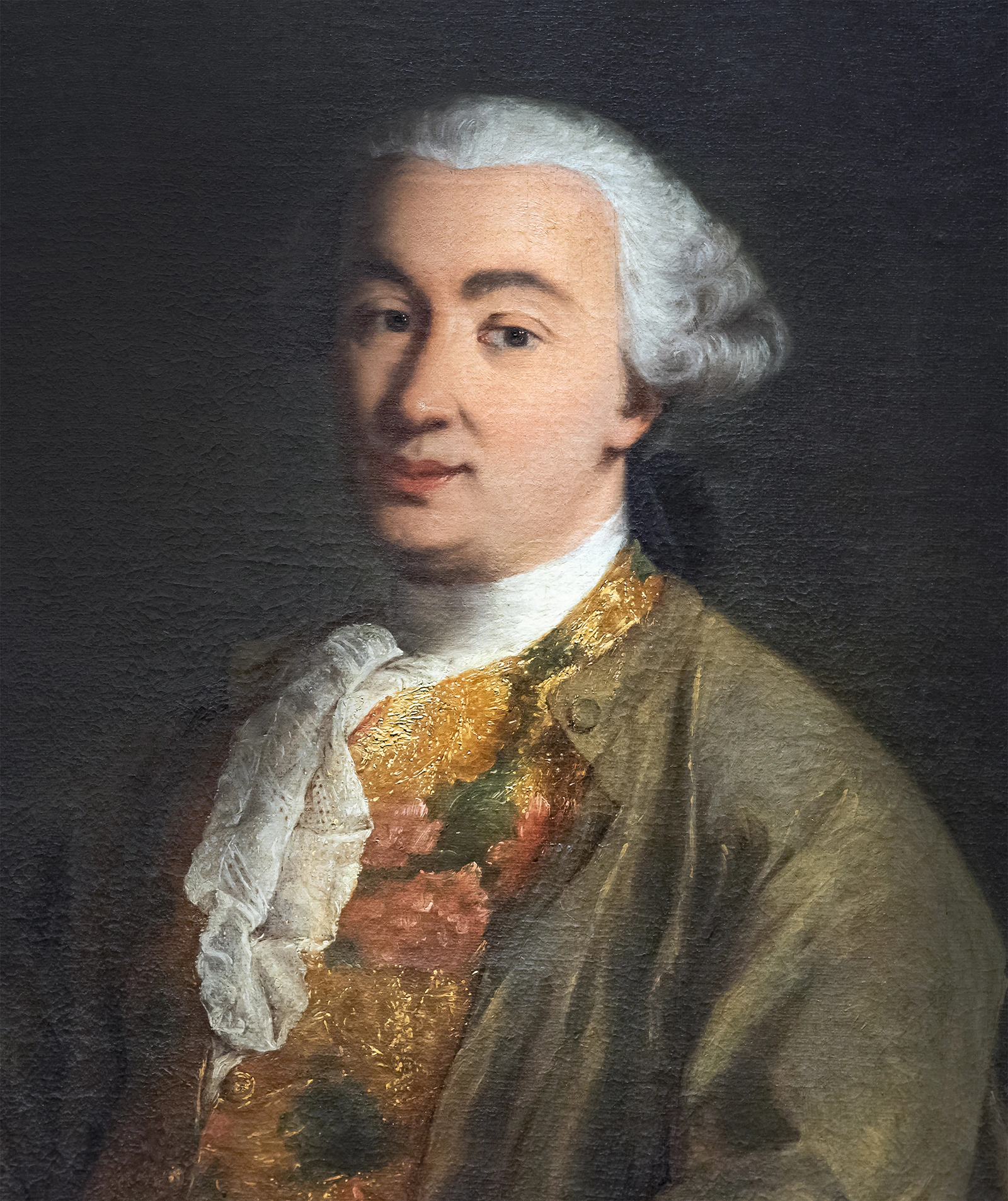
| 8 Quotes | |
| Born as | Carlo Osvaldo Goldoni |
| Occup. | Playwright |
| From | Italy |
| Born | February 25, 1707 Venice, Italy |
| Died | February 6, 1793 Paris, France |
| Cause | Natural Causes |
| Aged | 85 years |
| Cite | |
Citation Formats
APA Style (7th ed.)
Carlo goldoni biography, facts and quotes. (2026, February 11). FixQuotes. https://fixquotes.com/authors/carlo-goldoni/
Chicago Style
"Carlo Goldoni biography, facts and quotes." FixQuotes. February 11, 2026. https://fixquotes.com/authors/carlo-goldoni/.
MLA Style (9th ed.)
"Carlo Goldoni biography, facts and quotes." FixQuotes, 11 Feb. 2026, https://fixquotes.com/authors/carlo-goldoni/. Accessed 25 Mar. 2026.
Early Life and Background
Carlo Osvaldo Goldoni was born on February 25, 1707, in Venice, a maritime republic whose political power was waning even as its theaters, printing houses, and carnival culture still set the tempo for European entertainment. His father, Giulio Goldoni, was a physician, and the family moved repeatedly across the Veneto and Lombardy as medical appointments and finances shifted. That itinerant childhood gave Goldoni an early intimacy with dialects, classes, and the small humiliations and bravado of everyday bargaining - the raw material of his later stage world.From boyhood he was drawn less to patrician spectacle than to the mechanics of performance: actors improvising, audiences heckling, and the thin line between social respectability and comic exposure. The Venice he inherited was a city of masks in both literal and moral senses, where reputation was currency and commerce shaped manners. Goldoni learned to watch people closely - how a servant flatters, how a merchant calculates, how a nobleman postures when money is tight - and he stored these observations with the precision of a future dramatist.
Education and Formative Influences
Pushed toward a stable profession, Goldoni studied with the Jesuits and later pursued law at Pavia, absorbing rhetoric, casuistry, and the anatomy of contracts - tools he would translate into theatrical conflict. He was disciplined by classical models (Terence, Plautus, Moliere) yet increasingly impatient with drama that depended on stock lazzi rather than credible motives. His formative years were marked by a double education: formal training in argument and procedure, and an informal apprenticeship to Italian stage life, where commedia dell'arte still dominated with masked types and improvisation.Career, Major Works, and Turning Points
After early legal work and intermittent writing, Goldoni committed himself to theater in Venice in the 1740s and 1750s, eventually becoming the central reformer of Italian comedy. He replaced improvised scenarios with fully written plays, reduced reliance on masks, and insisted on recognizable social reality, developing a repertoire that included The Servant of Two Masters (Il servitore di due padroni), The Coffee House (La bottega del caffe), The Mistress of the Inn (La locandiera), The Jealousy of the Country Folk (Le baruffe chiozzotte), and The Boors (I rusteghi). His reforms provoked rivalry, most famously with Carlo Gozzi, who defended fantastical, mask-driven theater. In 1762 Goldoni left Venice for Paris, writing for the Comedie-Italienne and later composing his Memoirs in French, a self-portrait shaped by exile, pride, and the need to explain an Italian life to a European audience. He died in Paris on February 6, 1793, amid revolutionary upheaval that made the old patronage world - which had both sustained and constrained him - suddenly precarious.Philosophy, Style, and Themes
Goldoni's theater begins from a moral psychology of ordinary life: people are rarely monsters, more often anxious, vain, hungry for esteem, and skilled at self-justification. He distrusted grand abstractions and preferred the test of conversation, where character reveals itself in timing, hedges, and accidental truths. His comedies are built like social laboratories - coffee shops, inns, drawing rooms, fishers' quarrels - in which desire collides with decorum and money quietly dictates what virtue can afford. If he is a reformer, he is also a diagnostician, turning laughter into a humane instrument that exposes without annihilating.That humaneness is sharpened by a traveler-exile's skepticism. Goldoni understood how local pride hardens into blindness, and his work repeatedly contrasts provincial certainty with the broader education of movement and comparison: “He who never leaves his country is full of prejudices”. Yet he was not interested in simple cosmopolitan superiority; he could admire local custom while dissecting it. His dialogue often dramatizes how people weaponize propriety, and his plots pivot on rationalizations that sound respectable until the audience hears their hollowness: “Pretexts are not wanting when one wishes to use them”. Even his treatment of shame is double-edged - at once a social restraint and a strategic costume - as in the paradox, “The blush is beautiful, but it is sometimes convenient”. In Goldoni, manners are never merely surface; they are a system of survival.
Legacy and Influence
Goldoni endures as the playwright who helped steer Italian comedy from masked improvisation toward scripted realism without losing speed, theatricality, or tenderness. His influence runs through modern character comedy and ensemble realism: he normalized the stage as a mirror of work, gossip, credit, and domestic negotiation, giving actors roles with psychological continuity and audiences a satire that implicates them. In Venice he became a civic memory, and in Europe he stands alongside Moliere as a builder of bourgeois theater - a writer who made everyday speech into art and proved that the drama of ordinary motives can be both rigorous and jubilantly alive.Our collection contains 8 quotes written by Carlo, under the main topics: Witty One-Liners - Ethics & Morality - Wisdom - Knowledge - Legacy & Remembrance.
Carlo Goldoni Famous Works
- 1765 The Fan (Play)
- 1753 Mirandolina (Play)
- 1748 The Good-Humoured Ladies (Play)
- 1747 The Venetian Twins (Play)
- 1746 The Servant of Two Masters (Play)
Source / external links