
Caroline B. Cooney Biography Quotes 13 Report mistakes
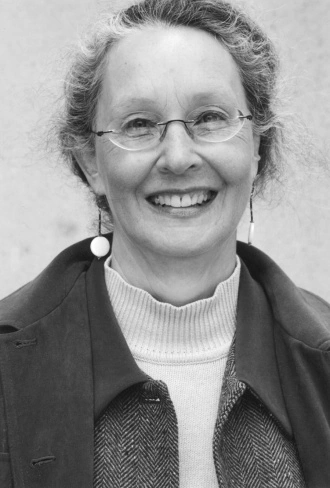
| 13 Quotes | |
| Occup. | Writer |
| From | USA |
| Born | May 10, 1947 Geneva, New York |
| Age | 78 years |
| Cite | |
Citation Formats
APA Style (7th ed.)
Caroline b. cooney biography, facts and quotes. (2026, February 11). FixQuotes. https://fixquotes.com/authors/caroline-b-cooney/
Chicago Style
"Caroline B. Cooney biography, facts and quotes." FixQuotes. February 11, 2026. https://fixquotes.com/authors/caroline-b-cooney/.
MLA Style (9th ed.)
"Caroline B. Cooney biography, facts and quotes." FixQuotes, 11 Feb. 2026, https://fixquotes.com/authors/caroline-b-cooney/. Accessed 6 Mar. 2026.
Early Life and Background
Caroline B. Cooney was born on May 10, 1947, in the United States, part of the postwar generation that came of age as American youth culture, mass-market paperbacks, and school libraries expanded rapidly. She grew up when girls were still expected to be orderly, agreeable, and practical - yet the era also dangled new possibilities: suburban stability on the surface, social upheaval on the horizon, and a widening audience for popular fiction that spoke directly to teenagers.That tension - between safety and risk, family loyalty and the pull of independence - became the emotional engine of her later work. Cooney developed an early fascination with how ordinary lives can pivot on a single choice, and with the private bravery of young people trying to be good while feeling deeply ambivalent. Even before publication, she was building an inner compass as a storyteller: pace, suspense, and moral consequence mattered, but so did the intimate physics of family life - what a child owes a parent, what a parent can fail to give, and what forgiveness costs.
Education and Formative Influences
Cooney studied in Indiana and later attended Indiana University, experiences that placed her in a Midwestern landscape often marked by close-knit communities and strong ideas about respectability. She read widely in genre fiction and classic narrative, absorbing the virtues of clean plotting and the satisfactions of a resolved story. The broader literary climate of her formative years also mattered: the rise of paperback distribution, the growth of young adult publishing, and the increasing willingness of editors to let adolescent protagonists confront danger, grief, and ethical compromise without requiring a tidy moral lecture.Career, Major Works, and Turning Points
Cooney worked steadily for years before her career found its public lane, writing persistently while learning the commercial realities of publishing. She later recalled, “I wrote eight full-length adult novels in my twenties. None of them were published”. , a blunt summary of apprenticeship through rejection. That early effort proved decisive: it trained her to draft at scale, revise with discipline, and treat storytelling as labor rather than inspiration alone. Her breakthrough came in young adult fiction, where she became known for taut suspense and psychological pressure, notably with The Face on the Milk Carton (1990) and its sequels, stories that fused domestic normalcy with identity shock. Other prominent novels such as Driver's Ed, The Fog, and What Child Is This? showcased her range within a recognizable signature: propulsive plots, ethical dilemmas, and the sense that adolescence is not a waiting room but a crucible. Over decades she produced a large body of work and became a reliable, high-circulation presence in school and public libraries, a writer many reluctant readers encountered as a first true page-turner.Philosophy, Style, and Themes
Cooney's style is built for momentum: close third-person intimacy, clean scene construction, and cliff-edge reversals that arrive not as gimmicks but as consequences. Unlike some YA contemporaries who cultivate bleakness as a badge of realism, she aims for seriousness without nihilism, grounding danger in recognizable homes, classrooms, and neighborhoods. Her creative temperament leans toward joy in craft rather than romantic suffering - “I love writing and do not know why it is considered such a difficult, agonizing profession”. - and that attitude helps explain her productivity and consistency. She treats writing as a solvable problem: find the pressure point, escalate it honestly, and let character choices do the moral work.Psychologically, her books reveal a mind preoccupied with belonging and the fragility of self-definition. The Face on the Milk Carton turns a suburban teen's life into a thriller of memory and kinship, yet the true horror is not violence but dislocation - the fear that your history is not yours. Cooney repeatedly returns to parents not as background furniture but as emotional gravity. “I approach serious subjects, and I like to have the good guys win and have the parents among the good guys”. , a credo that signals both her ethical preference and her understanding of young readers' longings: stability, fairness, and the hope that adulthood can be trusted. Even when parents fail, they are rarely disposable; her suspense often hinges on whether family can be repaired without denying harm. Across her long career she has emphasized continuity over reinvention - “I believe my voice is pretty much the same. I've written 75 books, so I'm better at it now than I was earlier in my career”. - suggesting an artist who sees growth as refinement: sharper timing, deeper empathy, surer control of fear.
Legacy and Influence
Cooney endures as one of the defining page-turner architects of modern American young adult fiction, a bridge between earlier problem novels and later YA thrillers that marry cinematic suspense to emotional realism. Her novels have been taught, debated, and widely circulated, particularly among readers who discover that books can move as fast as anxiety and as irresistibly as secrets. By centering adolescents who think hard, feel fiercely, and remain tethered to family - even when family is the source of the crisis - she helped normalize YA as a venue for serious moral inquiry without surrendering the pleasures of plot. Her influence is felt in the many contemporary YA suspense writers who treat domestic life as the most believable stage for dread, and who aim, as Cooney has long done, to make reading feel not like homework but like compulsion.Our collection contains 13 quotes written by Caroline, under the main topics: Witty One-Liners - Writing - Book - War - Family.
Caroline B. Cooney Famous Works
- 2005 Code Orange (Novel)
- 2001 The Ransom of Mercy Carter (Novel)
- 1996 The Voice on the Radio (Novel)
- 1995 Both Sides of Time (Novel)
- 1990 The Face on the Milk Carton (Novel)
Source / external links