
Carroll Shelby Biography Quotes 2 Report mistakes
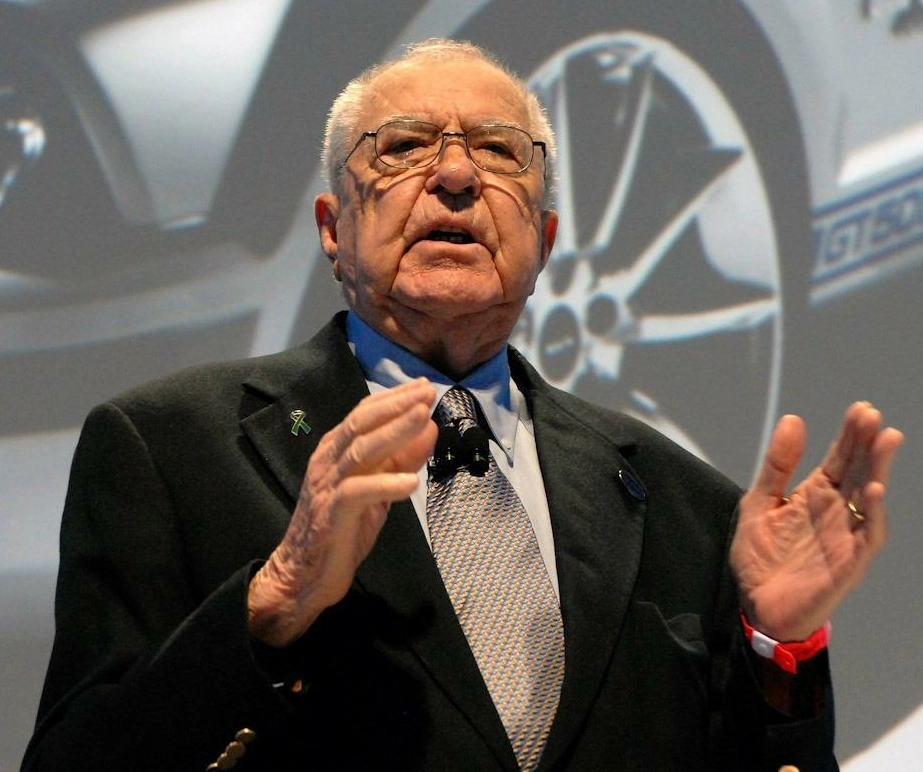
| 2 Quotes | |
| Born as | Carroll Hall Shelby |
| Occup. | Designer |
| From | USA |
| Born | January 11, 1923 Leesburg, Texas, USA |
| Age | 103 years |
| Cite | |
Citation Formats
APA Style (7th ed.)
Carroll shelby biography, facts and quotes. (2026, February 11). FixQuotes. https://fixquotes.com/authors/carroll-shelby/
Chicago Style
"Carroll Shelby biography, facts and quotes." FixQuotes. February 11, 2026. https://fixquotes.com/authors/carroll-shelby/.
MLA Style (9th ed.)
"Carroll Shelby biography, facts and quotes." FixQuotes, 11 Feb. 2026, https://fixquotes.com/authors/carroll-shelby/. Accessed 12 Feb. 2026.
Early Life and Background
Carroll Hall Shelby was born January 11, 1923, in Leesburg, Texas, and grew up in the oil-patch towns and farm roads of East Texas, a landscape where machinery was both livelihood and entertainment. He was a sickly child with heart trouble and asthma, a constraint that sharpened his appetite for speed into something like defiance - an early pattern of outrunning limits rather than accepting them. The Depression-era South and Southwest prized practical ingenuity, and Shelby absorbed that ethic: if something did not work, you fixed it, improvised around it, or built a better version.As a teenager he gravitated to engines, and his sense of identity formed around competence with tools and the romance of motion. Texas also gave him a particular kind of self-presentation - plainspoken, impatient with pretense, quick to size up men and machines. That blend of charm and hardness later became a leadership style: he could sell a dream to investors and racers, then drive a team relentlessly to meet it.
Education and Formative Influences
World War II became his first large-scale proving ground. Shelby served as an Army Air Forces flight instructor and test pilot, work that demanded calm judgment, mechanical sympathy, and respect for risk - qualities that transferred directly to racing and to car development. Like many postwar Americans, he came home to a country newly confident in technology and production, where hot-rodding and motorsport grew out of surplus parts, disposable income, and a national taste for performance.Career, Major Works, and Turning Points
Shelby raced seriously in the 1950s, rising rapidly through sports car events and becoming one of the era's toughest competitors despite worsening heart problems. His greatest driving triumph came in 1959, when he co-drove an Aston Martin DBR1 to overall victory at the 24 Hours of Le Mans, cementing international credibility. The medical reality - nitroglycerin under the tongue before climbs into the cockpit - pushed him toward the other side of the pit wall. In 1962 he founded Shelby American in California and executed the concept that made him a defining figure of the muscle-and-motorsport age: putting American V8 power into the lithe British AC Ace to create the Shelby Cobra. Soon he was in a strategic alliance with Ford, developing the GT40 program that finally beat Ferrari at Le Mans in 1966, and reshaping the Ford Mustang into homologation weapons like the GT350 and GT500. A heart transplant in 1990, and later a kidney transplant, did not end his influence; he returned as an elder statesman of performance, involved in late-career projects from continuation Cobras to Ford Shelby-branded modern Mustangs, while managing an empire of licensing and brand mythology.Philosophy, Style, and Themes
Shelby was less a stylist than a strategist of sensation: reduce weight, increase power, then ensure the whole package could survive endurance punishment. His signature idea is captured in a line that doubles as a design manifesto: "It's a massive motor in a tiny, lightweight car". The psychology beneath it is revealing - a taste for asymmetry, for mismatched forces made to cooperate through sheer will and clever engineering. He loved simple, brutal solutions, but he also understood the theater of speed: the Cobra was not only fast, it was a story about American horsepower humiliating European pedigree on road courses.That theater depended on a core temperament - stubborn optimism weaponized against doubt. Shelby framed resistance as fuel, and his leadership often ran on provocation and morale as much as on parts. "I'm not going to take this defeatist attitude and listen to all this crap any more from all these people who have nothing except doomsday to predict". He built teams the way he built cars: by refusing the premise that something could not be done, then bullying reality until it yielded. In the 1960s, when corporate America discovered motorsport as marketing and engineering lab, Shelby became the ideal intermediary - a racer with credibility, a Texan entrepreneur with swagger, and a development boss who could translate lap times into boardroom arguments.
Legacy and Influence
Carroll Shelby endures as one of the key architects of modern American performance culture: the man who turned the small-shop hot-rod impulse into factory-backed racing wins and mass-market legend. The Cobra remains a template for the "big engine, light chassis" philosophy that echoes in everything from kit cars to supercars, while the GT350/GT500 helped define the idea of a track-capable street Mustang. His deeper legacy is institutional as well as aesthetic: he showed that a charismatic independent could bend a giant like Ford toward racing priorities, and he left behind a brand that made his name shorthand for a particular promise - noise, torque, and the conviction that speed is worth fighting for.Our collection contains 2 quotes written by Carroll, under the main topics: Never Give Up - Technology.
Source / external links