
Casey Stengel Biography Quotes 42 Report mistakes
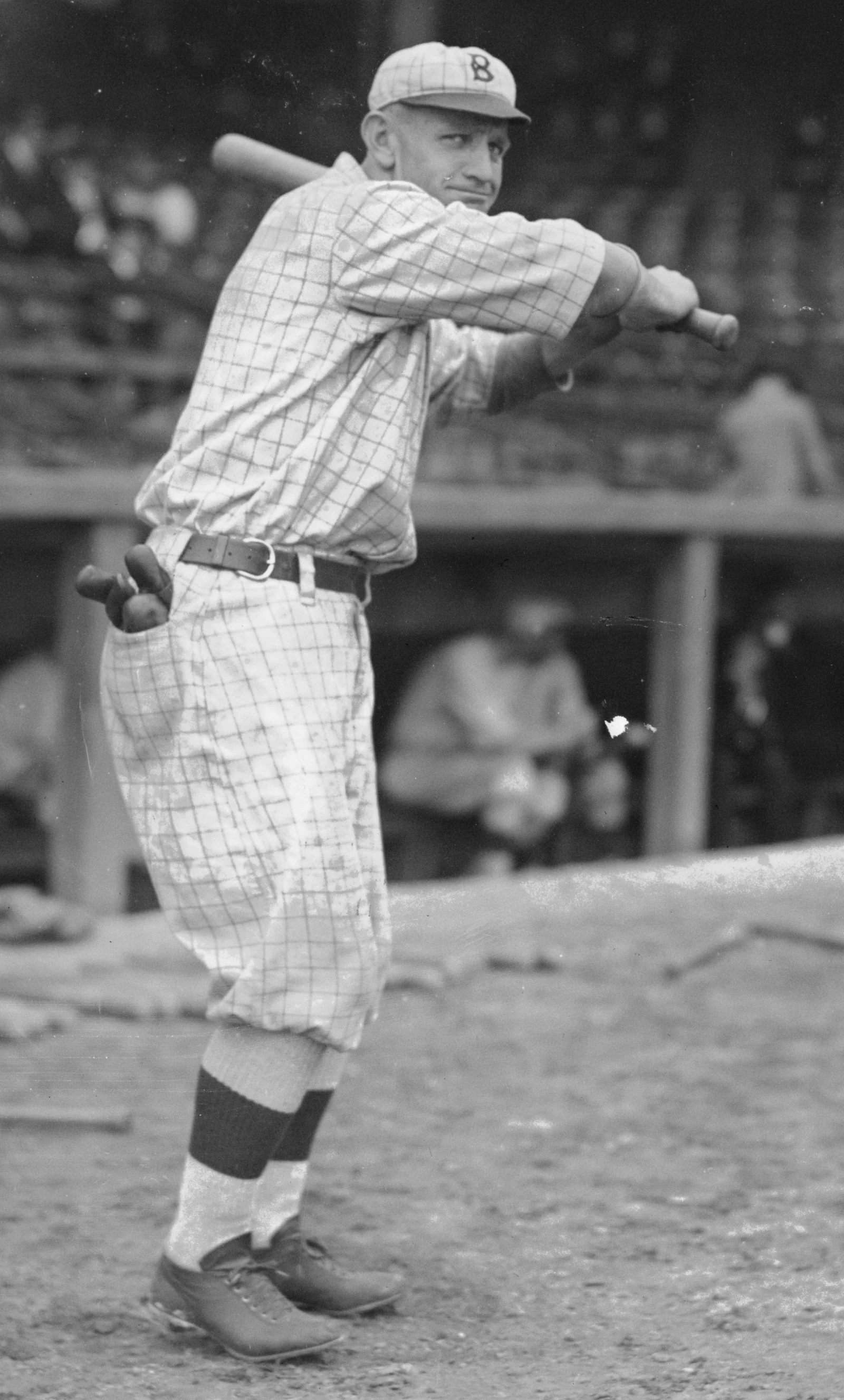
| 42 Quotes | |
| Born as | Charles Dillon Stengel |
| Occup. | Athlete |
| From | USA |
| Born | July 30, 1890 Kansas City, Missouri |
| Died | September 29, 1975 |
| Aged | 85 years |
| Cite | |
Citation Formats
APA Style (7th ed.)
Casey stengel biography, facts and quotes. (2026, February 11). FixQuotes. https://fixquotes.com/authors/casey-stengel/
Chicago Style
"Casey Stengel biography, facts and quotes." FixQuotes. February 11, 2026. https://fixquotes.com/authors/casey-stengel/.
MLA Style (9th ed.)
"Casey Stengel biography, facts and quotes." FixQuotes, 11 Feb. 2026, https://fixquotes.com/authors/casey-stengel/. Accessed 6 Mar. 2026.
Early Life and Background
Charles Dillon "Casey" Stengel was born on July 30, 1890, in Kansas City, Missouri, a river-and-rail town where sport, vaudeville humor, and politics mixed in the same saloons and streetcars. He grew up in a large German-American family in a period when baseball was hardening into a national language - part civic ritual, part working-class entertainment - and the local game was as much about bravado and storytelling as technique. The nickname "Casey", drawn from the popular baseball poem "Casey at the Bat", fit a boy who learned early that attention could be won with wit as surely as with a swing.That instinct for performance never meant he was unserious. In the rough early-1900s minor leagues he saw the underside of the sport: long train rides, injuries treated with folk remedies, club owners cutting corners, and careers that could end with a single bad slide. The dead-ball era valued speed, defense, and guile over glamour, and Stengel absorbed its street knowledge - how to read a pitcher, how to turn a crowd, how to survive a clubhouse - while developing the comic cadence that later became "Stengelese". Humor, for him, was armor and a management tool, but also a way to keep his own doubts from showing.
Education and Formative Influences
Stengel attended Central High School in Kansas City and spent time at the University of Missouri, but his real education came in professional baseball, where minor league managers and veteran players taught him the trade in blunt, practical terms. Signed by the Brooklyn Superbas, he entered the majors in 1912, learning the tactics of the dead-ball game and the psychology of a dugout in an age when bench jockeying and mind games were accepted craft. Military service in World War I interrupted his playing prime, and the experience of a world suddenly larger and harsher than a ballpark helped harden his later belief that baseball, for all its romance, was still a job that required discipline and emotional control.Career, Major Works, and Turning Points
An outfielder in the National League, Stengel played most famously for Brooklyn (1912-1917), hitting well enough in the 1916 World Series to become a Brooklyn folk hero, and later for the Pittsburgh Pirates and New York Giants before injuries and age pushed him into managing. His early managerial career was a long apprenticeship: successful stints in the minors, then major league jobs with the Boston Braves (1938-1943) and Brooklyn Dodgers (1943), where he was inventive but often undermined by weak rosters and wartime churn. The turning point came late - the kind of late that would have broken a less stubborn man - when the New York Yankees hired him in 1949. From 1949 to 1960 he won seven World Series and ten pennants, mastering platoons, bullpen matchups, and the politics of stars in the television age. He then took on the expansion New York Mets (1962-1965), turning lovable losing into a national comedy while teaching a young organization how to be professional, before retiring and becoming an elder statesman of the game until his death on September 29, 1975.Philosophy, Style, and Themes
Stengel believed baseball was a systems problem disguised as individual drama. He saw that a season is not won by one hero but by managing fatigue, confidence, and the small edges that accumulate across months. His most quoted one-liners were not just jokes - they were compressed lessons about credit, blame, and the manager's peculiar loneliness. “Managing is getting paid for home runs that someone else hits”. Behind the grin is a clear self-diagnosis: he understood that authority in baseball is partly theatrical, and that a manager must accept responsibility for outcomes he cannot directly create. The line also reveals his empathy for players; he treated them as the true producers, while he curated conditions where production could happen.His style paired comedic misdirection with rigorous competitive standards. He could puncture complacency without starting a fight, and he used irony to keep egos from swallowing a clubhouse. “If we're going to win the pennant, we've got to start thinking we're not as good as we think we are”. That sentence captures Stengel's inner engine: fear of decline transformed into a habit of perpetual recalibration. Even his baseball theory emphasized balance and contradiction, a worldview shaped by decades of watching certainty collapse under pressure: “Good pitching will always stop good hitting and vice-versa”. The apparent paradox was his point - the game is a chain of counters, and leadership means anticipating the next adjustment rather than believing in fixed formulas.
Legacy and Influence
Stengel endures as the rare figure who shaped baseball both as strategist and as cultural character: a winning architect for the Yankees, a founding myth for the Mets, and a model for later managers who mix analytics-in-spirit with emotional intelligence. His late-blooming dominance rewrote assumptions about managerial peak age, while his use of platoons and matchup logic anticipated the modern bullpen and roster churn. Just as important, he made the manager visible on radio and early television - not by self-serious posturing, but by turning language into a tool of leadership and a shield against the sport's cruelties. In an era when America moved from railroads to jets and from newspapers to TV, Casey Stengel translated baseball's old clubhouse wisdom into a public art form, leaving behind championships, stories, and a philosophy of competitive humility that still reads like a manual for pressure.Our collection contains 42 quotes written by Casey, under the main topics: Witty One-Liners - Sarcastic - Sports - Teamwork - Aging.
Other people related to Casey: Yogi Berra (Athlete), Warren Spahn (Athlete), Whitey Ford (Athlete), Bill Dickey (Athlete), Billy Martin (Athlete), Red Smith (Journalist), Richie Ashburn (Athlete), Enos Slaughter (Athlete), Jerry Coleman (Athlete), Robin Roberts (Athlete)
Frequently Asked Questions
- Casey Stengel stats: As an MLB outfielder, he hit .284 with 1,219 hits and 60 home runs; as a manager, he won 1,905 games, including seven World Series titles with the Yankees.
- Casey Stengel nickname: Casey Stengel’s famous nickname was “The Old Perfessor.”
- What is Casey Stengel net worth? Exact figures aren’t available, but Casey Stengel earned a typical star player and manager’s salary for his era, far below modern MLB earnings.
- Casey Stengel Mets: Casey Stengel was the first manager of the New York Mets, leading the expansion team from 1962 to 1965.
- Casey Stengel cause of death: Casey Stengel died of complications from cancer of the lymph glands (lymphoma) on September 29, 1975.
- How old was Casey Stengel? He became 85 years old
Source / external links