
Catharine MacKinnon Biography Quotes 10 Report mistakes
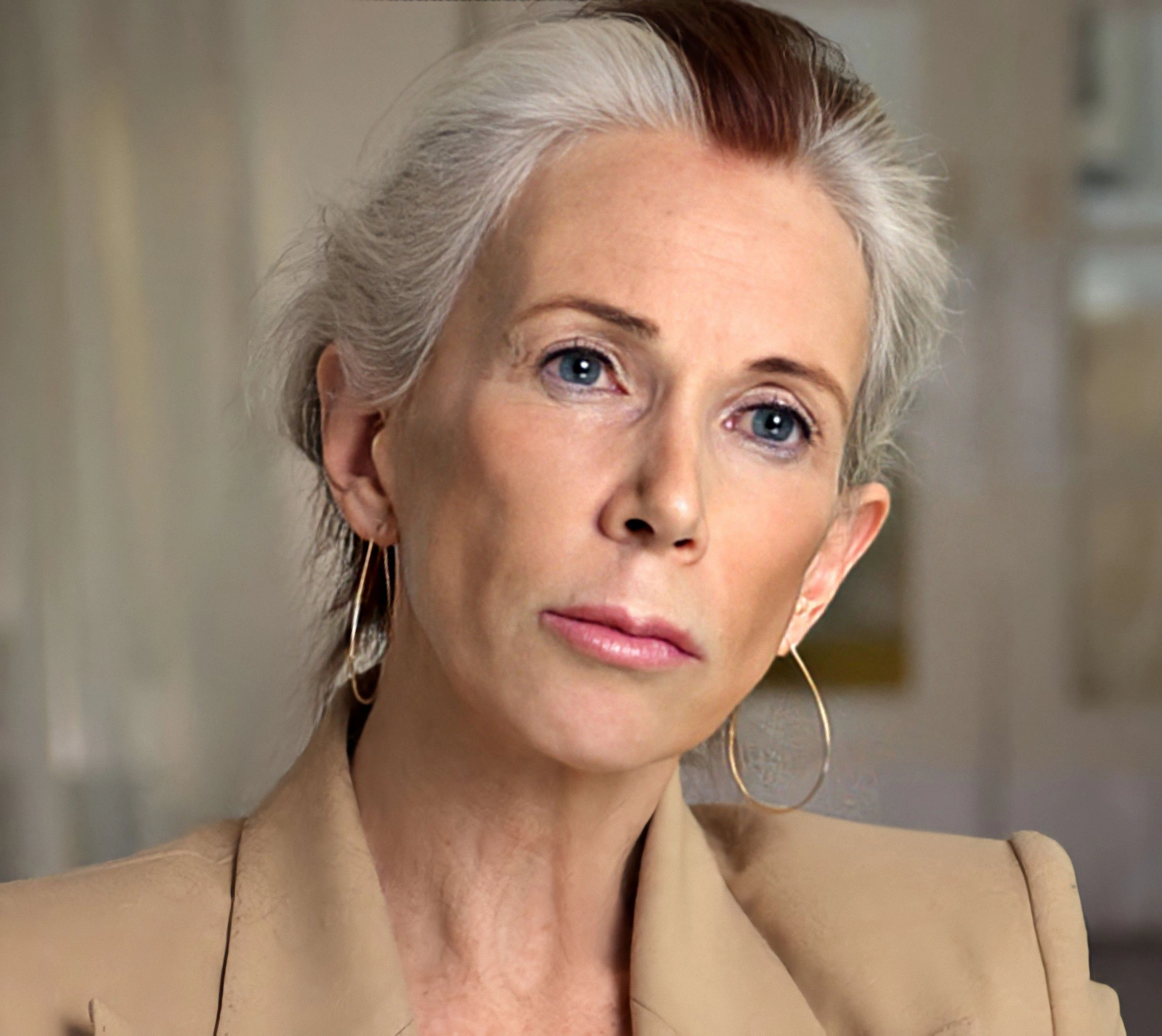
| 10 Quotes | |
| Born as | Catharine Alice MacKinnon |
| Known as | Catharine A. MacKinnon |
| Occup. | Activist |
| From | USA |
| Born | October 7, 1946 Minneapolis, Minnesota, USA |
| Age | 79 years |
| Cite | |
Citation Formats
APA Style (7th ed.)
Catharine mackinnon biography, facts and quotes. (2026, February 11). FixQuotes. https://fixquotes.com/authors/catharine-mackinnon/
Chicago Style
"Catharine MacKinnon biography, facts and quotes." FixQuotes. February 11, 2026. https://fixquotes.com/authors/catharine-mackinnon/.
MLA Style (9th ed.)
"Catharine MacKinnon biography, facts and quotes." FixQuotes, 11 Feb. 2026, https://fixquotes.com/authors/catharine-mackinnon/. Accessed 12 Feb. 2026.
Early Life and Education
Catharine Alice MacKinnon is an American legal scholar and activist whose work transformed understandings of sex inequality in law. Born in Minneapolis, Minnesota, in 1946, she grew up in a family where public service and the law were daily realities. Her father, George E. MacKinnon, became a prominent federal judge, and his life in the law exposed her early to the force of legal institutions and their limits. MacKinnon graduated from Smith College in 1969, then earned a J.D. from Yale Law School in 1977 and a Ph.D. in political science from Yale University in 1987. Across those years, she forged a path that would combine theory, litigation, teaching, and advocacy to redefine how the legal system understands power, sex, and equality.Formative Ideas and Early Scholarship
In the 1970s MacKinnon began developing the theory that sexual harassment is a form of sex discrimination. This work culminated in Sexual Harassment of Working Women (1979), a foundational text that argued harassment is not personal misconduct or private behavior but a systemic practice that enforces women's subordination in workplaces and schools. Her analysis helped shape the Equal Employment Opportunity Commission's guidelines and guided lawyers and judges as the Supreme Court, in Meritor Savings Bank v. Vinson (1986), formally recognized sexual harassment as discriminatory under Title VII. Figures such as Mechelle Vinson, whose case reached the Court, and Anita Hill, whose testimony later galvanized public debate, became widely known as the nation absorbed MacKinnon's central insight: sexual harassment is about inequality, power, and coercion. Her ideas joined a broader conversation in which contemporaries like Ruth Bader Ginsburg were also pressing American law to confront sex discrimination as a constitutional and statutory wrong.Anti-Pornography Civil Rights Ordinances
MacKinnon's collaboration with writer and activist Andrea Dworkin in the early 1980s produced a bold and controversial intervention: civil rights ordinances that defined pornography as a practice of sex discrimination and provided civil remedies for those harmed by it. The ordinances passed in several cities, including Minneapolis and Indianapolis, reframing a public debate that had been cast mainly in First Amendment terms. Supporters argued the measures vindicated equality; opponents, including the American Civil Liberties Union, claimed they violated free speech. In American Booksellers Association v. Hudnut (1985), the Seventh Circuit, in an opinion by Judge Frank Easterbrook, struck down the Indianapolis ordinance, concluding it impermissibly discriminated on the basis of viewpoint. Though invalidated, the ordinances reframed public understanding of pornography as a civil inequality rather than a private vice, and cemented MacKinnon and Dworkin's intellectual partnership as a defining force in late twentieth-century feminism. Dworkin's death in 2005 underscored the loss of a central ally whose ideas and presence had shaped MacKinnon's most contested interventions.Academic Career
MacKinnon became one of the most influential feminist legal theorists of her generation, holding long-term appointments at the University of Michigan Law School and the University of Chicago Law School, and visiting at institutions including Harvard Law School. She taught courses on sex equality, jurisprudence, and international law, training generations of students who would carry her approaches into courts, legislatures, and NGOs. Her classrooms and writing advanced a "dominance" theory of sex inequality: rather than focusing on similarity or difference between women and men, she analyzed how social and legal structures enforce hierarchies that privilege men collectively over women. Her books, including Toward a Feminist Theory of the State (1989), Only Words (1993), Women's Lives, Men's Laws (2005), Are Women Human? (2006), and Butterfly Politics (2017), engaged adversaries and allies alike, provoking debates across law, philosophy, and public policy. She argued that what people call "speech" can sometimes be a practice of harm that law should recognize and address.Sexual Harassment and the Architecture of Equality Law
MacKinnon's theory of sexual harassment reshaped legal doctrine beyond the workplace. She argued that harassment in schools, on campuses, and in other institutions is a mechanism of exclusion, reinforcing unequal participation and inhibiting women's full citizenship. Over the years, as survivors and advocates pressed claims and courts refined standards, her work supplied a conceptual framework that helped unify disparate practices under a single legal principle: sexualized abuses of power are discriminatory acts. The convergence of her scholarship with the experiences brought forward by individuals such as Anita Hill and, decades later, countless participants in the #MeToo movement, highlighted the endurance of her core message that structural inequality makes individual abuses possible and recurring.International Law and Human Rights
Beyond domestic law, MacKinnon was central to the recognition of sexual violence as a serious international crime. Her scholarship and advocacy contributed to a jurisprudence in which rape and other forms of sexual violence have been prosecuted as war crimes, crimes against humanity, and, under certain circumstances, acts of genocide. Cases such as Kadic v. Karadzic in the 1990s, together with decisions by international criminal tribunals for the former Yugoslavia and Rwanda, reflected principles she had articulated: that systematic sexual violence is not incidental to conflict but can be an instrument of terror and subordination. She later served as a Special Adviser on Gender to the Prosecutor of the International Criminal Court, a role that connected her with key figures in international justice, including prosecutors Luis Moreno Ocampo and Fatou Bensouda, and with survivors' groups whose testimonies pushed global institutions to act. Through this work, she helped operationalize, at a global level, the idea that equality and dignity require treating sexual violence as a core human rights violation.Prostitution, Trafficking, and Policy Debate
MacKinnon has been a prominent advocate for legal reforms addressing prostitution and sex trafficking. She has argued for approaches commonly called the Nordic model, which decriminalize those who are sold while penalizing those who buy and those who profit, and provide social supports for exit. Her testimony and writings informed debates in North America and Europe, linking exploitation in prostitution to broader systems of inequality. In this sphere as in others, she emphasized listening to survivors and recognizing how law can either reproduce or dismantle subordination. Her position has drawn criticism from libertarian and civil liberties perspectives and support from many anti-trafficking advocates, a polarity characteristic of the intense discussion her work reliably provokes.Legacy and Influence
MacKinnon's legacy lies both in concrete doctrinal change and in the shifting of legal imagination. Sexual harassment law, now a standard element of workplace compliance and education, reflects arguments she made when the term was scarcely known in courts. Her equality theory reframed pornography and prostitution as political and legal practices rather than purely private choices. In international human rights, she helped establish that gender-based violence is not peripheral but central to accountability for mass atrocities. Along the way, the presence of other pivotal figures has been visible: Andrea Dworkin as a collaborator and intellectual partner; judges and lawyers such as Frank Easterbrook who articulated the counterarguments; public figures like Anita Hill who catalyzed recognition; and prosecutors at the International Criminal Court who worked with her to build cases that take gender seriously.Across decades of writing, teaching, and advocacy, MacKinnon has remained focused on the idea that law can either normalize dominance or expose and oppose it. Her work urges legal actors to see the lived realities of those formally "protected" by rights, to ask whether the law's promises reach those most subordinated, and to design remedies that make equality operative. Whether in a classroom, a courtroom, or a global tribunal, that insistence has made her one of the most consequential legal thinkers of her time.
Our collection contains 10 quotes written by Catharine, under the main topics: Truth - Justice - Equality - Human Rights.
Other people related to Catharine: Ellen Willis (Writer)
Source / external links