
Catherine Helen Spence Biography Quotes 20 Report mistakes
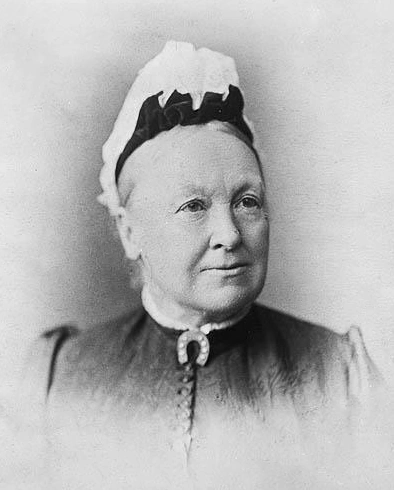
| 20 Quotes | |
| Occup. | Author |
| From | Australia |
| Born | October 31, 1825 Melrose, Scotland |
| Died | April 3, 1910 |
| Aged | 84 years |
| Cite | |
Citation Formats
APA Style (7th ed.)
Catherine helen spence biography, facts and quotes. (2026, March 6). FixQuotes. https://fixquotes.com/authors/catherine-helen-spence/
Chicago Style
"Catherine Helen Spence biography, facts and quotes." FixQuotes. March 6, 2026. https://fixquotes.com/authors/catherine-helen-spence/.
MLA Style (9th ed.)
"Catherine Helen Spence biography, facts and quotes." FixQuotes, 6 Mar. 2026, https://fixquotes.com/authors/catherine-helen-spence/. Accessed 24 Mar. 2026.
Early Life and Background
Catherine Helen Spence was born on 31 October 1825 at Melrose, in Roxburghshire, Scotland, into a family of modest gentility whose fortunes were more precarious than their bearing suggested. Her father, David Spence, was a lawyer and banker; her mother, Helen Brodie Spence, possessed intelligence, discipline, and the moral steadiness that would shape her daughter's conscience. The family belonged to that reform-minded Scottish world in which religion, self-improvement, and public argument were taken seriously. Yet Catherine's childhood was marked not by security but by dislocation: financial losses and the shrinking prospects of a large family made emigration a necessity rather than an adventure.
In 1839 the Spences sailed for South Australia, one of the newest experiments in British colonization, founded on Edward Gibbon Wakefield's theories of systematic settlement. Adelaide was still a raw colonial town, but for the adolescent Catherine it was also a revelation: a society in formation, where class boundaries were unsettled and talent might find room. Her father's health and finances never fully recovered, and after his death in 1846 the burden of supporting the household fell heavily on the women. Spence worked as a governess and teacher, while privately schooling herself into the vocation she most wanted - that of writer and public thinker. The colony's incompleteness became her opportunity. She learned early that private hardship and public possibility could coexist, and that colonial life demanded practical intelligence rather than inherited authority.
Education and Formative Influences
Spence never had a university education, but she possessed what many nineteenth-century women intellectuals needed in its place: rigorous early schooling, voracious reading, and a mind sharpened by exclusion. She later wrote, “I count myself well educated, for the admirable woman at the head of the school which I attended from the age of four and a half till I was thirteen and a half, was a born teacher in advance of her own times”. That tribute suggests both gratitude and a lifelong habit of measuring institutions by whether they enlarged human capacity. In Adelaide she read widely in history, political economy, theology, and fiction; she moved within Unitarian circles that encouraged rational religion and ethical reform; and she absorbed Wakefield, John Stuart Mill, and the language of representative government. Just as important was the colonial press, where she began publishing journalism and learned to convert observation into argument. Teaching trained her to explain; journalism trained her to persuade; colonial life trained her to connect abstract principles to daily realities.
Career, Major Works, and Turning Points
Spence became the first significant novelist produced in Australia with Clara Morison: A Tale of South Australia During the Gold Fever (1854), a work that used fiction to anatomize emigration, female labor, and the moral strains of colonial society. She followed it with novels including Tender and True (1856), Mr Hogarth's Will (1865), and Handfasted, written in the 1870s though published much later, each exploring marriage, property, women's independence, and the ethics of social arrangements. But her deepest influence came through journalism, lectures, and reform writing. She became a leading advocate of child welfare, boarding-out rather than institutionalization for destitute children, and electoral reform through proportional representation, which she championed for decades after studying Thomas Hare's system. She traveled to Britain and the United States in the 1890s, spoke at the 1893 World's Columbian Exposition in Chicago, and became one of the public faces of democratic experimentation in South Australia. In 1897, when women had newly won the vote there, she stood - symbolically but significantly - for election to the Federal Convention, the first Australian woman political candidate. She was never merely a novelist who turned to causes; she was a civic intellectual for whom literature, journalism, and reform were all instruments of social design.
Philosophy, Style, and Themes
Spence's writing joined moral seriousness to institutional curiosity. She was not a romantic nationalist in the loose sense; she was a diagnostician of societies, especially young ones. “Nothing is insignificant in the history of a young community, and - above all - nothing seems impossible”. That sentence captures her temperament: alert to small facts, hostile to fatalism, convinced that new societies could choose their structures rather than inherit them blindly. In fiction she often built plots around women negotiating economic dependence, inheritance law, and unsuitable marriages, not to sentimentalize suffering but to reveal the legal architecture beneath feeling. Her prose was lucid, argumentative, and socially observant, shaped by the newspaper column as much as by the Victorian novel. She preferred intelligible motives to melodrama, and reformable institutions to tragic destiny.
Her inner life seems marked by disciplined independence, a refusal to let the expected female script define her emotional worth. “I had only two offers of marriage in my life, and I refused both”. In Spence's hands, that is less a confession than a declaration of self-authorship. She did not reject domestic feeling; she rejected subordination without intellectual companionship. Travel widened but did not dilute her colonial perspective. “My return to London introduced me to a wider range of society”. The remark reveals a mind that used experience comparatively, testing empire's center against its margins. Across her work runs a characteristic theme: democracy is not just voting, but the just arrangement of opportunity - in family life, education, child protection, and representation. Her faith was reformist rather than revolutionary, but it was radical in implication because it treated social systems as human constructions open to reason.
Legacy and Influence
When Catherine Helen Spence died in Adelaide on 3 April 1910, she had become known as the "Grand Old Woman of Australia", a title affectionate enough to obscure how intellectually combative she had been. Her legacy is double. In literature, she stands at the beginning of the Australian novel's serious engagement with women's work, settler society, and public ethics. In civic life, she helped normalize the idea that women could be theorists of democracy, not merely beneficiaries of reform. Her advocacy of proportional representation anticipated later debates about fair voting systems; her work on boarding-out influenced child welfare practice; her journalism and lectures modeled a public role for women grounded in competence rather than novelty. She endures because she understood colonial Australia as an unfinished argument. For Spence, the test of a society was whether it could educate character, distribute voice, and protect the vulnerable - and by that demanding standard, her work remains alive.
Our collection contains 20 quotes written by Catherine, under the main topics: Witty One-Liners - Writing - Learning - Resilience - Parenting.
Catherine Helen Spence Famous Works
- 1888 Handfasted (Novella)
- 1887 Gathered In (Novella)
- 1884 An Agnostic's Progress from the Known to the Unknown (Novel)
- 1868 The Author's Daughter (Novel)
- 1865 Mr. Hogarth's Will (Novel)
- 1856 Tender and True: A Colonial Tale (Novel)
- 1854 Clara Morison: A Tale of South Australia During the Gold Fever (Novel)
Source / external links