
Cato the Younger Biography Quotes 4 Report mistakes
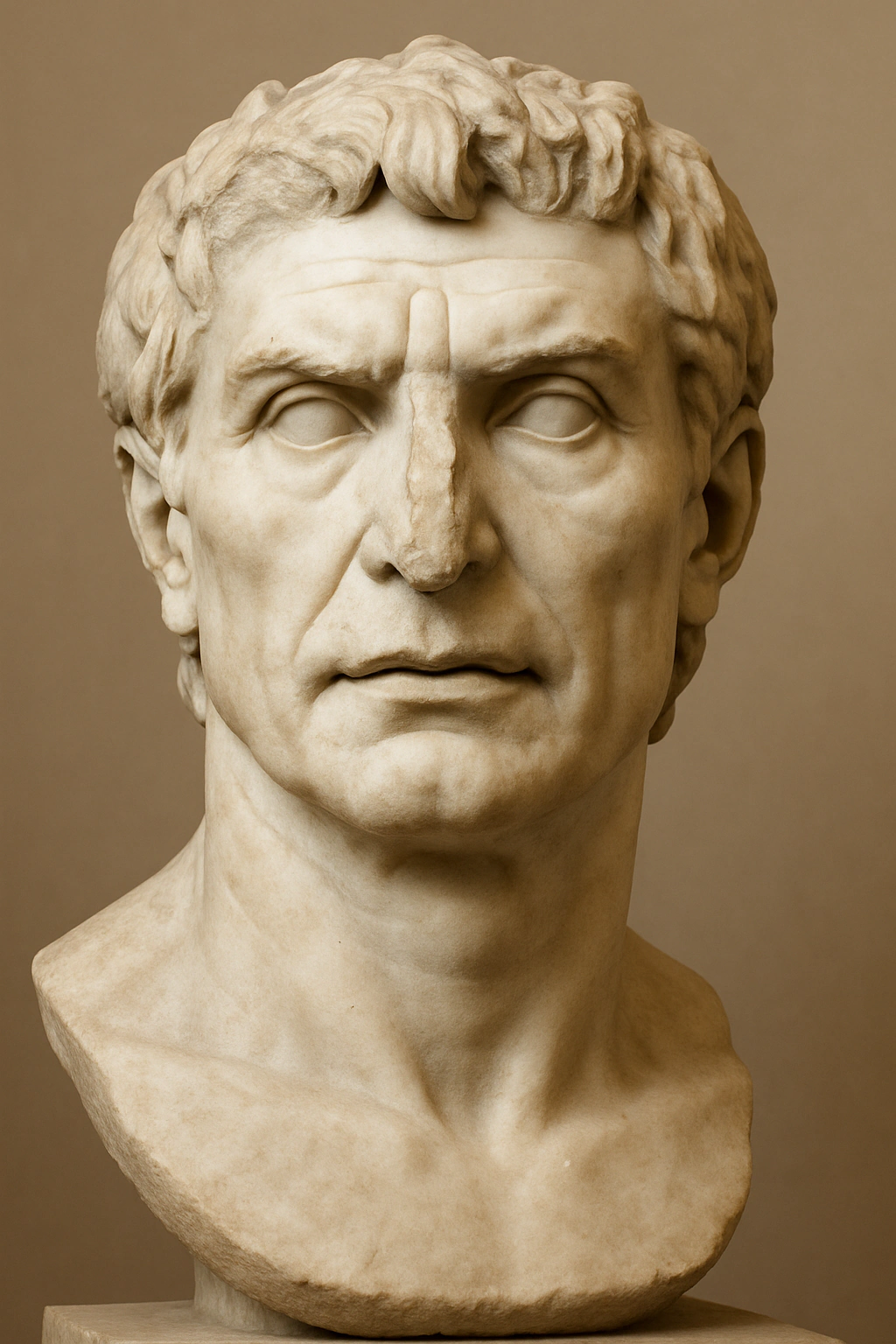
| 4 Quotes | |
| Born as | Marcus Porcius Cato Uticensis |
| Occup. | Politician |
| From | Rome |
| Born | 95 BC Rome |
| Died | 46 BC Utica |
| Cause | Suicide by sword |
| Cite | |
Citation Formats
APA Style (7th ed.)
Cato the younger biography, facts and quotes. (2026, February 11). FixQuotes. https://fixquotes.com/authors/cato-the-younger/
Chicago Style
"Cato the Younger biography, facts and quotes." FixQuotes. February 11, 2026. https://fixquotes.com/authors/cato-the-younger/.
MLA Style (9th ed.)
"Cato the Younger biography, facts and quotes." FixQuotes, 11 Feb. 2026, https://fixquotes.com/authors/cato-the-younger/. Accessed 4 Mar. 2026.
Early Life and Background
Marcus Porcius Cato, later called Cato Uticensis, was born around 95 BCE into the sternly traditional branch of the Porcii Catones, a plebeian family whose fame went back to Cato the Elder and his hard-edged Roman moralism. Orphaned young, he was raised in the household of his maternal uncle Marcus Livius Drusus, a tribune whose political murder in 91 BCE helped ignite the Social War. That early proximity to reform, violence, and constitutional rupture sharpened Cato's sense that Rome's republic survived only by discipline and law, not by charisma or force.Rome in Cato's youth was a city where veterans and creditors argued in the streets while generals bargained with armies. The dictatorship of Sulla (82-79 BCE) and the proscriptions set a brutal template for political victory, yet Cato absorbed the opposite lesson: that the republic must be defended without adopting the methods of its destroyers. His moral identity formed as a kind of internal fortress - a refusal to let expediency, fear, or factional loyalty dissolve personal duty.
Education and Formative Influences
Cato received the elite training of a Roman noble: rhetoric, law, and the habits of public speaking, but his deeper formation was philosophical. He embraced Stoicism - not as salon talk, but as a discipline of self-command - and was influenced by teachers in the Stoic tradition while moving in the circle of his half-brother and ally Quintus Servilius Caepio. He also served in the military, including duty in the East, and traveled widely enough to compare Rome's self-image with the realities of provincial power, returning more convinced that liberty depended on the internal virtue of its leaders.Career, Major Works, and Turning Points
Cato entered public life with a reputation for incorruptibility that made him both admired and feared: quaestor in 64 BCE, he pursued financial order and accountability; tribune of the plebs in 62, he fought populist tactics and the growing dominance of extraordinary commands; and as a senator he became the most unbending opponent of Caesar, Pompey, and Crassus when their informal alliance - the First Triumvirate - began to bend law around personal power. In 63 BCE, during the Catilinarian crisis, Cato argued for the execution of the conspirators, an episode that hardened his public image as the republic's conscience and as a man willing to sacrifice mercy to security. When civil war came in 49 BCE, he aligned with Pompey's camp less out of devotion than necessity, then after Pharsalus (48) continued resistance in Africa; following defeat at Thapsus (46), he chose suicide at Utica rather than accept clemency from Caesar, turning his death into a final political act.Philosophy, Style, and Themes
Cato's politics were an applied ethics: a conviction that the republic was not merely a set of offices but a moral ecology sustained by restraint, accountability, and the ability to refuse. His style in the Senate was blunt, legalistic, and relentless, often isolating him even among allies who preferred compromise. He could appear inflexible, yet his rigidity was a psychological strategy as much as a doctrine - a way to keep fear, ambition, and grief from dictating action in an age when the state rewarded those emotions. “An angry man opens his mouth and shuts his eyes”. The warning fits Cato's own self-surveillance: he distrusted the intoxication of anger because it made men govern by impulse, the very impulse that armed factions and toppled norms.His austerity also framed his views of wealth and public duty. “Even though work stops, expenses run on”. In Cato's world, the line reads as more than household advice - it is a civic diagnosis: empires accumulate obligations that do not pause for virtue, and leaders who treat the treasury as patronage invite a permanent fiscal crisis. Yet he sought no personal commemoration for such resistance, and his death completed the statement. “After I'm dead I'd rather have people ask why I have no monument than why I have one”. That preference reveals his inner aim: to make integrity itself the monument, and to deny posterity the easy comfort of a statue standing where courage should have been.
Legacy and Influence
Cato's defeat did not end his power over Roman imagination; it redirected it. To Caesar's supporters he became a tragic relic, but to republicans and later moralists he was the exemplar of principled opposition when institutions fail. Cicero praised him, Sallust measured him against Caesar as a countertype, and under the Empire Stoic-leaning senators and writers drew from his posture of inner freedom against arbitrary rule. In later centuries his "Utican" death became a touchstone for debates about liberty, conscience, and suicide, shaping political thought from Renaissance republicanism to Enlightenment drama, while his life remained a hard question Rome never fully answered: what is the cost of refusing to be bought, even when the world insists on purchase or surrender?Our collection contains 4 quotes written by Cato, under the main topics: Legacy & Remembrance - Quitting Job - Anger - Money.
Source / external links