
Chanakya Biography Quotes 36 Report mistakes
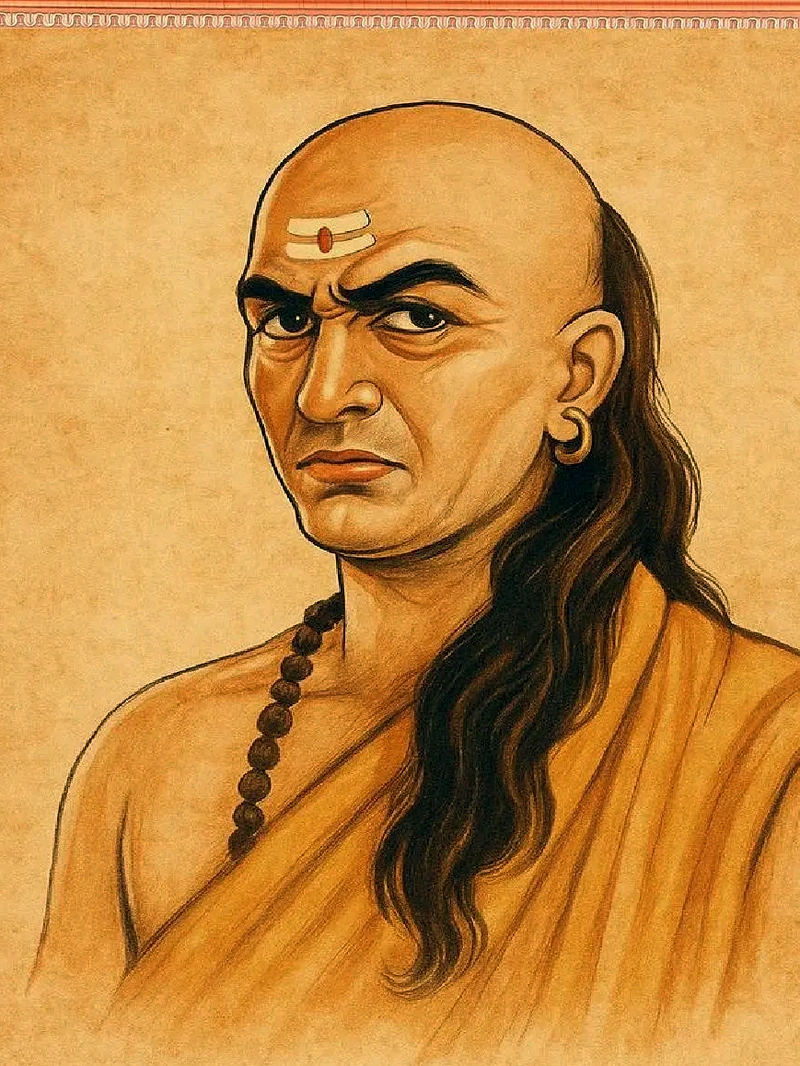
| 36 Quotes | |
| Known as | Kautilya |
| Occup. | Politician |
| From | India |
| Born | 350 BC |
| Died | 275 BC |
| Cite | |
Citation Formats
APA Style (7th ed.)
Chanakya biography, facts and quotes. (2026, February 11). FixQuotes. https://fixquotes.com/authors/chanakya/
Chicago Style
"Chanakya biography, facts and quotes." FixQuotes. February 11, 2026. https://fixquotes.com/authors/chanakya/.
MLA Style (9th ed.)
"Chanakya biography, facts and quotes." FixQuotes, 11 Feb. 2026, https://fixquotes.com/authors/chanakya/. Accessed 5 Mar. 2026.
Early Life and Background
Chanakya, also known as Kautilya and Vishnugupta, was born around 350 BCE in the intellectual corridor of northern India, in a world being reshaped by urbanization, long-distance trade, and fierce competition among the Mahajanapadas. His lifetime straddled the collapse of Nanda power in Magadha and the rise of the Mauryan Empire, when the Ganges plain was becoming the political center of the subcontinent and court intrigues could decide the fate of cities and dynasties.Later tradition casts him as a sharp-tongued Brahmin outsider whose social authority came from learning rather than lineage, and whose personal austerity disguised a talent for hard calculation. Whether every anecdote is literal or not, the portrait is consistent: he understood that empires are made not only by armies but by revenue systems, alliances, and information networks, and he cultivated a temperament that could endure humiliation, delay, and moral ambiguity in pursuit of statecraft.
Education and Formative Influences
Chanakya is closely associated with Takshashila (Taxila), the famed center of study in Gandhara, where students encountered Vedic learning alongside practical disciplines such as debate, administration, medicine, and the arts of war. In that setting, his formative influences likely included dharmashastra ideals of social order, the pragmatic needs of rulers, and the earlier tradition of counsel literature; he emerges as a thinker who could translate moral vocabulary into administrative technique, treating politics as a craft with rules, tools, and predictable consequences.Career, Major Works, and Turning Points
In the political turmoil of the late 4th century BCE, Chanakya became the strategist behind Chandragupta Maurya, helping to topple the Nanda dynasty and consolidate Magadha into a new imperial center at Pataliputra. The Greek incursion under Alexander and the subsequent power vacuum in the northwest formed the wider backdrop, and Mauryan expansion required not only conquest but integration - taxation, policing, roads, grain stores, and a watchful intelligence apparatus. Chanakya's enduring monument is the Arthashastra, a systematic manual of governance attributed to Kautilya: it ranges from ministerial selection and fiscal policy to espionage, diplomacy, and the management of crises, presenting rulership as an engineered system in which incentives and surveillance matter as much as virtue.Philosophy, Style, and Themes
Chanakya's inner life, as implied by the Arthashastra tradition and the sayings attached to his name, is defined by a solitude of responsibility and an almost clinical awareness of consequences. “A man is born alone and dies alone; and he experiences the good and bad consequences of his karma alone; and he goes alone to hell or the Supreme abode”. The line reads like a private ethic for a counselor who could not outsource guilt: it frames political action as personal burden, not merely public duty, and explains his preference for foresight, redundancy, and strict accountability in officials.His style is aphoristic, adversarial, and reality-tested - a voice that assumes deception is normal and that safety often depends on performance. “Even if a snake is not poisonous, it should pretend to be venomous”. This is not mere cynicism; it is a psychology of deterrence, the belief that credibility, reputation, and the management of fear can substitute for constant violence. Yet he also links power to disciplined effort rather than luck, insisting on endurance in long campaigns of reform and conquest: “Once you start a working on something, don't be afraid of failure and don't abandon it. People who work sincerely are the happiest”. Together these themes outline a statesman who prized persistence, controlled appearances, and the willingness to do unpleasant work in order to stabilize a realm.
Legacy and Influence
Chanakya became South Asia's archetype of the strategist-minister: the severe teacher, the maker of kings, the authorial mind behind an administrative state. The Arthashastra's mix of fiscal precision, intelligence tradecraft, and diplomatic theory - including the famous mandala logic of neighbors and rivals - continues to shape how Indian political thought is discussed, whether as a realist counterpoint to idealized dharma or as a manual for institutional resilience. Across centuries of retellings in Sanskrit literature, regional folklore, modern novels, and political commentary, his enduring influence lies in the same unsettling proposition he embodied: that moral intention is not enough, and that order is built by understanding incentives, fear, and human weakness as they actually are.Our collection contains 36 quotes written by Chanakya, under the main topics: Motivational - Wisdom - Truth - Friendship - Mortality.