
Charles Babbage Biography Quotes 30 Report mistakes
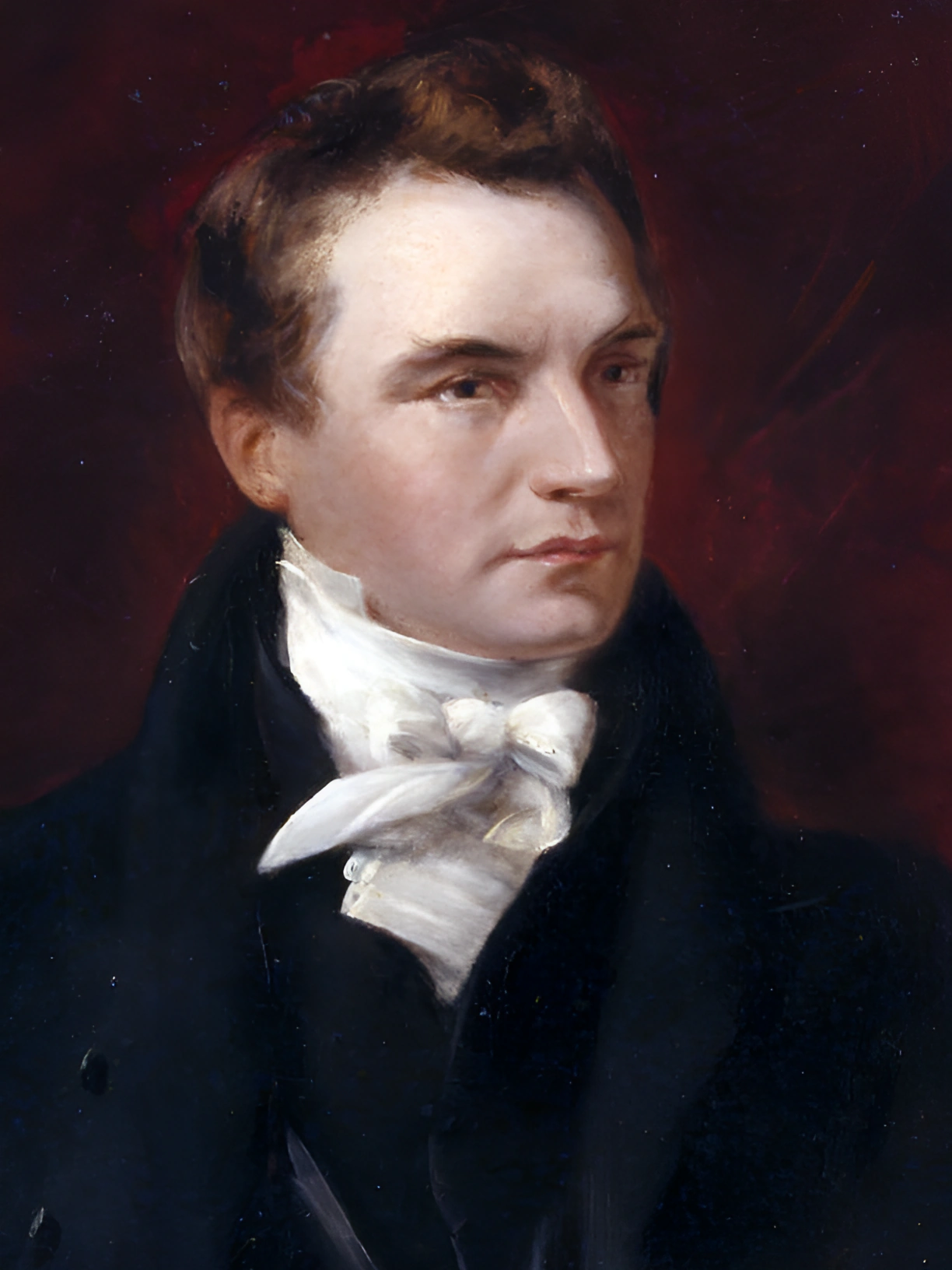
Attr: anonymous, Public domain
| 30 Quotes | |
| Occup. | Mathematician |
| From | England |
| Born | December 26, 1791 London, England |
| Died | October 18, 1871 Marylebone, London, England |
| Aged | 79 years |
| Cite | |
Citation Formats
APA Style (7th ed.)
Charles babbage biography, facts and quotes. (2026, February 11). FixQuotes. https://fixquotes.com/authors/charles-babbage/
Chicago Style
"Charles Babbage biography, facts and quotes." FixQuotes. February 11, 2026. https://fixquotes.com/authors/charles-babbage/.
MLA Style (9th ed.)
"Charles Babbage biography, facts and quotes." FixQuotes, 11 Feb. 2026, https://fixquotes.com/authors/charles-babbage/. Accessed 5 Mar. 2026.
Early Life and Background
Charles Babbage was born on 26 December 1791 in London, England, into a family enriched by banking and trade at the hinge of two worlds - Georgian commercial confidence and the accelerating machinery of the Industrial Revolution. His childhood was interrupted by bouts of illness, and the long convalescences that kept him away from ordinary schooling also cultivated a private intensity: hours with books, instruments, and the small, rule-bound pleasures of calculation. He grew up in a city where tables - of interest, navigation, taxes, and insurance - were becoming the hidden infrastructure of empire, and where errors in printed numbers could mean financial loss or maritime disaster.That early exposure to both wealth and its administrative fragility shaped him. Babbage developed a lifelong impatience with sloppiness, whether in arithmetic, institutions, or public policy. Even before he had a platform, he trained himself to look at society as a system of processes: who computed, who copied, who checked, where mistakes entered, and how labor might be reorganized. This temperament - principled, combative, and exacting - made him a natural critic of England's scientific complacency and a relentless advocate for tools that could discipline human fallibility.
Education and Formative Influences
After tutoring and schooling that reflected his family's means, Babbage entered Trinity College, Cambridge, then migrated to Peterhouse, taking his degree in 1814. At Cambridge he encountered a mathematics curriculum still tied to Newtonian notation and older habits, and he responded not by quiet mastery but by reform. With John Herschel and George Peacock he helped form the Analytical Society, championing continental analysis and the calculus notation of Leibniz, a campaign as much cultural as technical. The Society trained Babbage to think of mathematics as a living language with political consequences - what a nation teaches its students, what it values, and how quickly it can adapt.Career, Major Works, and Turning Points
Babbage's public career combined mathematics, invention, and institutional agitation. Elected a Fellow of the Royal Society (1816) and later Lucasian Professor of Mathematics at Cambridge (1828-1839), he achieved his most enduring identity through machines. Disturbed by errors in mathematical tables, he proposed the Difference Engine in the 1820s, securing government support but colliding with limits of precision engineering, management, and trust - and with the complicated partnership and eventual rupture with engineer Joseph Clement. Out of that frustration came a conceptual leap: the Analytical Engine (from 1837), a general-purpose mechanical computer with a "store" and "mill", conditional operation, and punched-card control influenced by the Jacquard loom. Though never completed, it drew Ada Lovelace into a collaboration that clarified its scope. In parallel he published on industrial organization and measurement, most famously On the Economy of Machinery and Manufactures (1832), and later wrote his pungent autobiography, Passages from the Life of a Philosopher (1864), preserving both his arguments and his grievances.Philosophy, Style, and Themes
Babbage's inner life reads as a continuous quarrel between ideal form and imperfect execution. He believed the universe of number could be made operational - that truth should not merely be contemplated but manufactured reliably. His acid humor reveals how personally he took error: “On two occasions I have been asked, 'Pray, Mr. Babbage, if you put into the machine wrong figures, will the right answers come out?' I am not able rightly to apprehend the kind of confusion of ideas that could provoke such a question”. The line is more than a joke; it exposes a psychology that demanded intellectual hygiene, and it hints at his deeper conviction that machines could not redeem careless thought - only enforce honest procedure.Yet he was no narrow mechanist. Babbage's imagination extended from computation to communication and labor itself, seeing technology as a moral economy of attention. “At each increase of knowledge, as well as on the contrivance of every new tool, human labour becomes abridged”. For him, abridgment was not laziness but liberation - the reallocation of scarce human time away from rote calculation and toward judgment, design, and discovery. His writing oscillates between visionary compression and bruised realism, as when he admits a kind of historical fatigue in pure theory: “In mathematics we have long since drawn the rein, and given over a hopeless race”. That melancholy edge helps explain his pivot toward engines, factories, and institutions - arenas where progress could be measured in output, error rates, and saved hours.
Legacy and Influence
Babbage died in London on 18 October 1871, leaving behind not a finished computer but a finished idea: that calculation is a mechanizable process, separable into storage, operations, and control. Later engineers and computer scientists recognized in his Analytical Engine the architecture of general computation, and museums and researchers have since vindicated his practicality by building working sections of his designs with period-appropriate methods. Beyond computing, his analysis of manufacturing anticipated modern operations research, and his insistence on precision made him a patron saint of the unglamorous disciplines - standards, verification, reproducibility - that allow science and industry to scale. His enduring influence lies in the conviction that intellect can be engineered, and that society advances when it treats error not as fate but as a design problem.Our collection contains 30 quotes written by Charles, under the main topics: Witty One-Liners - Wisdom - Freedom - Learning - Doctor.
Other people related to Charles: William Whewell (Philosopher), Howard Aiken (Scientist)
Charles Babbage Famous Works
- 1864 Passages from the Life of a Philosopher (Autobiography)
- 1837 The Ninth Bridgewater Treatise; A Fragment (Book)
- 1832 On the Economy of Machinery and Manufactures (Book)
- 1830 Reflections on the Decline of Science in England, and on Some of Its Causes (Essay)
Source / external links