
Charles Baudelaire Biography Quotes 75 Report mistakes
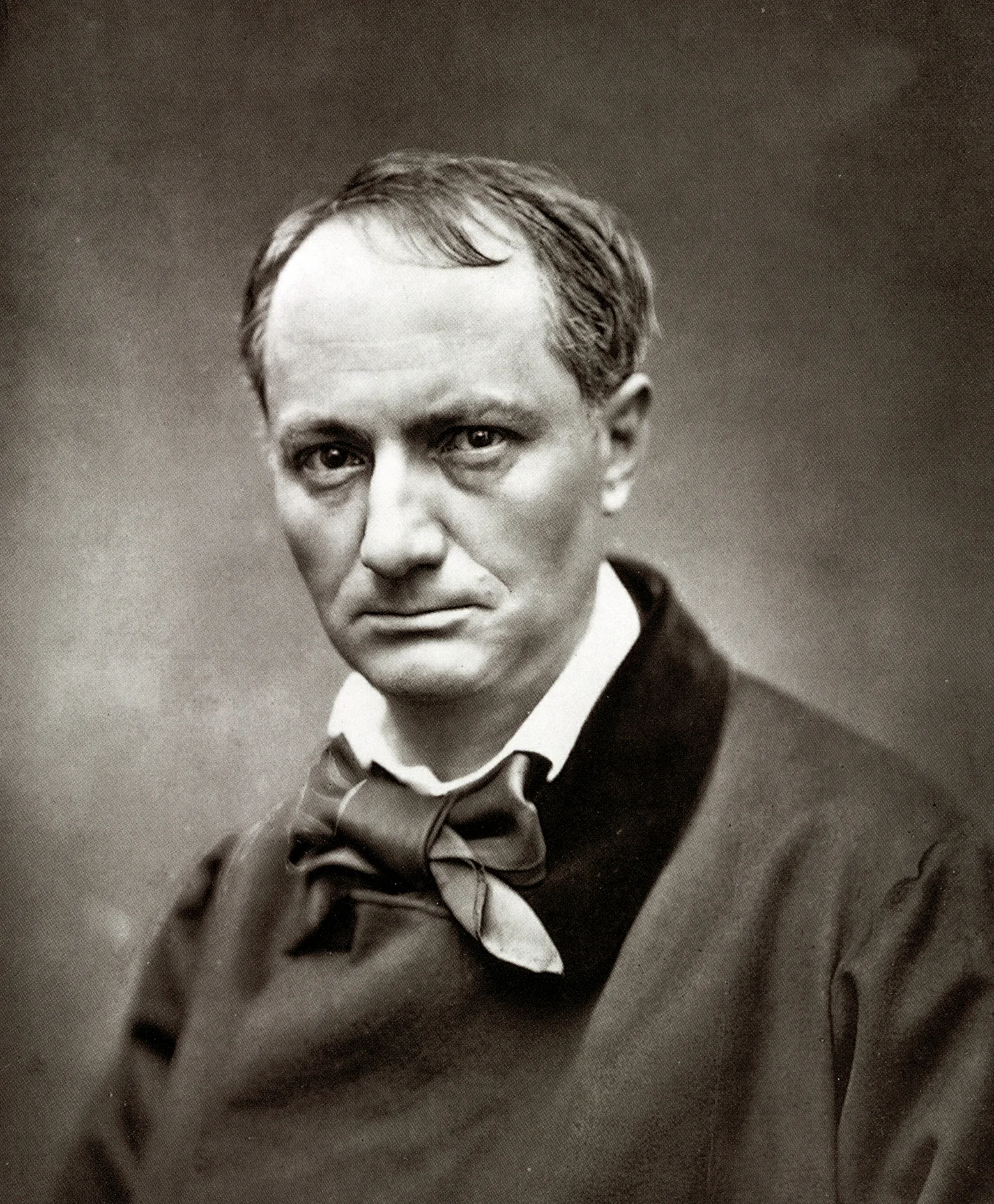
| 75 Quotes | |
| Occup. | Poet |
| From | France |
| Born | April 9, 1821 |
| Died | August 31, 1867 |
| Aged | 46 years |
| Cite | |
Citation Formats
APA Style (7th ed.)
Charles baudelaire biography, facts and quotes. (2026, February 2). FixQuotes. https://fixquotes.com/authors/charles-baudelaire/
Chicago Style
"Charles Baudelaire biography, facts and quotes." FixQuotes. February 2, 2026. https://fixquotes.com/authors/charles-baudelaire/.
MLA Style (9th ed.)
"Charles Baudelaire biography, facts and quotes." FixQuotes, 2 Feb. 2026, https://fixquotes.com/authors/charles-baudelaire/. Accessed 26 Mar. 2026.
Early Life and Background
Charles Pierre Baudelaire was born in Paris on 1821-04-09, into a household split by generations and temperaments. His father, Joseph-Francois Baudelaire, was an older former priest turned civil servant and amateur painter; his mother, Caroline Dufays, was young, cultured, and emotionally central to the boy who would later write to her with the urgency of a wounded lover. When his father died in 1827, the child experienced the first of many severings that would harden into a lifelong sensitivity to abandonment.In 1828 Caroline married Jacques Aupick, a disciplined army officer who rose to general and diplomat. The stepfather brought order, travel, and a clear expectation of bourgeois conformity; Baudelaire felt it as occupation. The family moved between postings, including Lyon, and the son learned early to read authority as a rival for his mother and as a pressure against his inward life. That domestic triangle - adoration, resentment, and dependence - became the private engine behind his later portraits of love as both refuge and trap.
Education and Formative Influences
He studied at the Lycee Louis-le-Grand in Paris, where his brilliance and insolence coexisted: classical training sharpened his rhetorical force, while repeated conflicts ended in expulsion. In 1841, alarmed by debts and bohemian company, his family put him on a voyage toward India; he turned back at Mauritius and Reunion, but the interrupted journey left him with a lasting repertoire of sea, heat, perfumes, and distance that would feed the exotic charge of his imagery. Back in Paris he embraced the Latin Quarter, art criticism, and a dandy identity - meticulous surface as psychic armor - while encountering Romanticism, the emerging realist city, and, crucially, Edgar Allan Poe, whose work he would later translate with missionary devotion.Career, Major Works, and Turning Points
A small inheritance in 1842 briefly financed his independence, then accelerated his spending; by 1844 his family obtained a legal guardianship over his estate, a humiliation that kept him in chronic financial siege. He debuted as a critic with the Salon of 1845 and Salon of 1846, announcing a new seriousness about contemporary painting and the moral stakes of sensation; he also wrote the political sketch "Le Salut public" around the 1848 upheavals, then withdrew from direct activism into the longer revolution of style. His masterpiece, Les Fleurs du mal, appeared in 1857 and was prosecuted for offenses against public morals; six poems were banned, and the verdict branded him as both scandal and symptom of a modern Paris anxious about sex, blasphemy, and the citys nocturnal underside. Later came Les Paradis artificiels (1860), a lucid, self-incriminating study of hashish and opium; the essays Le Peintre de la vie moderne (1863); and the posthumously gathered Petits poemes en prose (Le Spleen de Paris). Illness (likely syphilis), depression, and exhaustion converged with a disastrous 1864-1866 stay in Belgium; after a stroke in 1866 he was left aphasic, and he died in Paris on 1867-08-31.Philosophy, Style, and Themes
Baudelaires inner life is best read as a courtroom where the prosecutor and the defendant share the same voice. He distrusted easy virtue and treated moral effort as craftsmanship, a stance he formulated with chilling clarity: “Evil is committed without effort, naturally, fatally; goodness is always the product of some art”. That sentence is not a pose but a self-diagnosis - the poet as artisan of conscience, building formal beauty (rhyme, stanza, classical balance) to resist what he felt as an almost gravitational pull toward self-destruction. The recurring oscillation between "Spleen" and "Ideal" is therefore psychological as much as metaphysical: desire reaches for the absolute, then collapses into boredom, disgust, and rage at the ordinary.His modernity was not simply new subject matter but a new contract with time. In Le Peintre de la vie moderne he insisted that the present, with its fashion, crowds, shocks, and speed, is a legitimate site of the sublime: “Modernity is the transitory, the fugitive, the contingent, which make up one half of art, the other being the eternal and the immutable. This transitory fugitive element, which is constantly changing, must not be despised or neglected”. That doctrine underwrites his signatures: Paris as labyrinth, the flaneur as both observer and addict of surfaces, woman as idol and abyss, scent as memory, and music as a ladder beyond language. Even his longing for escape carries a metaphysical claim: “The insatiable thirst for everything which lies beyond, and which life reveals, is the most living proof of our immortality”. He wrote like someone who believed transcendence is real but intermittently accessible, and who therefore turned form into ritual - an attempt to summon the eternal inside the contingent.
Legacy and Influence
Baudelaire reorganized the possibilities of lyric poetry in the age of the metropolis. By fusing classical control with taboo subjects, he became a founding figure for Symbolism (Mallarme, Verlaine) and a decisive catalyst for Modernism; his prose poems anticipated cinematic montage and the fragmentary self of the twentieth century. His art criticism helped define the modern artist as interpreter of the present, while his translations made Poe a European force. The trial of 1857 fixed him as a martyr of expression, but the deeper legacy is methodological: a model of how to turn private torment, urban sensation, and moral ambivalence into exact, memorable form - beauty wrested from mud, and the sacred pursued through the streets.Our collection contains 75 quotes written by Charles, under the main topics: Witty One-Liners - Motivational - Ethics & Morality - Truth - Wisdom.
Other people related to Charles: Edouard Manet (Artist)
Charles Baudelaire Famous Works
- 1869 Le Spleen de Paris (Prose Collection)
- 1860 Les Paradis artificiels (Essay)
- 1857 Les Fleurs du mal (Poetry Collection)
Source / external links