
Charles Darwin Biography Quotes 30 Report mistakes
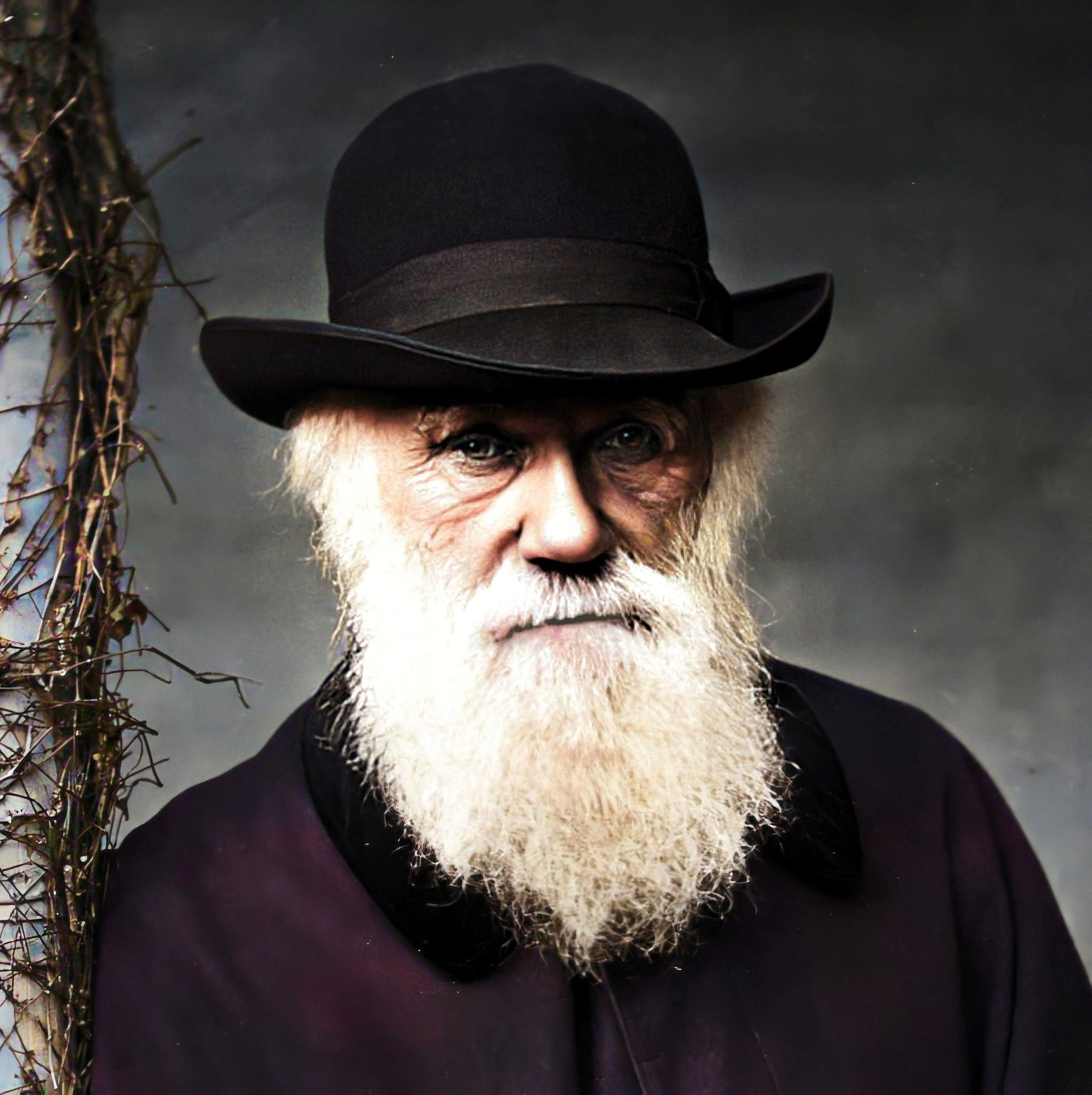
| 30 Quotes | |
| Born as | Charles Robert Darwin |
| Occup. | Scientist |
| From | England |
| Born | February 12, 1809 Shrewsbury, Shropshire, England |
| Died | April 19, 1882 Down, Kent, England |
| Aged | 73 years |
| Cite | |
Citation Formats
APA Style (7th ed.)
Charles darwin biography, facts and quotes. (2026, February 11). FixQuotes. https://fixquotes.com/authors/charles-darwin/
Chicago Style
"Charles Darwin biography, facts and quotes." FixQuotes. February 11, 2026. https://fixquotes.com/authors/charles-darwin/.
MLA Style (9th ed.)
"Charles Darwin biography, facts and quotes." FixQuotes, 11 Feb. 2026, https://fixquotes.com/authors/charles-darwin/. Accessed 5 Mar. 2026.
Early Life and Background
Charles Robert Darwin was born on 1809-02-12 in Shrewsbury, Shropshire, into an English family where money, medicine, and reformist politics set the household tone. His father, Robert Waring Darwin, was a prosperous physician; his mother, Susannah Wedgwood, came from the famed pottery dynasty. Susannah died in 1817, a loss that left Darwin to be raised largely by sisters and by a father whose authority he both feared and needed. The England of Darwin's youth was being refashioned by industrialization, evangelical revival, and a confident natural theology that read divine intention in every organism - assumptions Darwin would later test against the stubborn facts of nature.As a boy at Shrewsbury School under Samuel Butler, Darwin was an indifferent classicist but an avid collector: beetles, minerals, birds' eggs, anything that could be named, pinned, compared. He absorbed the era's gentlemanly science - field clubs, cabinets, specimen exchange - while learning early how social networks powered knowledge. The habits that later defined him were already present: patient observation, delight in small differences, and a preference for concrete evidence over rhetorical certainty.
Education and Formative Influences
In 1825 Darwin was sent to the University of Edinburgh to study medicine, but surgery without anesthesia and a distaste for the lecture room drove him away from the career his father wanted. He found his real education in the Plinian Society and along the Firth of Forth with the radical anatomist Robert Edmond Grant, who opened his eyes to marine invertebrates and to transmutationist speculation. Redirected to Christ's College, Cambridge (matriculated 1828), Darwin prepared for the clergy, yet he was formed more by science than sermons: John Stevens Henslow trained his eye and discipline; Adam Sedgwick taught him to read strata as history; and Alexander von Humboldt's travel writing offered a model of nature described with both precision and wonder. These influences converged just as empire, exploration, and museum science were creating a pipeline from distant field sites to metropolitan theory.Career, Major Works, and Turning Points
The turning point was the voyage of HMS Beagle (1831-1836) under Captain Robert FitzRoy, during which Darwin ranged from Brazil to Patagonia, the Andes, and the Galapagos, amassing specimens and questions rather than a finished theory. Lyell's uniformitarian geology taught him to think in deep time; the distribution of species, island variation, and fossils of giant extinct mammals pressed him toward common descent. Back in London he became a central node in scientific society, published Journal of Researches (1839), and married his cousin Emma Wedgwood (1839), whose devout conscience and steady intelligence became a private counterweight to his own doubt. Chronic illness and the demands of family life at Down House did not stop him: he spent two decades refining an argument that could survive hostile scrutiny, accelerated after Alfred Russel Wallace independently conceived natural selection in 1858. Darwin then published On the Origin of Species (1859), followed by works that extended and defended his framework - on orchids (1862), variation under domestication (1868), sexual selection and The Descent of Man (1871), expression of emotions (1872), and the slow labor of plant movement and earthworms - turning a country-house study into a generator of world-changing ideas.Philosophy, Style, and Themes
Darwin's mind worked by accumulation and self-correction: notebooks full of queries, letters probing opponents, experiments improvised with household objects, and a relentless habit of weighing objections against his own view. He distrusted grand metaphysical finales, preferring provisional conclusions anchored to mechanism. That restraint was not mere caution; it was a moral stance about inquiry in an age when many thinkers treated nature as a solved theological tableau. “The mystery of the beginning of all things is insoluble by us; and I for one must be content to remain an agnostic”. The line captures the psychological center of Darwin's adulthood - a man who could live with unanswered ultimates while pressing harder on questions that could be tested.His prose aimed to make a disturbing idea feel inevitable: modest in tone, thick with examples, and structured like a legal brief that anticipates cross-examination. The most radical claims appear as definitions of process rather than declarations of creed. “I have called this principle, by which each slight variation, if useful, is preserved, by the term of Natural Selection”. Natural selection, for Darwin, was not a slogan but a way to translate the chaos of life into intelligible history - without denying its cruelty. His private correspondence and later arguments show the emotional cost of that honesty: “I cannot persuade myself that a beneficent and omnipotent God would have designedly created parasitic wasps with the express intention of their feeding within the living bodies of Caterpillars”. The wasp and caterpillar became symbols of a world where suffering is not an exception but part of the system - a fact Darwin faced not with nihilism, but with a sober ethics of truth-telling.
Legacy and Influence
Darwin died on 1882-04-19 and was buried in Westminster Abbey, a sign that Victorian Britain could absorb even unsettling science into national honor. His legacy is double: a specific theory - evolution by natural selection - that remains foundational to biology, and a method of reasoning from variation, inheritance, ecology, and time that reshaped the life sciences, anthropology, psychology, and philosophy. Yet his influence also includes the controversies his work enabled: social and political misuses of evolutionary language, and enduring debates over human origins, morality, and meaning. Darwin's lasting power lies in the way he joined intellectual humility to explanatory ambition, turning natural history into an engine for modern thought.Our collection contains 30 quotes written by Charles, under the main topics: Witty One-Liners - Ethics & Morality - Truth - Justice - Friendship.
Other people related to Charles: Thomas Huxley (Scientist), John Lubbock (Statesman), Ivan Pavlov (Psychologist), Francis Darwin (Scientist), John Fiske (Philosopher), Frances Cornford (Poet), Ernst Mayr (Scientist), William Kirby (Scientist), Julia Margaret Cameron (Photographer), Ralph Vaughan Williams (Composer)
Charles Darwin Famous Works
- 1872 The Expression of the Emotions in Man and Animals (Book)
- 1871 The Descent of Man (Book)
- 1868 The Variation of Animals and Plants under Domestication (Book)
- 1859 On the Origin of Species (Book)
- 1839 The Voyage of the Beagle (Book)