
Charles de Montesquieu Biography Quotes 36 Report mistakes
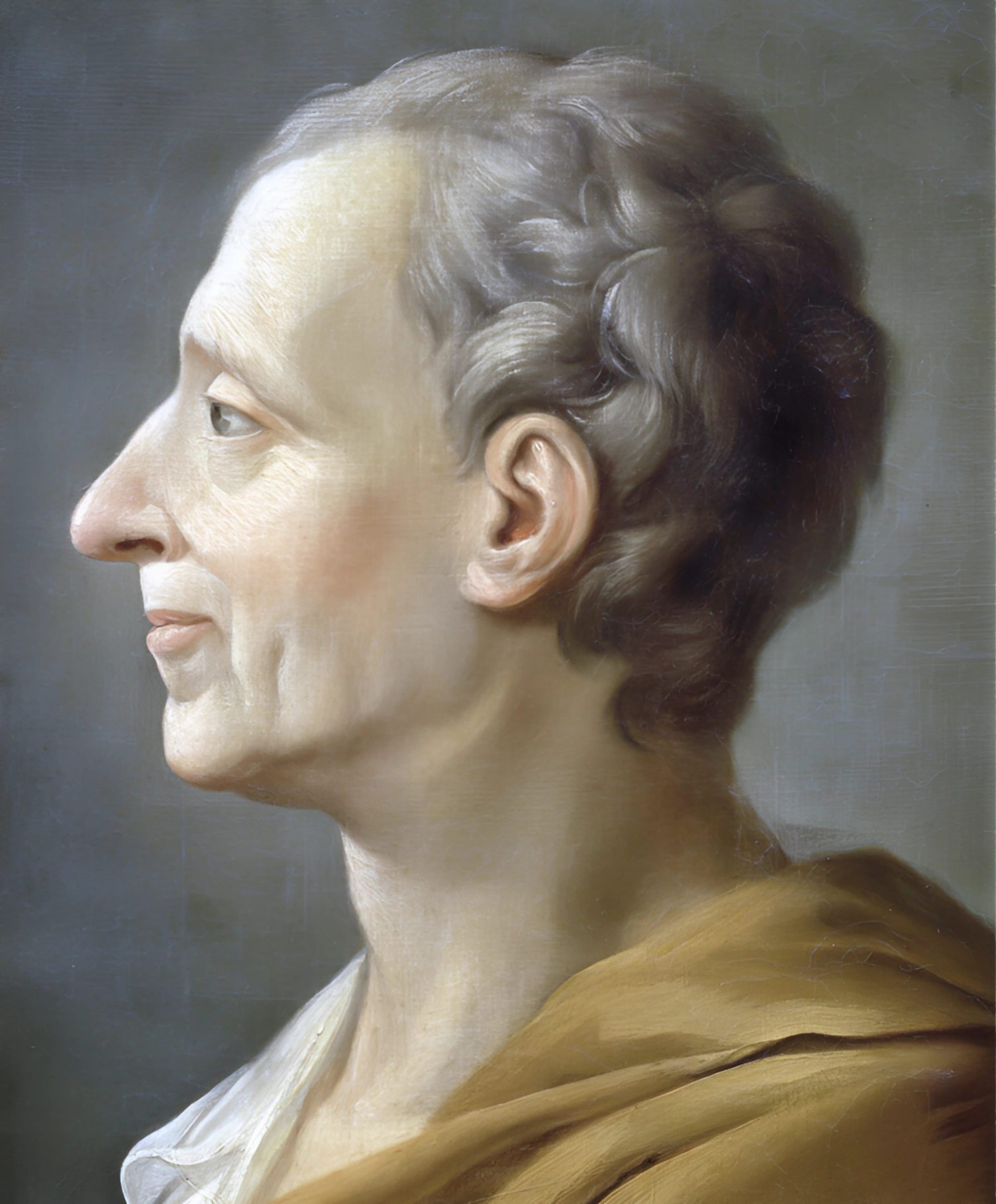
Attr: Maarten van Vliet
| 36 Quotes | |
| Born as | Charles-Louis de Secondat |
| Known as | Montesquieu |
| Occup. | Philosopher |
| From | France |
| Spouse | Jeanne de Lartigue (1715) |
| Born | January 18, 1689 La Brède, Bordeaux, France |
| Died | February 10, 1755 Paris, France |
| Cause | Fever |
| Aged | 66 years |
| Cite | |
Citation Formats
APA Style (7th ed.)
Charles de montesquieu biography, facts and quotes. (2026, February 11). FixQuotes. https://fixquotes.com/authors/charles-de-montesquieu/
Chicago Style
"Charles de Montesquieu biography, facts and quotes." FixQuotes. February 11, 2026. https://fixquotes.com/authors/charles-de-montesquieu/.
MLA Style (9th ed.)
"Charles de Montesquieu biography, facts and quotes." FixQuotes, 11 Feb. 2026, https://fixquotes.com/authors/charles-de-montesquieu/. Accessed 5 Mar. 2026.
Early Life and Background
Charles-Louis de Secondat, baron de La Brede et de Montesquieu, was born on 1689-01-18 at the family chateau of La Brede, near Bordeaux, in the Kingdom of France. He entered the world as Louis XIV's long reign hardened absolutism into habit: centralized administration, a domesticated nobility at Versailles, religious uniformity after the revocation of the Edict of Nantes, and wars that strained the provinces. In that setting, Montesquieu's later fascination with how climate, custom, law, and commerce shape political life began as a provincial awareness that Paris was not the whole of France.His mother died when he was young; he was raised within a landed, magistrate milieu that mixed seigneurial privilege with the practical business of courts and property. A family tradition of the robe nobility, not the sword, oriented him toward institutions and legal reasoning. When he inherited the barony of Montesquieu and, later, offices tied to the Parlement of Bordeaux, he would come to see power less as a single will than as a set of procedures - and to fear the ways procedures can disguise domination.
Education and Formative Influences
Montesquieu studied at the College of Juilly near Paris, an Oratorian school known for humane learning, then trained in law, returning to Bordeaux to practice and to enter its intellectual circles. Classical history and moral philosophy formed his mental furniture; Roman constitutional change, English politics, and the comparative study of religions became lasting reference points. The early eighteenth century also gave him the stimulus of the scientific temper and the Republic of Letters: a conviction that social life could be analyzed with the same disciplined curiosity used to study nature.Career, Major Works, and Turning Points
In 1716 he inherited from an uncle the office of president a mortier in the Parlement of Bordeaux, a senior judicial post that brought daily contact with statutes, precedent, and the lived friction between royal policy and local society. His first major success, the satirical epistolary novel Persian Letters (1721), used fictional foreign observers to expose the vanity of Paris, the violence hidden in domestic and imperial arrangements, and the fragility of authority when it relies on mere display. Elected to the Academie francaise (1728), he traveled widely in Europe from 1728 to 1731, spending significant time in England and observing parliamentary practice, party conflict, and civic liberties. He then withdrew to La Brede to write: Considerations on the Causes of the Greatness of the Romans and Their Decline (1734) and, after years of drafting, The Spirit of the Laws (1748), the ambitious comparative treatise that made his name across Europe and drew ecclesiastical scrutiny.Philosophy, Style, and Themes
Montesquieu's defining move was to treat laws as social facts: expressions of a society's history, economy, religion, mores, and even geography, rather than mere commands from a sovereign. His mature style favors the balancing clause and the clinical example - a magistrate's prose trained to see how an admirable principle becomes dangerous when unbounded. Liberty, for him, was not license but security in a system where power is checked by power: “Liberty is the right to do what the law permits”. That formulation reveals a psychological preference for durable arrangements over heroic leaders - a temperament shaped by courtroom experience, wary of the intoxicating certainty of absolute claims.He also understood how institutions outlive intentions and discipline the people who occupy them, a theme that runs from his Roman history to his constitutional analysis: “In the infancy of societies, the chiefs of state shape its institutions; later the institutions shape the chiefs of state”. The aphorism exposes a mind preoccupied with unintended consequences and the slow coercion of routine. His suspicion of sanctified power extended to religious and legal authority when they claim moral immunity; he could write, with mordant provocation, “No kingdom has shed more blood than the kingdom of Christ”. Even when exaggerated, the sentence illuminates his fear that the most destructive force is not naked brutality but violence wrapped in righteousness, the kind that makes persecution feel like duty.
Legacy and Influence
Montesquieu died in Paris on 1755-02-10, but The Spirit of the Laws became one of the Enlightenment's central tools for thinking about constitutional design, religious toleration, and the sociology of law. His articulation of separated powers and balanced government traveled into eighteenth-century reform debates and powerfully shaped later constitutional framers, especially in the Anglophone world, even as readers simplified his nuanced account of England and his comparative method. Modern political science, legal realism, and comparative constitutionalism continue to draw on his core insight that liberty is an institutional achievement - fragile, engineered, and perpetually threatened when any single authority claims the right to be judge, legislator, and executor at once.Our collection contains 36 quotes written by Charles, under the main topics: Witty One-Liners - Ethics & Morality - Wisdom - Justice - Leadership.
Other people related to Charles: James Madison (President), Madame de Stael (Writer)
Frequently Asked Questions
- Where was Baron de Montesquieu born: He was born in La Brède, France.
- Montesquieu impact: His theories on government structure shaped the development of modern democracies.
- What did Baron de Montesquieu do: He was a philosopher and writer known for his works on political theory, including 'The Spirit of the Laws.'
- Montesquieu beliefs in government: He advocated for a balanced government where powers are divided among different branches.
- Baron de Montesquieu contributions to democracy: His ideas on the separation of powers influenced modern democratic systems, particularly the U.S. Constitution.
- Where did Baron de Montesquieu live: He lived in France, particularly in Bordeaux and Paris.
- Baron de Montesquieu beliefs: He believed in the separation of powers within government to prevent tyranny and promote liberty.
- How old was Charles de Montesquieu? He became 66 years old
Charles de Montesquieu Famous Works
- 1748 The Spirit of the Laws (Treatise)
- 1734 Considerations on the Causes of the Greatness of the Romans and their Decline (Historical Analysis)
- 1721 The Persian Letters (Novel)
Source / external links