
Charles Dickens Biography Quotes 59 Report mistakes
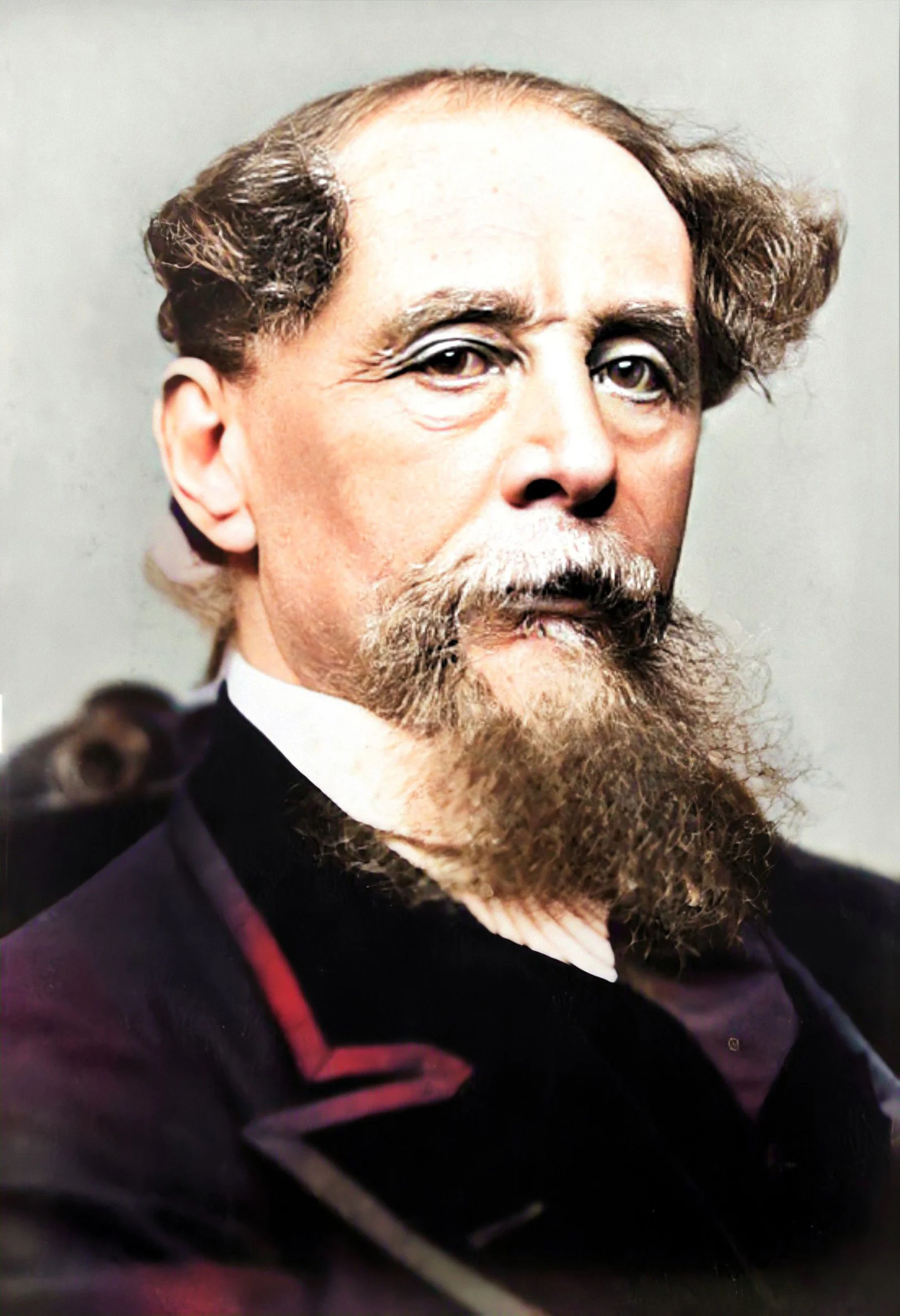
| 59 Quotes | |
| Born as | Charles John Huffam Dickens |
| Occup. | Novelist |
| From | England |
| Born | February 7, 1812 Landport, Portsmouth, England |
| Died | June 9, 1870 Gad's Hill Place, Higham, Kent, England |
| Cause | Stroke |
| Aged | 58 years |
| Cite | |
Citation Formats
APA Style (7th ed.)
Charles dickens biography, facts and quotes. (2026, February 1). FixQuotes. https://fixquotes.com/authors/charles-dickens/
Chicago Style
"Charles Dickens biography, facts and quotes." FixQuotes. February 1, 2026. https://fixquotes.com/authors/charles-dickens/.
MLA Style (9th ed.)
"Charles Dickens biography, facts and quotes." FixQuotes, 1 Feb. 2026, https://fixquotes.com/authors/charles-dickens/. Accessed 6 Mar. 2026.
Early Life and Background
Charles John Huffam Dickens was born on 1812-02-07 in Portsmouth, England, into the anxious respectability of a lower-middle-class naval-pay-clerk household. His father, John Dickens, was charming, improvident, and chronically in debt; his mother, Elizabeth Barrow, could be tender yet practical in ways that later stung. When the family drifted through Chatham and then London, Dickens absorbed the sights and sounds of streets, docks, and theaters, learning early how public life could be both spectacle and trap.The defining wound arrived in 1824 when John Dickens was imprisoned for debt in the Marshalsea. At twelve, Dickens was sent to work at Warren's Blacking Warehouse by the Thames, pasting labels in a grime-stained routine while lodging away from his family. The humiliation was private, searing, and long concealed, but it seeded his lifelong obsession with institutions that grind the young and poor. Even after a brief return to schooling, the memory remained: poverty was not only material deprivation but a social sentence, and the child who survives it never fully stops watching.
Education and Formative Influences
Dickens had intermittent formal schooling, but he educated himself with ferocious appetite, devouring novels and periodicals, studying the stage, and mastering the cadence of public speech. In his late teens he trained as a shorthand reporter and entered journalism, first as a parliamentary reporter and then as a sketch writer; the work taught him speed, ear, and accuracy under pressure, while the city taught him character. London became his laboratory: courts, prisons, slums, and drawing rooms supplied a moral geography that he would later redraw as fiction.Career, Major Works, and Turning Points
Dickens burst into print with "Sketches by Boz" (1836) and the serial phenomenon "The Pickwick Papers" (1836-1837), then rapidly deepened his art with "Oliver Twist" (1837-1839), "Nicholas Nickleby" (1838-1839), and the American travelogue "American Notes" (1842) followed by the satirical "Martin Chuzzlewit" (1843-1844). The 1840s and 1850s produced his great social and psychological novels: "Dombey and Son" (1846-1848), "David Copperfield" (1849-1850), "Bleak House" (1852-1853), "Hard Times" (1854), and "Little Dorrit" (1855-1857), alongside the cultural ritual of "A Christmas Carol" (1843). A key turning point was his break from purely comic abundance toward systems and inward damage: chancery delays, factory discipline, debtors' prisons, and the corrosions of secrecy. Another was personal: by the late 1850s his marriage to Catherine Hogarth collapsed amid his attachment to Ellen Ternan, a rupture that sharpened his themes of performance and divided selves. In his final decade he edited and wrote for "Household Words" and "All the Year Round", performed exhausting public readings, published "Great Expectations" (1860-1861), and began "The Mystery of Edwin Drood" (1870), left unfinished when he died on 1870-06-09 at Gad's Hill Place in Kent.Philosophy, Style, and Themes
Dickens wrote like a man trying to outpace oblivion: serial cliffhangers, teeming casts, and scenes that swing from farce to terror in a paragraph. His realism is not photographic but theatrical and auditory, built from idiolects, gestures, and the pressure of crowds. Yet beneath the bravura is a moral psychology shaped by childhood exposure to shame. He distrusted abstractions when they excused cruelty, and he distrusted bureaucracies that hid responsibility behind procedure. The opening paradox of "A Tale of Two Cities" - “It was the best of times, it was the worst of times”. - is less a flourish than a diagnosis of modernity as simultaneity: progress and squalor, philanthropy and predation, all in the same street.His inner life turns repeatedly on the making of character as an ethical craft and a social fate. The line “We forge the chains we wear in life”. captures his belief that vice is rarely a lightning strike; it is habit, rationalization, and comfort becoming iron. Against that determinism he set a counter-faith in practical mercy, expressed without sentimentality: “No one is useless in this world who lightens the burden of it to anyone else”. This is Dickens at his most personal: the boy who felt discarded built an art in which attention becomes rescue, and in which love is proven not by purity but by action amid ugliness. His recurring targets - predatory schools, hollow respectability, hypocritical religion, and the legal and financial machines that monetize delay - are ultimately assaults on systems that teach people to stop seeing one another.
Legacy and Influence
Dickens became the defining novelist of Victorian England and one of the central architects of the modern social novel, shaping how readers imagine London, poverty, childhood, and the moral stakes of everyday life. His characters entered the language, his plots set expectations for serialization and popular narrative, and his fusion of comedy with indignation influenced writers from Thomas Hardy to George Orwell and beyond. Through countless adaptations and the annual revival of "A Christmas Carol", he remains both a national myth and a live ethical presence: a storyteller who insisted that institutions are made by people, and can be remade when people decide to notice the suffering in front of them.Our collection contains 59 quotes written by Charles, under the main topics: Witty One-Liners - Motivational - Ethics & Morality - Wisdom - Puns & Wordplay.
Other people related to Charles: H. C. Andersen (Writer), Wilkie Collins (Novelist), Trevor Nunn (Director), Rich Little (Comedian), Patrick Stewart (Actor), Jane Smiley (Writer), Hans Christian Anderson (Author), Dinah Maria Mulock (Novelist), Douglas Jerrold (Playwright), Frederick Marryat (Novelist)
Frequently Asked Questions
- When was Charles Dickens born: He was born on February 7, 1812.
- Charles Dickens achievements: Dickens was one of the greatest novelists of the Victorian era, known for his rich characters and criticism of social injustices.
- What was Charles Dickens famous for: He was famous for his novels, which vividly depicted the social and economic conditions of Victorian England.
- Charles Dickens family: He was married to Catherine Hogarth and had ten children. His father was John Dickens and his mother was Elizabeth Dickens.
- How did Charles Dickens die: Charles Dickens died of a stroke on June 9, 1870.
- Charles Dickens famous works: Some of his famous works include 'A Tale of Two Cities', 'Great Expectations', 'Oliver Twist', and 'David Copperfield'.
- How old was Charles Dickens? He became 58 years old
Charles Dickens Famous Works
- 1861 Great Expectations (Novel)
- 1859 A Tale of Two Cities (Novel)
- 1850 David Copperfield (Novel)
- 1843 A Christmas Carol (Novella)
- 1838 Oliver Twist (Novel)