
Charles Eastman Biography Quotes 26 Report mistakes
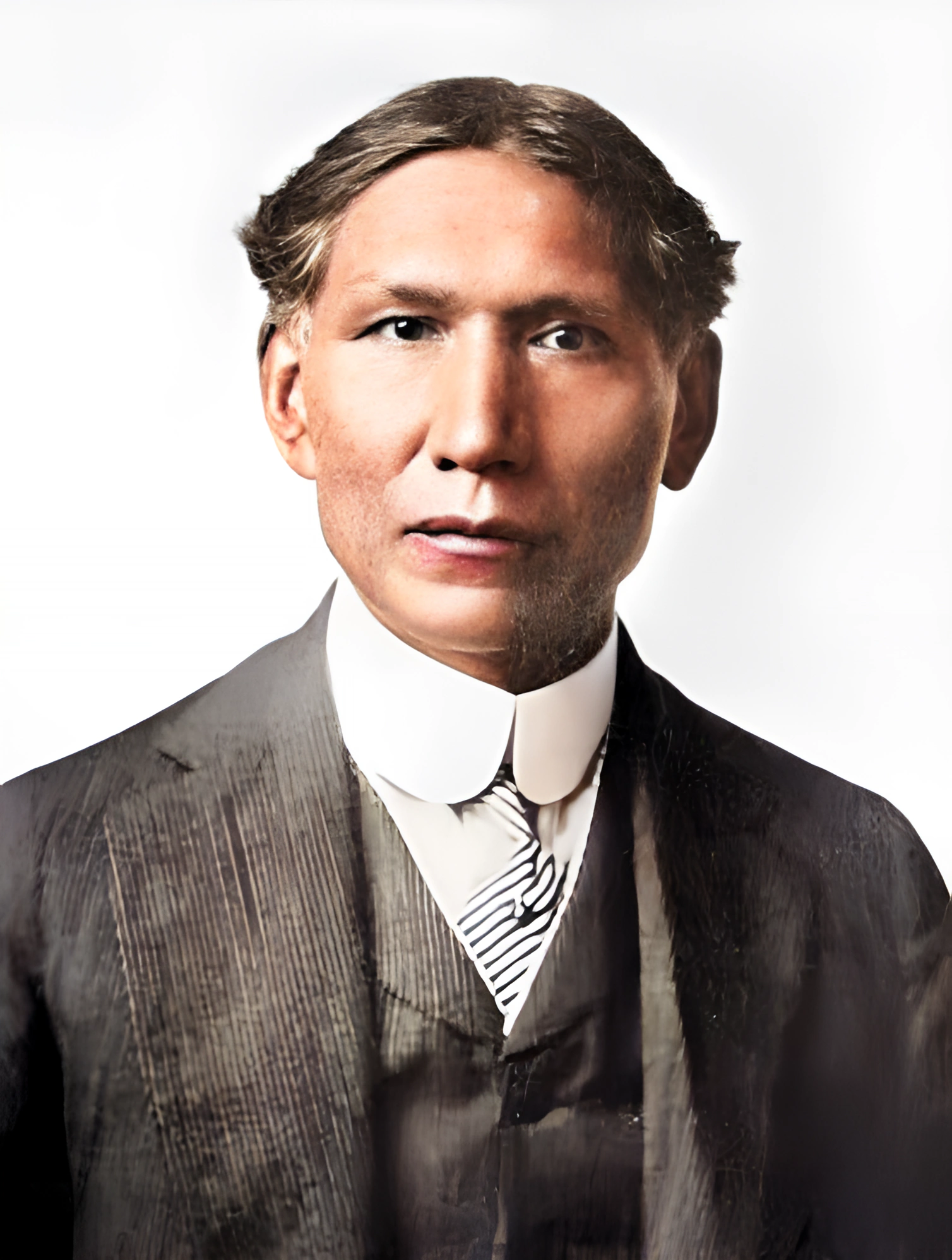
| 26 Quotes | |
| Born as | Charles Alexander Eastman |
| Known as | Ohiyesa |
| Occup. | Author |
| From | Sioux |
| Born | February 19, 1858 Near Redwood Falls, Minnesota |
| Died | January 8, 1939 Detroit, Michigan |
| Cause | Heart disease |
| Aged | 80 years |
| Cite | |
Citation Formats
APA Style (7th ed.)
Charles eastman biography, facts and quotes. (2026, February 11). FixQuotes. https://fixquotes.com/authors/charles-eastman/
Chicago Style
"Charles Eastman biography, facts and quotes." FixQuotes. February 11, 2026. https://fixquotes.com/authors/charles-eastman/.
MLA Style (9th ed.)
"Charles Eastman biography, facts and quotes." FixQuotes, 11 Feb. 2026, https://fixquotes.com/authors/charles-eastman/. Accessed 26 Mar. 2026.
Early Life and Background
Charles Alexander Eastman was born Hakadah (often rendered Ohiyesa) on February 19, 1858, among the Santee Dakota (Sioux), in the upheaval years that preceded the U.S.-Dakota War of 1862 and the punitive removals that followed. His earliest world was one of kinship, hunting, and story, shaped by a people adapting under pressure from settlers, soldiers, and federal policy. The violence and dislocation of the 1860s did not arrive as an abstraction in his life; they framed childhood memory and the long argument he would later make in print about what was lost - and what endured - in Dakota moral life.After 1862, Eastman grew up amid the widening gulf between reservation confinement and older Dakota freedoms. He believed his mother had died, and his father, Many Lightnings, was absent for years, swept into the conflict and its aftermath. The child was raised by relatives and elders who trained him in what he later described as a disciplined, communal ethic: self-control, generosity, and courage without boasting. When his father reappeared, having converted to Christianity, the reunion set Eastman on a path that would require him to translate between two worlds without ever fully belonging to either.
Education and Formative Influences
Eastman was drawn into missionary and school networks that aimed to refashion Native youth, yet he also used them as ladders into the professions. He attended Santee Normal Training School in Nebraska, then Beloit College, and later Dartmouth College, where he completed his undergraduate degree in 1887. He earned an M.D. from Boston University School of Medicine in 1890, a rare credential for an American Indian in that era. Throughout these years, he absorbed Protestant moral language, the prestige of scientific medicine, and the late-19th-century American faith in "civilization" - while privately measuring those claims against Dakota standards of character learned in childhood.Career, Major Works, and Turning Points
In 1890 Eastman became a government physician at Pine Ridge, South Dakota, arriving at the epicenter of the Ghost Dance crisis and tending the wounded after the massacre at Wounded Knee. The experience hardened his skepticism about federal benevolence and fixed a lifelong question: how to speak truthfully about conquest without surrendering to despair. He married Elaine Goodale, a writer and reformer, in 1891; their partnership amplified his public voice but also exposed him to the scrutiny and paternalism of eastern reform circles. Eastman worked as a reservation doctor and later as an activist and lecturer, serving for a time with the YMCA in Indian work and joining the founding circle of the Society of American Indians (1911), which sought citizenship rights and self-determination within a hostile political climate. His major books - "Indian Boyhood" (1902), "Red Hunters and the Animal People" (1904), "Old Indian Days" (1907), "The Soul of the Indian" (1911), "The Indian Today" (1915), and "From the Deep Woods to Civilization" (1916) - blended memoir, ethnography, and moral critique, written for a mainstream audience that often demanded uplift more than honesty.Philosophy, Style, and Themes
Eastman wrote in lucid, restrained prose that carried the cadence of oral narrative into print while meeting the expectations of genteel American letters. His recurring strategy was comparison: he placed Dakota social order beside the modern nation-state, Dakota spirituality beside church organization, Dakota child-rearing beside industrial schooling. The stakes were psychological as much as political. Eastman had lived the promises of assimilation - degrees, professional status, eastern platforms - and yet he had also witnessed its costs at Pine Ridge and elsewhere, where policy spoke of progress while bodies and communities bore the damage. That tension shaped a voice that could praise individual virtue and still indict systems, often by letting contradictions speak for themselves.His deepest themes cluster around moral authority: where it comes from, who is trusted to wield it, and how a people preserves dignity under domination. He insisted that Dakota life was neither chaotic nor primitive, but ordered by family responsibility and inward discipline: “The family was not only the social unit, but also the unit of government”. He also challenged Christian America with a clinical eye for hypocrisy learned in the very institutions that trained him, observing, “More than this, even in those white men who professed religion we found much inconsistency of conduct. They spoke much of spiritual things, while seeking only the material”. Even his account of belief resists caricature, emphasizing personal conscience over hierarchy: “The American Indian was an individualist in religion as in war. He had neither a national army nor an organized church”. These claims were not nostalgia; they were Eastman's attempt to protect an inner standard, a way to judge both worlds without letting either define him completely.
Legacy and Influence
Eastman died on January 8, 1939, after years marked by professional strain, separation from Elaine, and the long fatigue of being cast as interpreter, exemplar, and witness. His enduring influence lies in how he made Native intellectual life legible to broad audiences while refusing to reduce it to folklore: he offered an ethical portrait of Dakota society, a sober record of federal violence at its sharpest moment, and an early model of Native autobiography as critique. Later generations of Native writers and historians have debated his accommodation to reform rhetoric, yet his books remain foundational texts for understanding the collision of Dakota and American modernity from the inside - the story of a physician-author who tried to heal bodies, translate cultures, and keep faith with a moral inheritance under relentless pressure.Our collection contains 26 quotes written by Charles, under the main topics: Friendship - Nature - Parenting - Reason & Logic - Honesty & Integrity.
Charles Eastman Famous Works
- 1918 Indian Heroes and Great Chieftains (Book)
- 1916 From the Deep Woods to Civilization (Book)
- 1915 Indian Child Life (Book)
- 1914 Indian Scout Talks (Book)
- 1911 The Soul of the Indian (Book)
- 1909 Wigwam Evenings: Sioux Folk Tales Retold (Book)
- 1907 Old Indian Days (Book)
- 1904 Red Hunters and the Animal People (Book)
- 1902 Indian Boyhood (Book)
Source / external links