
Charles Evers Biography Quotes 34 Report mistakes
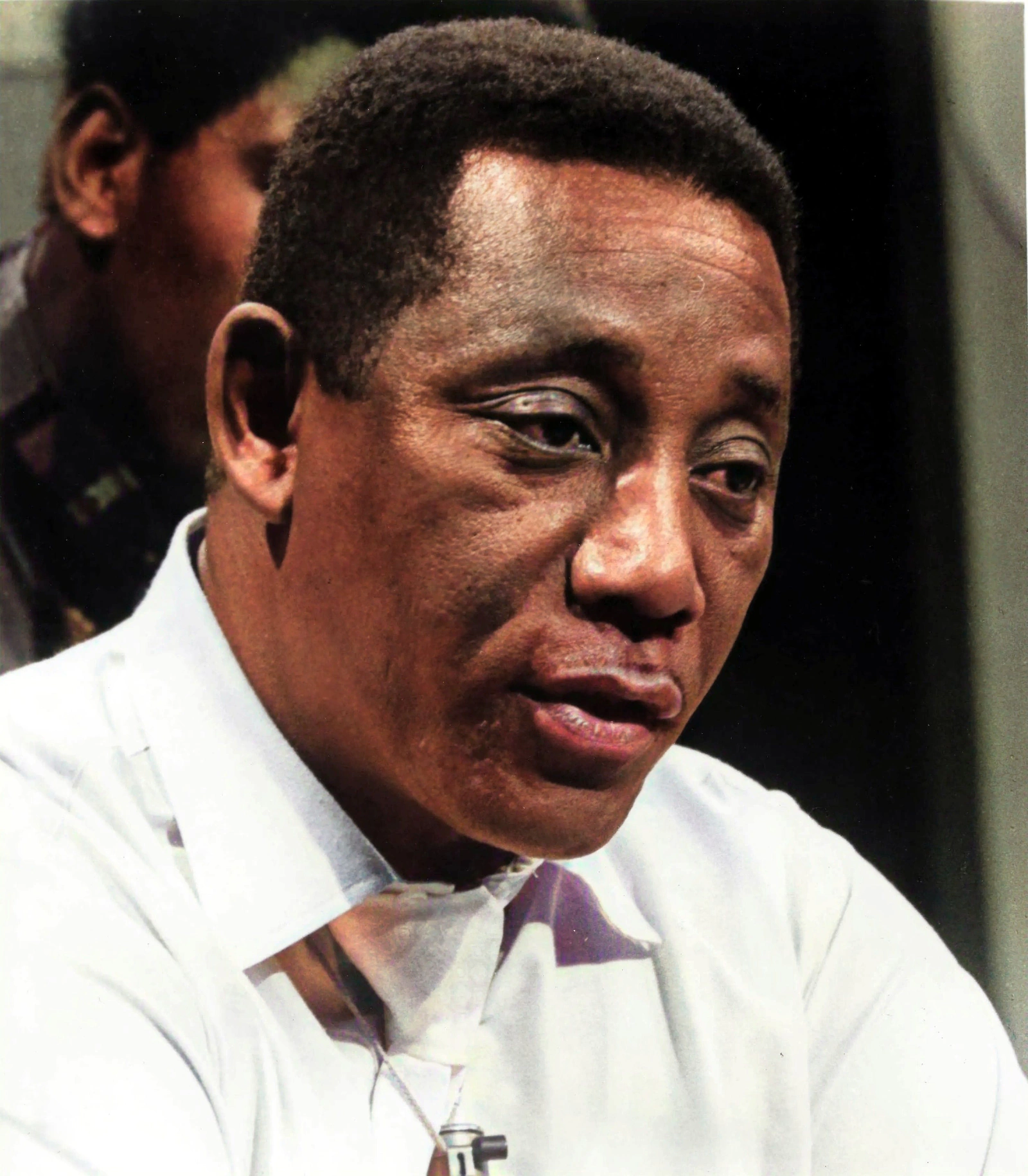
| 34 Quotes | |
| Born as | James Charles Evers |
| Occup. | Activist |
| From | USA |
| Spouses | Christine Evers Nannie L. Magee |
| Born | September 11, 1922 Decatur, Mississippi, U.S. |
| Died | July 22, 2020 Brandon, Mississippi, U.S. |
| Aged | 97 years |
| Cite | |
Citation Formats
APA Style (7th ed.)
Charles evers biography, facts and quotes. (2026, March 8). FixQuotes. https://fixquotes.com/authors/charles-evers/
Chicago Style
"Charles Evers biography, facts and quotes." FixQuotes. March 8, 2026. https://fixquotes.com/authors/charles-evers/.
MLA Style (9th ed.)
"Charles Evers biography, facts and quotes." FixQuotes, 8 Mar. 2026, https://fixquotes.com/authors/charles-evers/. Accessed 26 Mar. 2026.
Early Life and Background
Charles Evers was born James Charles Evers on September 11, 1922, in Decatur, Mississippi, in Newton County, the eldest surviving son in a farming family shaped by the hard arithmetic of Jim Crow. He grew up in a world where race determined danger, wages, schooling, and even posture. His parents, James and Jesse Evers, stressed discipline, self-respect, and survival; the household also produced Medgar Evers, whose later martyrdom would define both brothers' public lives. Charles's early years were marked by the routines of rural labor and the daily humiliations that Black Mississippians learned to read as warnings. Segregation was not abstract policy but a total social order, enforced by custom, police power, and the ever-present possibility of white violence.
That setting helped produce Evers's signature blend of militancy, pragmatism, and showmanship. Unlike activists formed primarily in colleges or churches, he came out of work, hustling, military service, and the need to make quick judgments in dangerous places. He served in the U.S. Army during World War II and later lived in Chicago and Philadelphia before returning South, experiences that widened his sense of possibility while confirming how deeply the Mississippi caste system deformed public life. By the time the modern civil rights struggle intensified, Evers had the instincts of an organizer who knew fear intimately but refused to romanticize it.
Education and Formative Influences
Evers's formal education was limited by the inequalities of segregated Mississippi, but his real schooling came through mobility, commerce, and confrontation. He worked a range of jobs, learned how institutions actually functioned, and developed the transactional intelligence that later made him effective in voter registration drives, boycotts, and local negotiations. He was influenced by the Black southern tradition of self-help as much as by protest politics, and by his brother Medgar's disciplined NAACP work as much as by the raw impatience of ordinary people tired of waiting. The murder of Medgar Evers in Jackson on June 12, 1963, was the central emotional and political turning point of his life. Charles stepped into the breach not as a replica of Medgar but as a different kind of leader - more improvisational, more openly combative, and more willing to use publicity, economic leverage, and electoral politics together.
Career, Major Works, and Turning Points
After Medgar's assassination, Charles Evers became the NAACP's first field director in Mississippi, a role of extraordinary danger in the blood-soaked middle years of the freedom movement. He helped organize voter registration, support local chapters, and sustain morale after bombings, beatings, and murders had made activism a near-military undertaking. He was present in the era of Freedom Summer, the Mississippi Freedom Democratic Party challenge, and the long push to turn federal law into local change. In 1969 he won election as mayor of Fayette, Mississippi, becoming one of the first Black mayors of a racially mixed southern town since Reconstruction, and served multiple terms. That office mattered symbolically, but it also reflected his practical genius: he understood that seizing a courthouse or city hall could alter daily life more than rhetoric alone. He later ran for governor and for the U.S. Senate, remained a force in Mississippi politics for decades, and published an autobiography, Have No Fear, whose title doubled as creed and political theater.
Philosophy, Style, and Themes
Evers's worldview fused civil rights insurgency with a hard, often conservative language of individual agency. He distrusted dependency, whether imposed by segregation or softened by government paternalism, and he often framed freedom in muscular, personal terms rather than as a purely legal abstraction. “The main thing I believe in is freedom”. That sentence captures both his breadth and his contradictions: freedom meant voting rights and desegregation, but also local control, self-defense, business ownership, and the refusal to let any party claim permanent loyalty from Black voters. His political independence was not polish; it was identity. “I'm a Republican, by the way”. Coming from a man forged in the Black freedom struggle, the line was deliberately provocative, but it also revealed his contempt for ideological obedience and his instinct to force audiences to confront complexity.
Psychologically, Evers projected bravado because fear was the daily tax of his generation. He made a public style out of defiance, but that style was rooted in grief, especially the knowledge that his brother had been murdered for insisting on citizenship. “I'd rather be dead and in heaven than afraid to do what I think is right”. That was not mere flourish; it was the moral logic of someone who had seen caution fail to protect the innocent. His speech could be sharp, theatrical, and politically inconvenient, yet beneath it ran a consistent theme: dignity required risk. He was less interested in purity than in power, less in applause than in movement, and his language carried the cadence of a man who believed history changed when ordinary people stopped asking permission.
Legacy and Influence
Charles Evers died on July 22, 2020, at age ninety-seven, having outlived most of the central figures of Mississippi's civil rights revolution and become one of its last living bridges to the era of terror and transformation. His legacy is inseparable from Medgar's, yet distinctly his own: he translated mourning into local power, helped normalize Black elected leadership in the Deep South, and embodied a strain of Black political thought that refused easy categorization. He could frustrate allies, confound journalists, and cross partisan lines without apology, but that unpredictability was part of his historical importance. Evers showed that the movement was never ideologically uniform; it contained churchmen, litigators, national strategists, and also men like him - earthy, combative, entrepreneurial, and intensely local. In Mississippi, where white supremacy had long seemed immovable, he helped make Black citizenship visible not only in marches and funerals but in ballots, budgets, and municipal authority.
Our collection contains 34 quotes written by Charles, under the main topics: Ethics & Morality - Justice - Freedom - Honesty & Integrity - Work Ethic.
Source / external links