
Charles F. Kettering Biography Quotes 32 Report mistakes
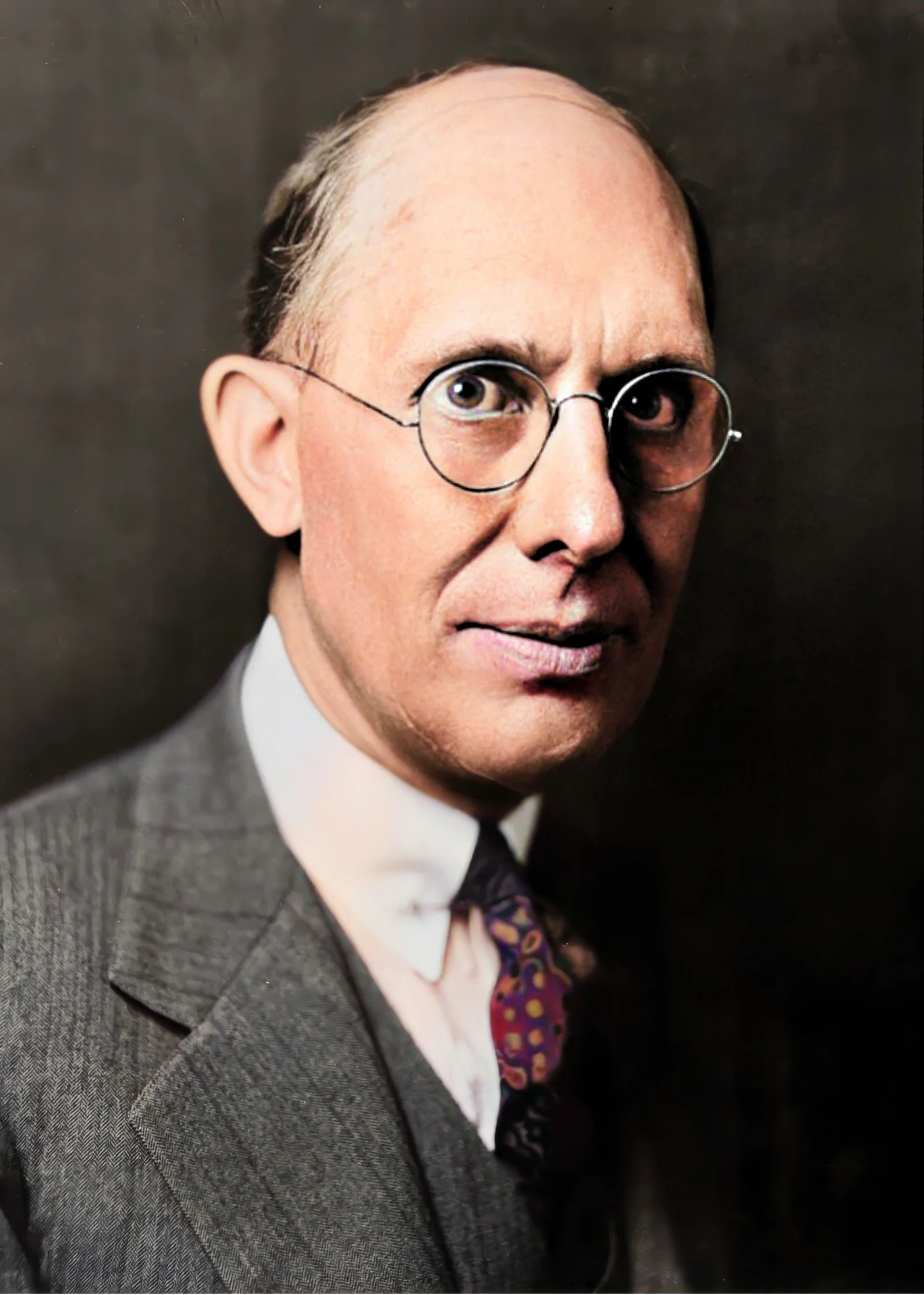
| 32 Quotes | |
| Born as | Charles Franklin Kettering |
| Occup. | Inventor |
| From | USA |
| Born | August 29, 1876 Loudonville, Ohio |
| Died | November 25, 1958 Dayton, Ohio |
| Aged | 82 years |
| Cite | |
Citation Formats
APA Style (7th ed.)
Charles f. kettering biography, facts and quotes. (2026, February 1). FixQuotes. https://fixquotes.com/authors/charles-f-kettering/
Chicago Style
"Charles F. Kettering biography, facts and quotes." FixQuotes. February 1, 2026. https://fixquotes.com/authors/charles-f-kettering/.
MLA Style (9th ed.)
"Charles F. Kettering biography, facts and quotes." FixQuotes, 1 Feb. 2026, https://fixquotes.com/authors/charles-f-kettering/. Accessed 24 Mar. 2026.
Early Life and Background
Charles Franklin Kettering was born on August 29, 1876, in Loudonville, Ohio, a small Midwestern town shaped by farms, rail lines, and the practical optimism of the late 19th century. He grew up in a large family where thrift was necessity and tinkering was a form of literacy. The United States he entered was electrifying itself - literally - and the distance between a lantern-lit workshop and a modern laboratory was shrinking fast. That atmosphere rewarded minds that could turn curiosity into devices and devices into industries.Kettering's early life mixed ambition with interruption. He worked as a schoolteacher and as a telephone lineman, absorbing how power, signal, and machinery behaved in the real world, not just in books. Eye trouble repeatedly forced him to pause and regroup, a constraint that sharpened his habit of building systems that were robust, simple, and serviceable. Even before fame, he was a man who treated obstacles as raw material, and who was drawn to problems that others found too messy for polite engineering.
Education and Formative Influences
He entered Ohio State University to study electrical engineering, leaving and returning as his health and finances allowed, then graduating in 1904. The era's defining belief - that scientific method could be made industrial - took hold of him there, as did the culture of the machine shop and the laboratory bench. In 1904 he went to National Cash Register in Dayton, where Frederick J. Patterson was building a proto-modern R and D environment; Kettering learned to run experiments under deadline, to collaborate with machinists and draftsmen, and to measure success by what worked on a factory floor, not what impressed a lecture hall.Career, Major Works, and Turning Points
Kettering's first great turning point came in 1909 when he and Edward A. Deeds formed the Dayton Engineering Laboratories Company (Delco). Their most consequential product, the electric self-starter, replaced hand-cranking - an injury-prone ritual - and debuted on the 1912 Cadillac, making cars safer and expanding who could drive them. Delco's rise carried him into General Motors, where he led research and innovation at scale, helping define the 20th-century corporate laboratory. His work ranged from ignition systems and electrical accessories to higher-compression engines and the drive to eliminate "engine knock", a challenge that culminated in the adoption of tetraethyl lead gasoline in the 1920s - a technical triumph later shadowed by profound public-health consequences. He also guided GM efforts in diesel development, refrigeration (including automotive air conditioning), and wartime research; in 1945 he helped found the Sloan-Kettering Institute for Cancer Research, reflecting an expanding view of what industrial problem-solving could serve.Philosophy, Style, and Themes
Kettering's inner life reads as a blend of engineer and gambler: methodical about testing, but emotionally committed to forward motion. He distrusted ceremonial consensus and preferred small groups that could build, break, and rebuild quickly, which fit a personality impatient with delay and oddly energized by difficulty. “A problem well stated is a problem half-solved”. For him, naming the problem with precision was not academic - it was a way to convert anxiety into a work plan, and to keep teams from hiding behind vague goals or fashionable jargon.His style was pragmatic imagination: picture a workable future, then prototype your way toward it. Failure, in his worldview, was not a verdict but a vector. “One fails forward toward success”. That attitude powered Delco's iterative culture and later GM Research, where he pressed for experiments that produced data, not just confidence. Yet his optimism was coupled to a stern expectation of comprehension over mere information, a distinction he believed separated genuine invention from clever talk: “Knowing is not understanding. There is a great difference between knowing and understanding: you can know a lot about something and not really understand it”. The line exposes his psychology - a man wary of superficial mastery, demanding that ideas survive contact with materials, heat, vibration, cost, and human use.
Legacy and Influence
Kettering died on November 25, 1958, in the United States he had helped mechanize and electrify. His legacy is dual: he made the automobile more usable and more democratic through the self-starter and a cascade of electrical and fuel innovations, and he helped institutionalize the corporate research lab as a driver of American industry. At the same time, the leaded-gasoline chapter stands as a caution about how problem-solving can outrun ethical foresight. Through the Sloan-Kettering Institute and the philanthropic uses of industrial wealth, he also helped link invention to long-horizon human health. Enduring influence, in his case, is not only the devices that changed daily life, but a durable model of innovation - aggressive definition of problems, relentless experimentation, and the belief that engineering is, ultimately, a way of thinking about the future.Our collection contains 32 quotes written by Charles, under the main topics: Witty One-Liners - Motivational - Wisdom - Never Give Up - Music.
Other people related to Charles: John Henry Patterson (Businessman)
Frequently Asked Questions
- When was charles f kettering born: August 29, 1876
- What is Charles Kettering famous for: Inventing the electric self-starter; GM research leader; co-founder of Delco
- Charles Kettering family tree: Parents: Jacob H. Kettering & Martha (Hunter); wife: Olive Williams; son: Eugene W. Kettering; grandson: Charles F. Kettering II
- How did Charles Kettering die: Natural causes at age 82
- Charles Kettering inventions: Electric self-starter; ignition systems; leaded gasoline (Ethyl); Freon; Duco lacquer; diesel engine improvements
- Charles F Kettering II: His grandson and namesake; a philanthropist tied to Kettering family foundations
- How old was Charles F. Kettering? He became 82 years old
Source / external links