
Charles Fourier Biography Quotes 1 Report mistakes
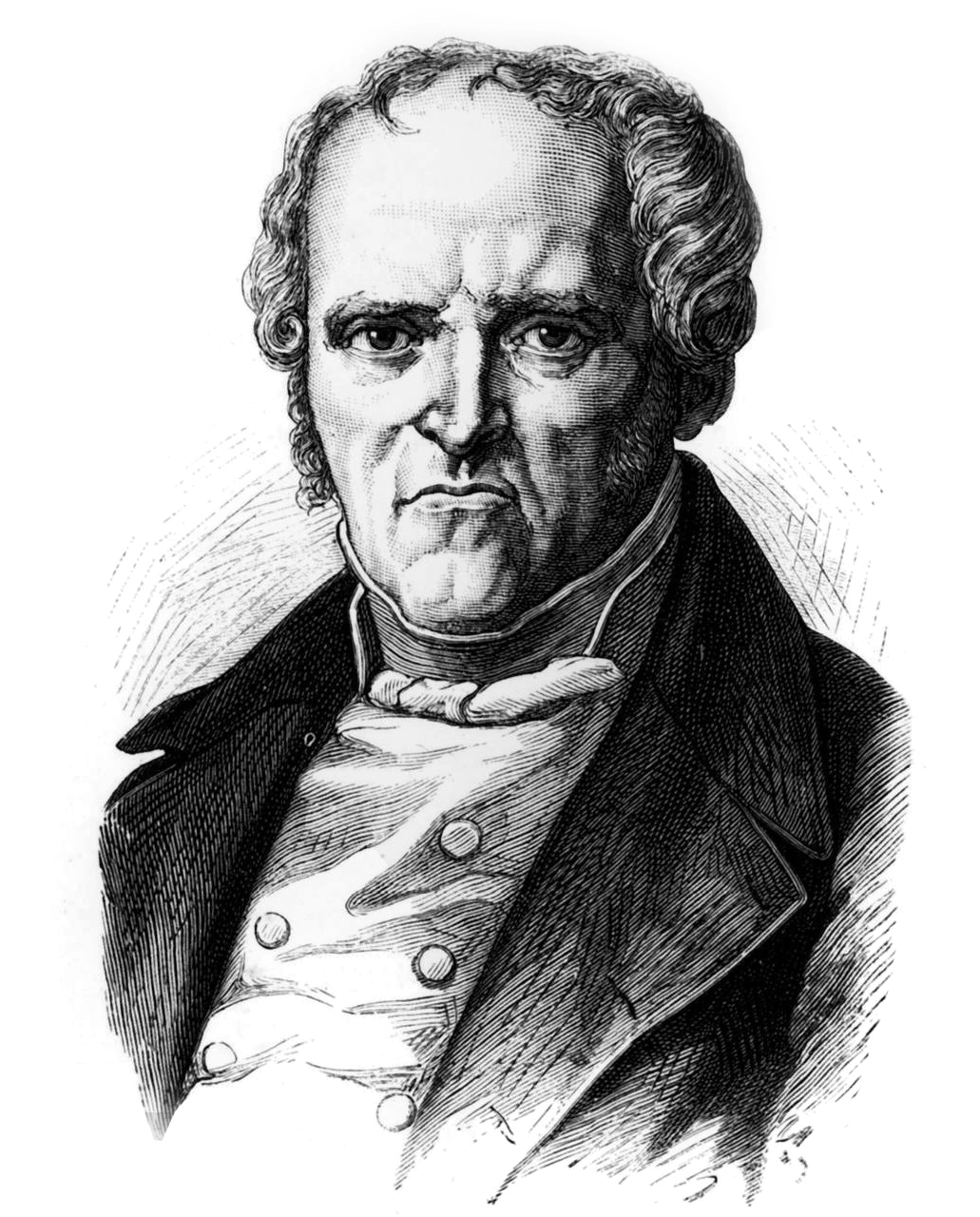
| 1 Quotes | |
| Born as | François Marie Charles Fourier |
| Occup. | Philosopher |
| From | France |
| Born | April 7, 1772 Besançon, Doubs, France |
| Died | October 10, 1837 Paris, France |
| Aged | 65 years |
| Cite | |
Citation Formats
APA Style (7th ed.)
Charles fourier biography, facts and quotes. (2026, February 11). FixQuotes. https://fixquotes.com/authors/charles-fourier/
Chicago Style
"Charles Fourier biography, facts and quotes." FixQuotes. February 11, 2026. https://fixquotes.com/authors/charles-fourier/.
MLA Style (9th ed.)
"Charles Fourier biography, facts and quotes." FixQuotes, 11 Feb. 2026, https://fixquotes.com/authors/charles-fourier/. Accessed 4 Mar. 2026.
Early Life and Background
Francois Marie Charles Fourier was born on 1772-04-07 in Besancon, in the Franche-Comte, a provincial city newly folded into the French crown within living memory. His father, a cloth merchant, represented the commercial respectability Fourier would later indict as "civilization" - a society ruled by money, duplicity, and competitive anxiety. Early bereavement and the discipline of shopkeeping left him with a lasting sense that daily economic life trained people to counterfeit feeling and to treat one another as instruments.Fourier came of age as the old regime cracked. The French Revolution, beginning when he was seventeen, did not feel to him like liberation so much as the public eruption of passions mismanaged. He watched the rhetoric of virtue slide into terror, then into the hard pragmatism of war and speculation. That sequence helped fix a central tension of his inner life: he mistrusted both traditional authority and revolutionary improvisation, yet he refused resignation, convinced that the same passions that destroy societies could be harnessed to build humane ones.
Education and Formative Influences
Fourier had no grand academic training; he was largely self-taught, formed by the library of a merchant household, the bookkeeping desk, and the road. Apprenticed in commerce and employed as a traveling clerk and salesman, he learned the geography of prices, shortages, and fraud across French cities, and later experienced military conscription during the Revolutionary wars. This practical education sharpened his observational method: instead of starting from abstract rights or constitutions, he began from appetites, work rhythms, courtship, boredom, and the hidden humiliations of earning a living.Career, Major Works, and Turning Points
After years in commerce in Lyon and elsewhere, Fourier began writing his social system in isolation, convinced he had discovered the laws of "passional attraction" as surely as Newton had laws of motion. His breakthrough book, Theorie des quatre mouvements et des destinees generales (1808), laid out a cosmological and social vision in which harmony arises when human drives are arranged rather than repressed; it also introduced his famous critique of "civilization" and his proposal for cooperative communities. He elaborated the design in Traite de l'association domestique-agricole (1822) and in Le Nouveau Monde industriel et societaire (1829), describing the phalanstere - a planned communal "phalanx" blending agriculture and industry, organized to make labor varied, sociable, and even pleasurable. Fourier never saw a full phalanx built in his lifetime; he spent crucial years seeking patrons, publishing at his own expense, and gathering a small circle of disciples, dying in Paris on 1837-10-10 with his blueprint intact but largely untested.Philosophy, Style, and Themes
Fourier was a philosopher of desire with the temperament of an auditor: he cataloged impulses, classified characters, and treated society as an arrangement problem rather than a morality tale. Where many Enlightenment thinkers preached self-command, he took passions as primary data and accused existing institutions of manufacturing hypocrisy. His scheme sought to convert competition into emulation, solitary drudgery into rotating tasks, and the family-as-economic-unit into a freer web of affinities. He also pursued a radical revaluation of pleasure - culinary, erotic, and aesthetic - arguing that repression breeds perversion and cruelty, while orchestrated freedom produces solidarity.His sharpest psychological insight was that the measure of a society lies in how it treats those whose lives are most constrained. “The extension of women's rights is the basic principle of all social progress”. This was not an ornamental slogan in his system; it was a diagnostic. Fourier read the subordination of women as the clearest sign that "civilization" had made power synonymous with property and had turned love into a transaction. His utopia is therefore less a fantasy of uniform virtue than a wager that dignity, sexual equality, and economic security can be designed together - that institutions can be built to stop training people to lie about what they want.
Legacy and Influence
Fourier's immediate legacy traveled through his followers - especially Victor Considerant - and through attempted communities in France and the United States, including experiments inspired by phalansterian planning. Though many collapsed under financing, leadership conflicts, and the difficulties of scaling ideal cooperation, Fourier's influence endured as a permanent critique of industrial capitalism's moral psychology: the boredom, the commodification of intimacy, the waste of human variety. Marx and Engels placed him among the major "utopian socialists", and later feminists and communal theorists drew on his insistence that private life, sexuality, and labor organization are inseparable political questions. In modern debates about cooperative enterprise, gender equality, and the right to a life not organized around drudgery, Fourier remains a stubborn presence - a thinker who refused to treat misery as human nature and instead treated it as a solvable design flaw.Our collection contains 1 quotes written by Charles, under the main topics: Equality.
Charles Fourier Famous Works
- 1829 Le Nouveau Monde industriel et sociétaire (Book)
- 1822 Traité de l'association domestique-agricole (Book)
- 1808 Théorie des quatre mouvements et des destinées générales (Book)
Source / external links