
Charles II Biography Quotes 3 Report mistakes
| 3 Quotes | |
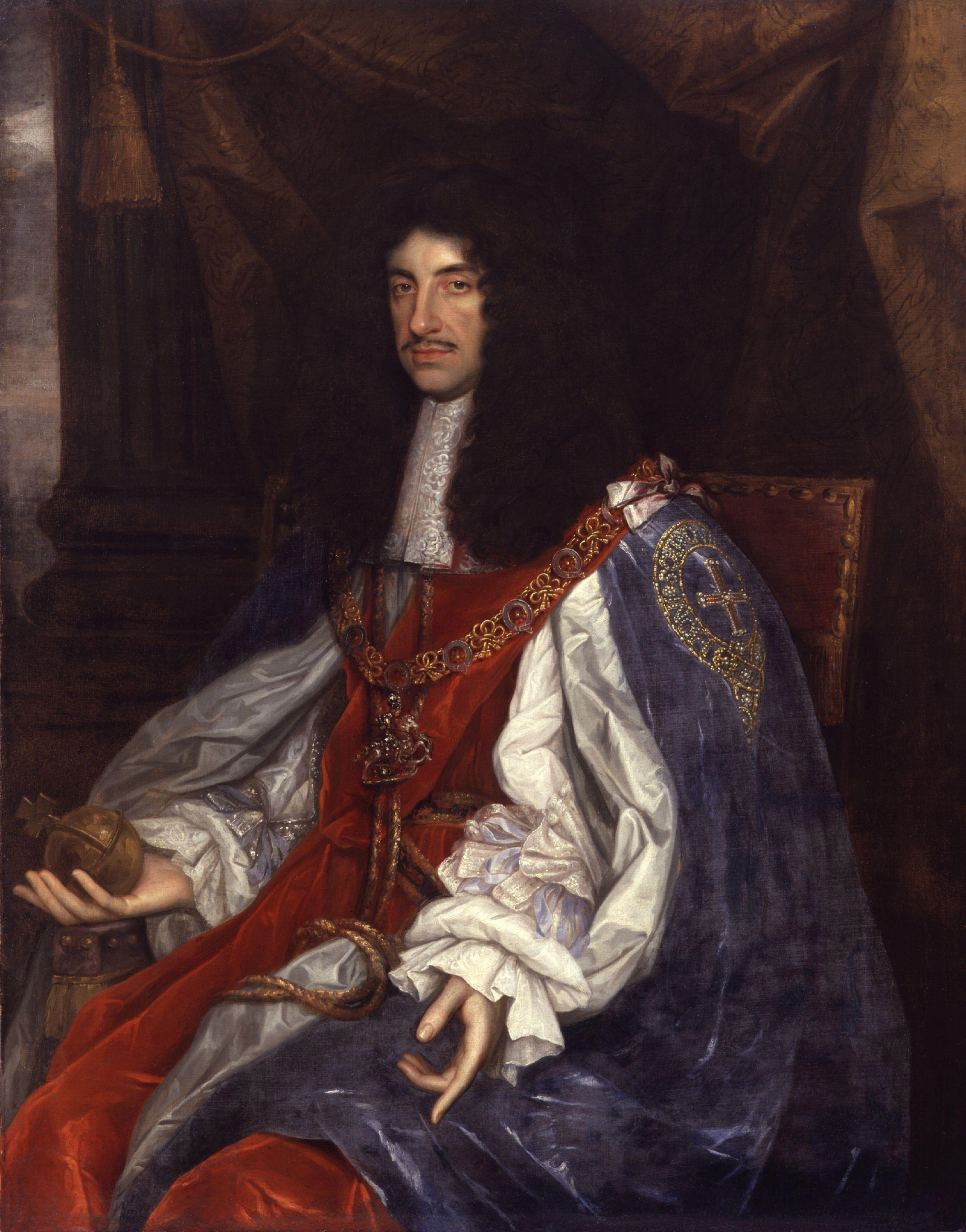
| Known as | King Charles II |
| Occup. | Royalty |
| From | United Kingdom |
| Born | May 29, 1630 St James's Palace, London |
| Died | February 6, 1685 Whitehall Palace, London |
| Aged | 54 years |
| Cite | |
Citation Formats
APA Style (7th ed.)
Charles ii biography, facts and quotes. (2026, March 8). FixQuotes. https://fixquotes.com/authors/charles-ii/
Chicago Style
"Charles II biography, facts and quotes." FixQuotes. March 8, 2026. https://fixquotes.com/authors/charles-ii/.
MLA Style (9th ed.)
"Charles II biography, facts and quotes." FixQuotes, 8 Mar. 2026, https://fixquotes.com/authors/charles-ii/. Accessed 25 Mar. 2026.
Early Life and Background
Charles II was born at St James's Palace on 29 May 1630, the eldest surviving son of Charles I and Henrietta Maria of France. He entered the world as the heir to three troubled kingdoms - England, Scotland, and Ireland - at a moment when the Stuart monarchy still claimed sacred authority but was already drifting toward collision with Parliament, militant Protestantism, and the political culture of a rapidly changing Atlantic state. His childhood was courtly, ceremonial, and emotionally marked by contrast: an affectionate, artistically refined household shaped by his mother's Catholic piety and continental manners, and a father whose belief in divine-right monarchy would destroy him. Charles was made Prince of Wales in 1638, but the title could not shield him from the accelerating breakdown of royal government in the 1640s.
The English Civil Wars transformed him from dynastic symbol into political fugitive. As royalist power collapsed, he was moved between strongholds, separated from his parents, and forced into premature adulthood. In 1646 he escaped to the Isles of Scilly, then Jersey, and eventually to the Continent. The execution of Charles I in 1649 was the defining psychic wound of his life: it gave him a martyr-father, taught him the price of inflexibility, and fused kingship with survival. Proclaimed king by Scots and Irish royalists, he accepted the Scottish Covenant to secure a crown, was crowned at Scone in 1651, then saw his invasion of England end in defeat at Worcester. His famous escape - hiding in an oak tree, moving in disguise, trusting obscure loyalists - became both legend and lifelong lesson in prudence, performance, and the uses of charm.
Education and Formative Influences
Charles's education was princely but irregular, shaped less by systematic scholarship than by upheaval, travel, and observation. He learned languages, riding, fencing, theology, and statecraft, yet exile proved his deepest school. In France, the Dutch Republic, the Spanish Netherlands, and German courts, he studied how power really worked when stripped of ceremony: through money, patronage, secrecy, alliances, and patience. He absorbed French court polish, a taste for science and architecture, and a cosmopolitan tolerance unusual in England's confessional age. At the same time, dependence on foreign hosts humbled him. He watched the republican regime of Oliver Cromwell consolidate itself, learned how faction devours causes, and concluded that rigidity was politically suicidal. If his father embodied tragic consistency, Charles became supple, elusive, and intensely alert to mood, appetite, and timing.
Career, Major Works, and Turning Points
Charles's career divides into exile, restoration, and managed crisis. The decisive turning point came in 1660, when General Monck engineered the collapse of the Commonwealth and Charles issued the Declaration of Breda, promising pardon, property settlement, arrears for the army, and "liberty to tender consciences". He returned to London in a wave of public relief, restoring monarchy without restoring the old absolutism. His reign then moved through alternating brilliance and strain: the Clarendon ministry, the Cavalier Parliament, war with the Dutch, the plague of 1665, and the Great Fire of London in 1666; the cultivation of court wit, theater, and science, including the chartering of the Royal Society; the secret Treaty of Dover with Louis XIV in 1670; and the political storms unleashed by his indulgence toward Catholics and dissenters, the Popish Plot, and the Exclusion Crisis. He outmaneuvered attempts to bar his Catholic brother James from succession by dissolving Parliament, using patronage, and appealing to fear of disorder. His later rule was more controlled, even hard-edged, but it achieved what had once seemed impossible: a Stuart king dying peacefully on the throne.
Philosophy, Style, and Themes
Charles II's governing philosophy was less a formal doctrine than a temperament forged by catastrophe. He distrusted zeal, preferred balance to purity, and believed that political life had to accommodate human weakness rather than pretend to abolish it. This made him appear cynical, but his cynicism was often a survival ethic. The sentence “I always admired virtue - but I could never imitate it”. captures not only his sensual self-knowledge but also his refusal to pose as saint or reformer. He loved women, conversation, racing, dogs, naval matters, mechanics, and the stage; he fathered numerous acknowledged illegitimate children and turned Whitehall into a theater of access and amusement. Yet behind the hedonist stood a ruler who had seen kingdoms destroyed by moral absolutists. His ease was strategic, a way of softening authority after civil war.
His style was therefore theatrical but not empty. He excelled at appearing effortless while calculating constantly, and his famous maxim “Never in the way, and never out of the way”. reads as a compressed self-portrait of political presence: visible enough to command loyalty, elusive enough to escape entrapment. Likewise, “You had better have one King than five hundred”. reveals the deepest Restoration argument - not that monarchy was flawless, but that divided sovereignty was worse. Charles cultivated moderation, ambiguity, and delay because he knew how quickly principle can become bloodshed. In religion he leaned toward comprehension and indulgence, partly from sympathy, partly from realism; in politics he preferred management to confrontation; in private life he sought pleasure with remarkable candor. The result was a kingship grounded not in heroic virtue but in resilience, irony, and an almost modern understanding of image.
Legacy and Influence
Charles II left a paradoxical legacy. He did not solve the constitutional and religious conflicts that had shattered his father's reign; indeed, by sheltering Catholic interests and ruling without Parliament in his last years, he helped prepare the crisis that would topple James II in 1688. Yet he made monarchy livable again after regicide and republic. Restoration culture - Dryden, Rochester, court portraiture, revived theater, urban rebuilding after the Fire, scientific patronage, naval reform - all bears his imprint. He normalized a less sacral, more political crown: adaptable, media-conscious, companionable, and deeply entangled with commerce and empire. To admirers he was the Merry Monarch, witty and humane; to critics, indolent and faithless. Both views contain truth. His greatest historical achievement was not moral elevation but re-entry - bringing the Stuart monarchy back from extinction by learning, better than any of his line, how to survive the modern world.
Our collection contains 3 quotes written by Charles, under the main topics: Witty One-Liners - Wisdom - Leadership.
Other people related to Charles: John Dryden (Poet), Philip IV (Royalty), Thomas Blood (Soldier), Algernon Sydney (Politician), Rose Tremain (Novelist), Joseph Glanvill (Writer), John Bunyan (Clergyman), John Wilmot (Writer), William Davenant (Poet), George Etherege (Dramatist)
Source / external links