
Charles Kennedy Biography Quotes 4 Report mistakes
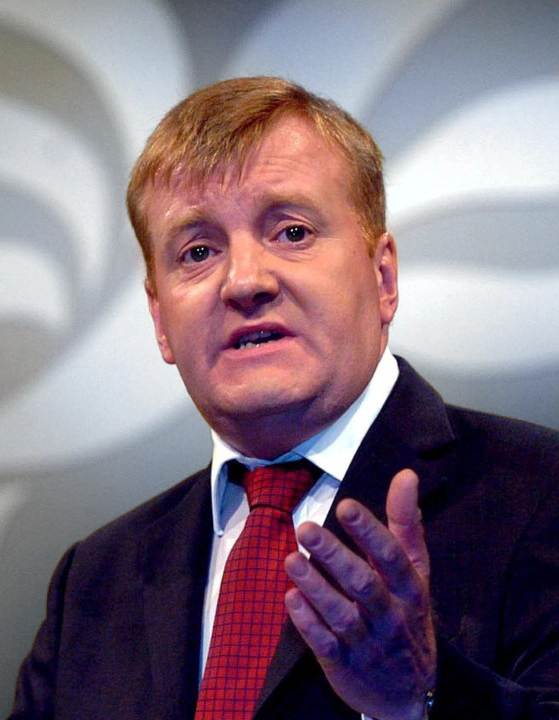
| 4 Quotes | |
| Born as | Charles Peter Kennedy |
| Occup. | Politician |
| From | United Kingdom |
| Born | November 25, 1959 Inverness, Scotland, United Kingdom |
| Died | June 1, 2015 Fort William, Scotland, United Kingdom |
| Cause | Haemorrhage due to alcohol abuse |
| Aged | 55 years |
| Cite | |
Citation Formats
APA Style (7th ed.)
Charles kennedy biography, facts and quotes. (2026, February 11). FixQuotes. https://fixquotes.com/authors/charles-kennedy/
Chicago Style
"Charles Kennedy biography, facts and quotes." FixQuotes. February 11, 2026. https://fixquotes.com/authors/charles-kennedy/.
MLA Style (9th ed.)
"Charles Kennedy biography, facts and quotes." FixQuotes, 11 Feb. 2026, https://fixquotes.com/authors/charles-kennedy/. Accessed 5 Mar. 2026.
Early life and education
Charles Peter Kennedy was born on 25 November 1959 in Inverness, in the Scottish Highlands, and grew up in and around Fort William in Lochaber. The Highland setting, with its strong sense of community and cultural identity, shaped his outlook and helped form the easy manner and warmth that became central to his public persona. He attended Lochaber High School and went on to the University of Glasgow, where he immersed himself in debating and student politics. The skills he developed there, including a talent for clear advocacy and a willingness to listen as well as persuade, fed directly into the career that followed.Early political career
Kennedy came into national politics at remarkable speed. In 1983, at just 23, he won election to the House of Commons, becoming one of the youngest MPs of his generation. He entered Parliament with the Social Democratic Party during a period of realignment on the center-left, and when the SDP and the Liberal Party merged in 1988, he was among the cohort that helped give the newly formed Liberal Democrats a distinctive, modern voice. Colleagues from both traditions, including Paddy Ashdown and Shirley Williams, recognized his gifts as a communicator and coalition-builder.Parliamentary representative for the Highlands
For more than three decades Kennedy represented a Highland constituency, initially Ross, Cromarty and Skye and later Ross, Skye and Lochaber. He was known as a diligent constituency MP, attentive to local industries, transport links, and rural services, and as a defender of Gaelic culture and Highland communities. He built personal relationships across party lines and with local leaders, keeping a consistent focus on practical results over partisanship.Leader of the Liberal Democrats
In 1999 he succeeded Paddy Ashdown as leader of the Liberal Democrats. Kennedy inherited a party that had grown in confidence and sought to broaden its appeal. Under his leadership, the party combined a liberal commitment to civil liberties and constitutional reform with socially progressive priorities, and it took resolute positions on issues of conscience and foreign policy. Kennedy's clearest national stand came in 2003, when he opposed the invasion of Iraq and cautioned Prime Minister Tony Blair about the consequences of military action without broad international support. That stance, shared by many in the party including Menzies Campbell, became a defining moment of his leadership.The 2005 general election produced the Liberal Democrats' best postwar performance in terms of seats, reflecting both strategic campaigning and Kennedy's ability to connect with voters beyond the party's traditional base. His approach emphasized calm persuasion over stridency, and his popularity with the public often surpassed that of other leaders. At the same time, he managed internal debates that stretched back to the Ashdown era about how closely to align with Labour under Tony Blair and later Gordon Brown, maintaining the party's independence.
Leadership challenges and resignation
Kennedy faced personal challenges that became public in the mid-2000s. Questions about his health and alcohol dependency overshadowed political successes and raised concerns within the parliamentary party. In early 2006, after acknowledging his struggle with alcohol, he stepped down as leader. Menzies Campbell served as acting leader and then became leader later that year, followed by Nick Clegg in 2007. Even as he left the leadership, there was broad recognition across the Commons of Kennedy's decency, wit, and contribution to a more civil political culture.Roles after the leadership
Remaining on the back benches, Kennedy continued to campaign on constitutional reform, civil liberties, and European and international engagement. He was skeptical about any drift away from the party's liberal principles and, during the 2010, 2015 Conservative-Liberal Democrat coalition led by David Cameron and Deputy Prime Minister Nick Clegg, he voiced reservations about aspects of government policy, notably on higher education and social policy. He also devoted energy to public life outside Parliament, including service as Rector of the University of Glasgow, a role that connected him again with students and the civic life that had first launched his career.Kennedy was a prominent voice in the 2014 Scottish independence referendum, arguing for Scotland to remain in the United Kingdom while pressing for a strengthened devolution settlement. He campaigned with colleagues across parties, valuing the cross-party cooperation of figures such as Alistair Darling while making a distinctly liberal case for shared institutions and local empowerment.
Personal life
In 2002 he married Sarah Gurling. The couple had one son, Donald, born in 2005. Although the marriage later ended, Kennedy remained a devoted father, and friends and colleagues frequently remarked on the grounding influence of family and his affection for the Highlands communities where he had grown up. His Roman Catholic upbringing and Highland roots informed a gentle but firm moral sensibility, evident in his preference for dialogue and consensus.Final years, death, and legacy
The political landscape shifted dramatically in 2015, and Kennedy lost his long-held seat to the Scottish National Party candidate Ian Blackford in the general election. Only weeks later, on 1 June 2015, he died at his home in the Highlands, aged 55. A post-mortem examination found that he died from a hemorrhage, and many tributes acknowledged both his long, private struggle with alcohol and his public courage and integrity.Across the political spectrum, tributes poured in from figures such as Paddy Ashdown, Menzies Campbell, Nick Clegg, and opponents including Tony Blair, emphasizing Kennedy's humanity, humor, and independence of mind. He is remembered as one of the most gifted communicators of his generation, a leader who made a principled stand against the Iraq War, and a Highland MP who never lost sight of the people he served. His career traced the modern history of liberalism in Britain, from the SDP's challenge to the two-party system through the rise of the Liberal Democrats. The example he set in campaigning with courtesy, arguing with conviction, and listening with respect remains a benchmark for public life.
Our collection contains 4 quotes written by Charles, under the main topics: Freedom - War - Fear.
Other people related to Charles: Anne Campbell (Politician)
Source / external links