
Charles M. Schulz Biography Quotes 27 Report mistakes
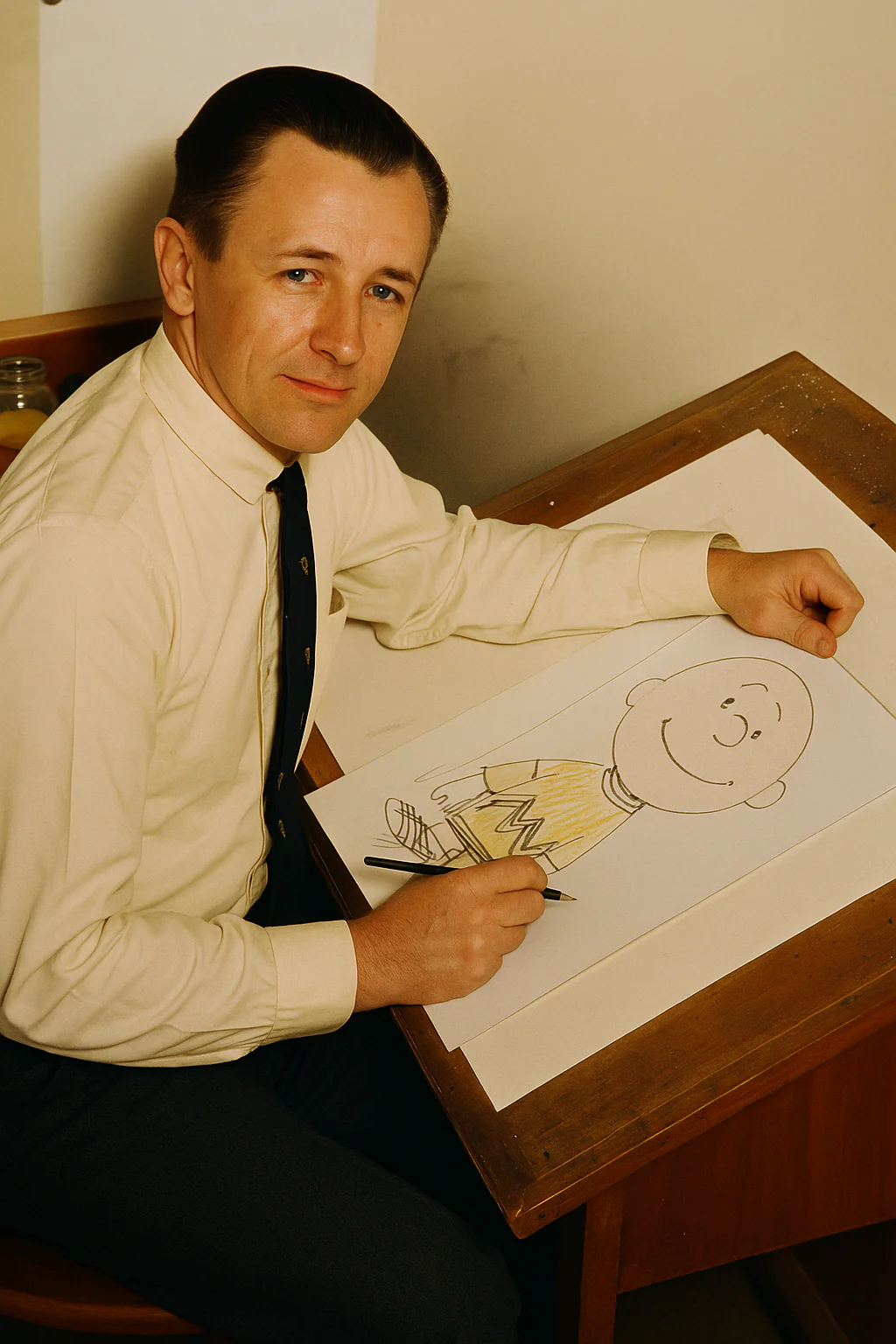
Attr: Roger Higgins, World Telegram staff photographer
| 27 Quotes | |
| Born as | Charles Monroe Schulz |
| Occup. | Cartoonist |
| From | USA |
| Born | November 26, 1922 Minneapolis, Minnesota, USA |
| Died | February 12, 2000 Santa Rosa, California, USA |
| Cause | colon cancer |
| Aged | 77 years |
| Cite | |
Citation Formats
APA Style (7th ed.)
Charles m. schulz biography, facts and quotes. (2026, February 11). FixQuotes. https://fixquotes.com/authors/charles-m-schulz/
Chicago Style
"Charles M. Schulz biography, facts and quotes." FixQuotes. February 11, 2026. https://fixquotes.com/authors/charles-m-schulz/.
MLA Style (9th ed.)
"Charles M. Schulz biography, facts and quotes." FixQuotes, 11 Feb. 2026, https://fixquotes.com/authors/charles-m-schulz/. Accessed 5 Mar. 2026.
Early Life and Background
Charles Monroe Schulz was born on November 26, 1922, in Minneapolis, Minnesota, and grew up largely in St. Paul, the only child of Carl Schulz, a barber, and Dena Halverson Schulz. His family life was modest, affectionate, and quietly disciplined - the kind of Midwestern domestic order that later became the stage on which his characters rehearsed their anxieties. Nicknamed "Sparky" after the comic-strip horse Spark Plug, he absorbed early the idea that identity could be both given and performed, a tension he would refine into a lifetime of drawing children who act like philosophers and feel like wounded adults.From childhood he drew constantly, taking cues from newspaper strips, animation, and the ordinary drama of neighborhoods and schoolyards. A formative emotional fact was his closeness to his mother and the loneliness of being an only child, which sharpened his sensitivity to small slights and private rituals. The Great Depression and then World War II framed his adolescence with unease and uncertainty, and he developed the habit that would define his work: turning worry into a daily, controlled act of craft.
Education and Formative Influences
After graduating from Central High School in St. Paul, Schulz studied by correspondence and then attended the Art Instruction Schools in Minneapolis, later returning there to teach. His artistic language formed at the intersection of classic American cartooning and personal temperament: the clean line of newspaper comics, the timing of radio comedy, and the emotional realism of lived shyness. Drafted in 1943, he served as a staff sergeant with the 20th Armored Division in Europe; the war years hardened his reserve and deepened his sense that ordinary life is never fully secure, a perception that would later surface as humor edged with apprehension.Career, Major Works, and Turning Points
Back in Minnesota, Schulz sold single-panel gags and began publishing a local feature, Li'l Folks, in the St. Paul Pioneer Press (1947-1950), where prototypes of Charlie Brown, Snoopy, and the strip's bleakly cheerful worldview first appeared. In 1950 United Feature Syndicate launched Peanuts, renamed from his preferred title, and its slow rise became one of the defining American cultural stories of the postwar era: a daily strip that treated childhood not as innocence but as an arena of status, disappointment, and stubborn hope. Schulz moved to California, sustained an intense solo routine (writing and drawing the strip himself for nearly fifty years), and expanded the brand with television specials - most famously A Charlie Brown Christmas (1965) - that brought his quiet pacing and melancholy warmth to mass audiences. Personal turning points included the death of his mother in 1943, his first marriage to Joyce Halverson (1951) and their later divorce (1972), and his second marriage to Jean Forsyth Clyde (1973), along with ongoing bouts of anxiety and health issues that culminated in his retirement announcement in late 1999; he died on February 12, 2000, one day before the final original strip ran.Philosophy, Style, and Themes
Schulz's comedy is often described as gentle, yet its gentleness is a deliberate moral stance rather than softness: he builds laughter from the friction between longing and limitation. His people - especially Charlie Brown - want recognition, competence, and love, but encounter a world of missed kicks, misunderstood intentions, and social hierarchies that feel permanent. The famous line “I love mankind; it's people I can't stand”. captures the paradox at the core of his inner life: an expansive sympathy for humanity paired with acute irritation, even fear, of actual encounters. Schulz transmuted that social unease into characters who speak in crisp aphorisms while privately spiraling, turning neurosis into a shared language.Formally, Peanuts perfected a stripped-down line and an elastic rhythm: long silences, repeated setups, and punchlines that land like quiet admissions. Time barely moves, but emotion does - the strip advances by accumulating small defeats and small acts of endurance, a daily discipline that mirrored Schulz's own work ethic. “I have a new philosophy. I'm only going to dread one day at a time”. reads like a joke, but it also describes his method: narrowing the horizon so the self can keep functioning. Underneath the humor sits a spiritual restlessness - he engaged Christian themes openly at times, yet his characters remain unsure, performing faith, doubt, and resilience in miniature. When he writes, “My life has no purpose, no direction, no aim, no meaning, and yet I'm happy. I can't figure it out. What am I doing right?” , the laughter is inseparable from confession: meaning is fragile, but the act of noticing, drawing, and continuing can itself become a kind of meaning.
Legacy and Influence
By the time of his death, Schulz had made Peanuts a global vernacular, translated into dozens of languages and embedded in American memory through books, greeting cards, Broadway, and television. Yet his lasting influence is less commercial than psychological: he proved that a newspaper strip could carry real interiority, that sadness could be funny without being mocked, and that minimalism could hold a whole moral universe. Cartoonists from Jim Davis to Bill Watterson and countless graphic novelists absorbed his pacing and emotional candor; readers absorbed his permission to be anxious, tender, and persistent. Schulz left behind not just iconic characters but a durable model of modern conscience - the small, daily struggle to be decent in a world that rarely grants easy victories.Our collection contains 27 quotes written by Charles, under the main topics: Witty One-Liners - Wisdom - Puns & Wordplay - Love - Meaning of Life.
Other people related to Charles: Bill Watterson (Cartoonist)
Frequently Asked Questions
- Jean Schulz: Charles M. Schulz’s widow; married 1973–2000; longtime leader of the Charles M. Schulz Museum.
- Charles m schulz created characters: Charlie Brown, Snoopy, Lucy, Linus, Woodstock, Peppermint Patty, Schroeder, Sally.
- Charles M Schulz net worth: Widely reported around $200 million at the time of his death (est.).
- Charles M Schulz books: Happiness Is a Warm Puppy; Peanuts Jubilee; Peanuts: A Golden Celebration; numerous Peanuts strip collections.
- Charles M Schulz cause of death: Complications from colon cancer (2000).
- How old was Charles M. Schulz? He became 77 years old
Source / external links