
Charles Maurice de Talleyrand Biography Quotes 20 Report mistakes
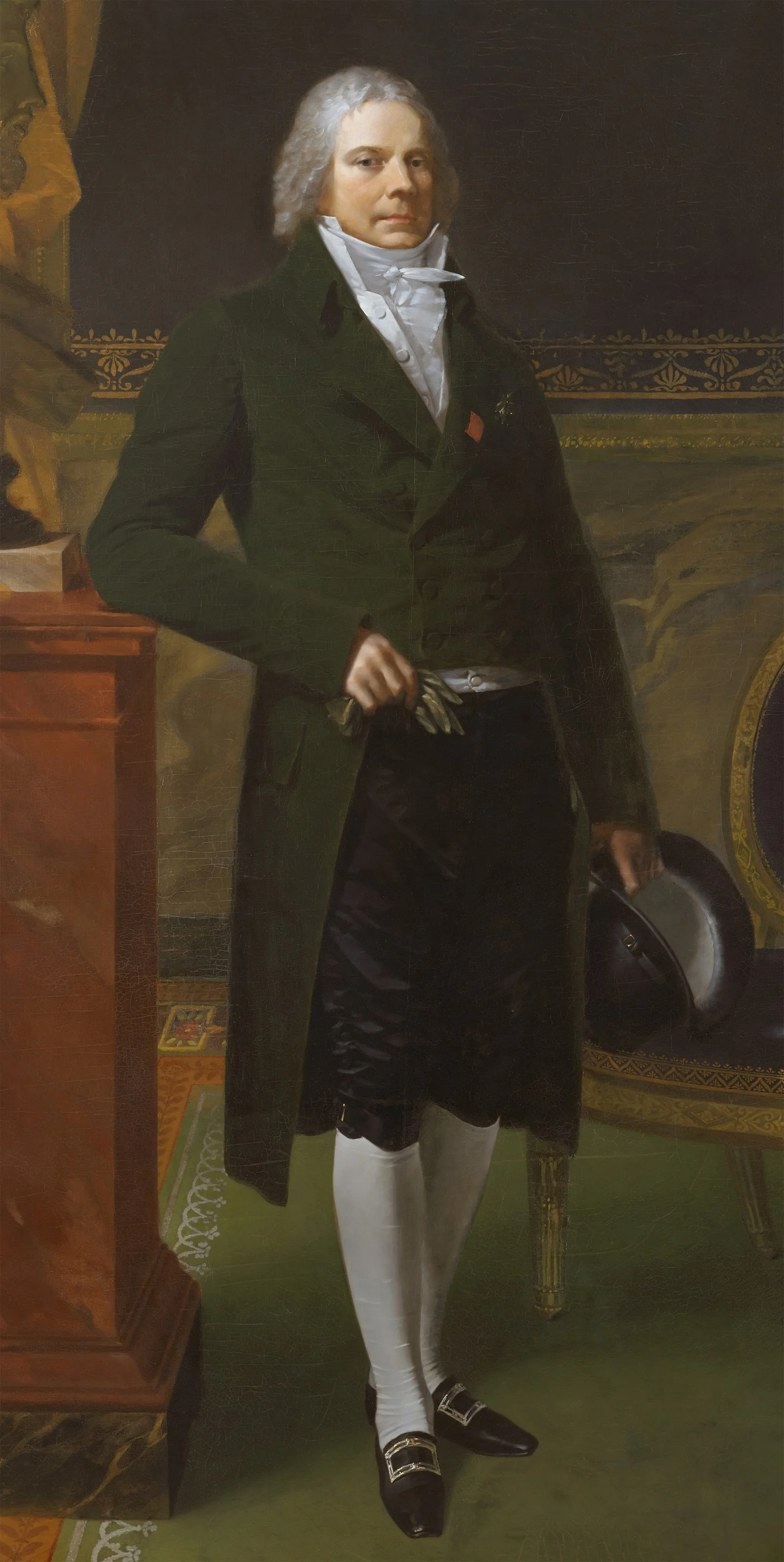
| 20 Quotes | |
| Born as | Charles-Maurice de Talleyrand-Périgord |
| Known as | Talleyrand |
| Occup. | Diplomat |
| From | France |
| Born | February 2, 1754 Paris, France |
| Died | May 17, 1838 Paris, France |
| Cause | Natural Causes |
| Aged | 84 years |
| Cite | |
Citation Formats
APA Style (7th ed.)
Charles maurice de talleyrand biography, facts and quotes. (2026, February 11). FixQuotes. https://fixquotes.com/authors/charles-maurice-de-talleyrand/
Chicago Style
"Charles Maurice de Talleyrand biography, facts and quotes." FixQuotes. February 11, 2026. https://fixquotes.com/authors/charles-maurice-de-talleyrand/.
MLA Style (9th ed.)
"Charles Maurice de Talleyrand biography, facts and quotes." FixQuotes, 11 Feb. 2026, https://fixquotes.com/authors/charles-maurice-de-talleyrand/. Accessed 26 Mar. 2026.
Early Life and Background
Charles-Maurice de Talleyrand-Perigord was born on February 2, 1754, in Paris into one of France's oldest noble families, a lineage rich in titles and poor in cash. A childhood leg injury left him with a permanent limp, a physical mark that mattered in an aristocratic culture that equated bodily prowess with command. Barred from the military path expected of his rank, he learned early to treat limitation as leverage - to win by angle rather than force.He grew up in the waning decades of the Bourbon ancien regime, amid salons, court offices, and the delicate economy of favor that kept the monarchy upright. This world trained him in reading rooms the way others read maps: who needed what, who feared whom, what could be promised without being delivered. It also produced his lifelong realism about institutions - that they survive not by purity but by adaptation, and that those who cannot bend will break.
Education and Formative Influences
Directed toward the Church, Talleyrand studied at the College d'Harcourt and at Saint-Sulpice, absorbing theology while privately cultivating the Enlightenment's skepticism and the courtier's practical ethics. He read the philosophes, learned the rhetoric of reform, and practiced the social intelligence required to move between clerical hierarchy and noble society. Ordained in 1779, he rose quickly through patronage and competence; by 1788 he became Bishop of Autun, a post that placed him close to power on the eve of revolution and gave him a platform from which to translate new ideas into statecraft.Career, Major Works, and Turning Points
Elected in 1789 to the Estates-General for the clergy, he became an early architect of the Revolution's institutional turn: he supported merging the orders into the National Assembly and helped push the nationalization of church lands, a decisive step in funding the new regime and in severing old allegiances. Excommunicated and increasingly at risk during the Terror, he moved through London and the United States, then returned after Thermidor to reenter politics as foreign minister under the Directory in 1797, negotiating at Campo Formio and proving he could serve a republic without romanticizing it. Under Napoleon he again became foreign minister, helped build the Concordat settlement's diplomatic frame, and shaped the reshaping of Europe after Austerlitz - then turned against imperial overreach as the Continental System and perpetual war threatened France's future. His finest hour came in defeat: at the Congress of Vienna (1814-1815) he represented the restored Bourbons and used legitimacy as a weapon to reinsert France among the great powers, splitting the coalition and limiting punitive terms. He served Louis XVIII and, briefly, the July Monarchy as ambassador to London in 1830, ending his public life as a grand seigneur of diplomacy who had outlasted kings, conventions, and emperors. He died in Paris on May 17, 1838, after a late reconciliation with the Church and the crafting of memoirs that sought to control the verdict of history.Philosophy, Style, and Themes
Talleyrand's inner life was governed by a cool appetite for survival and a sharper appetite for continuity: he treated regimes as vessels and France as the cargo. To him, political language was not confession but instrument, a view compressed in the line, “Speech was given to man to disguise his thoughts”. That was not mere cynicism; it was a theory of governance in an age when candor could collapse coalitions and cost lives. He specialized in the half-said, the plausible deniability, the option left open - tactics that made him seem treacherous to moralists and indispensable to rulers.His diplomacy rested on a sober analysis of force and a bias toward civilian control of national destiny, especially after he watched revolutionary war mutate into imperial habit. “War is much too serious a thing to be left to military men”. The remark reveals both fear and discipline: fear of martial logic becoming the state's only logic, and discipline in insisting that politics must reassert limits. Beneath the famous polish was a patience for inevitabilities, a readiness to move first not from impulse but from calculation: “The art of statesmanship is to foresee the inevitable and to expedite its occurrence”. In practice this meant conceding what could not be held - old privileges, conquered thrones, exhausted alliances - while trading those concessions for the durable assets of security, recognition, and time.
Legacy and Influence
Talleyrand remains the prototype of the modern diplomat: pragmatic, information-centered, and devoted to balance-of-power mechanics even while serving volatile regimes. His name became shorthand for opportunism, yet his record also shows a coherent through-line - preventing France from being permanently excluded from Europe and preventing Europe from becoming permanently dominated by one power, whether Jacobin, Napoleonic, or reactionary. His methods anticipated professional foreign ministries and the idea that negotiation is a form of national infrastructure, not a courtly pastime. Admired by Metternich even when distrusted, condemned by contemporaries who wanted purity, he endures because he embodied the uncomfortable truth of his era: in revolutionary times, survival itself becomes a political skill, and the statesman is judged not by innocence but by outcomes.Our collection contains 20 quotes written by Charles, under the main topics: Witty One-Liners - Ethics & Morality - Truth - Wisdom - Leadership.
Other people related to Charles: Louis XVIII (Royalty)
Source / external links