
Charles Peguy Biography Quotes 9 Report mistakes
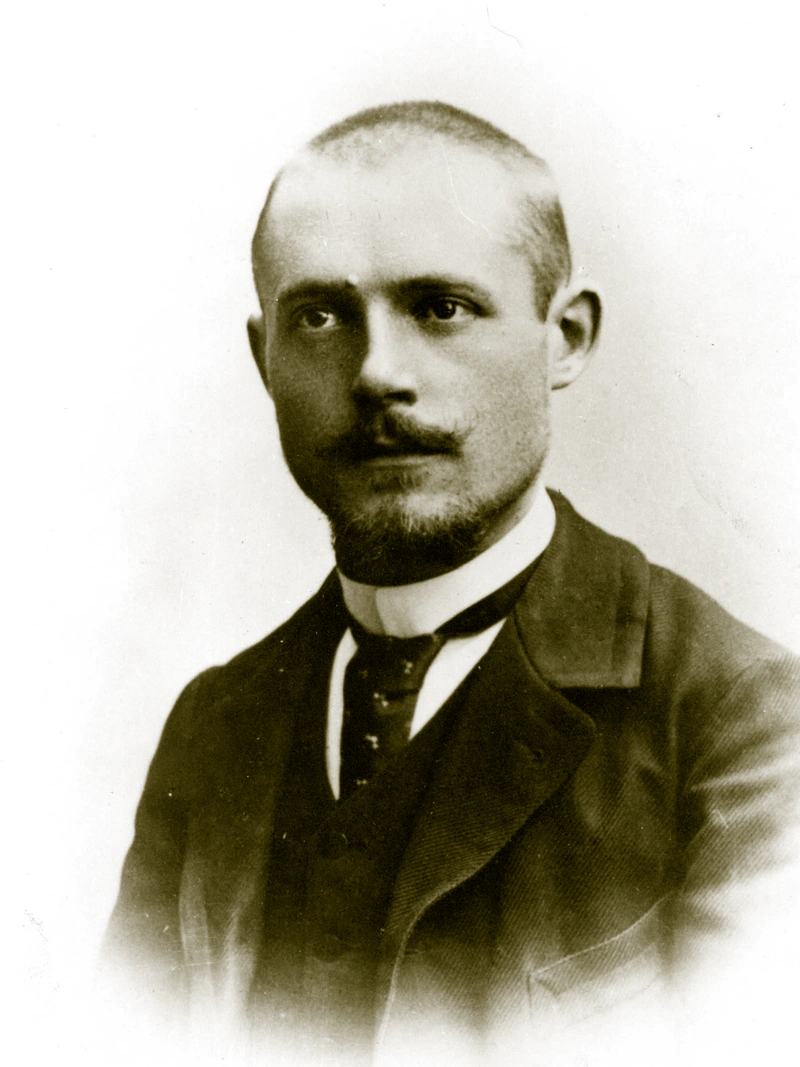
| 9 Quotes | |
| Occup. | Philosopher |
| From | France |
| Born | January 7, 1873 Orleans, France |
| Died | September 4, 1914 Villeroy, Seine-et-Marne, France |
| Cause | Killed in action (World War I) |
| Aged | 41 years |
| Cite | |
Citation Formats
APA Style (7th ed.)
Charles peguy biography, facts and quotes. (2026, February 11). FixQuotes. https://fixquotes.com/authors/charles-peguy/
Chicago Style
"Charles Peguy biography, facts and quotes." FixQuotes. February 11, 2026. https://fixquotes.com/authors/charles-peguy/.
MLA Style (9th ed.)
"Charles Peguy biography, facts and quotes." FixQuotes, 11 Feb. 2026, https://fixquotes.com/authors/charles-peguy/. Accessed 22 Mar. 2026.
Early Life and Background
Charles Peguy was born on January 7, 1873, in Orleans, in the shadow of France's defeat in the Franco-Prussian War and the upheavals of the early Third Republic. His father, a carpenter, died when Peguy was very young; he was raised largely by his mother and grandmother, both modest chair-caning workers. The household economy was precarious, but the discipline of craft, repetition, and honest labor formed his earliest moral vocabulary - a sense that dignity is earned and that words, like tools, must be used without falsity.Orleans also gave him a native geography of memory: the Loire, the provinces, and above all the civic and religious aura of Joan of Arc. Peguy grew up in a France arguing over secular schooling, clerical power, and republican legitimacy; those arguments were not abstractions but lived pressures, felt through education policy, parish life, and political talk. From the start, his inner life combined tenderness toward the poor with a fierce impatience for complacent elites - whether bourgeois, bureaucratic, or ecclesiastical.
Education and Formative Influences
A brilliant student, Peguy won scholarships that carried him from local schools to the lycee in Orleans and then to Paris, where he entered the elite academic world centered on the Ecole normale superieure (late 1890s). There he encountered the philosophical climate of the era - moral idealism, socialist debate, and a growing distrust of parliamentary routine - and formed lasting friendships and rivalries. He read widely, including classical sources and modern political theory, but what marked him was less a system than a moral sensibility: the conviction that thought must answer to lived experience, and that intellectuals betray their vocation when they substitute career for truth.Career, Major Works, and Turning Points
Peguy emerged as a writer and public intellectual around the Dreyfus Affair, aligning himself with the defense of Alfred Dreyfus and with a socialism rooted in justice rather than party discipline. In 1900 he founded the Cahiers de la Quinzaine, an independent review that became his platform and burden - a sustained, often financially ruinous effort to publish literature, political critique, and philosophical reflection outside institutional control. Over time he broke with orthodox socialist leaders, attacked the spiritual emptiness of modern bureaucracy, and moved toward a renewed, unclassifiable Catholic faith while remaining suspicious of clerical opportunism. His major writings include the lyric-political essay Notre jeunesse, the meditation on time and fidelity in Clio, and his Joan of Arc works, culminating in The Mystery of the Charity of Joan of Arc and later mysteries that fused prayer, history, and national destiny. Mobilized in 1914 as Europe fell into war, he was killed on September 4, 1914, at Villeroy near the Marne, on the eve of the First Battle of the Marne - a death that sealed his image as both poet of conscience and soldier of France.Philosophy, Style, and Themes
Peguy's thought is best understood as a moral philosophy of attention, fidelity, and incarnate truth. He distrusted systems that became self-serving machines, insisting that freedom is not an arrangement but a virtue lived under pressure: “Freedom is a system based on courage”. In politics he saw how modern states and parties could perfect technique while hollowing out the human person, a diagnosis compressed in his observation that “Tyranny is always better organized than freedom”. Yet his response was not cynicism; it was a strenuous ethic of witnessing, an insistence that the first duty is clarity of perception before argument, because moral collapse begins in self-deception.His style mirrors that ethic: incantatory repetition, abrupt turns, and long rhythmic sentences that work like a hammer on the reader's evasions. Peguy treated language as a test of sincerity, separating the writer who suffers truth from the one who merely handles phrases: “A word is not the same with one writer as with another. One tears it from his guts. The other pulls it out of his overcoat pocket”. This is also the psychology of his work - a man who could not tolerate the gap between what is said and what is lived, whether in bourgeois comfort, party rhetoric, or religious cant. His themes return obsessively to childhood as moral origin, to poverty as a lens on justice, to the sanctity of ordinary labor, and to Joan of Arc as the fusion of innocence, national ordeal, and supernatural calling.
Legacy and Influence
Peguy's influence runs through French letters and political thought as a model of the uncompromising independent intellectual: anti-servile to parties, allergic to careerism, and willing to let prose become a form of moral struggle. His rehabilitation of Catholic imagination without clerical complacency helped shape later writers who sought a faith adequate to modern fracture, while his critique of bureaucratic modernity anticipated twentieth-century anxieties about technocracy and ideological conformity. Read today, he remains bracing because his deepest subject is not an event but an inner demand: that a person, a nation, and a writer must pay for truth with attention, courage, and fidelity.Our collection contains 9 quotes written by Charles, under the main topics: Truth - Friendship - Writing - Freedom - Honesty & Integrity.
Charles Peguy Famous Works
- 1912 Le Porche du Mystère de la Deuxième Vertu (Poetry)
- 1910 Le Mystère de la charité de Jeanne d'Arc (Play)