
Charles Sanders Peirce Biography Quotes 10 Report mistakes
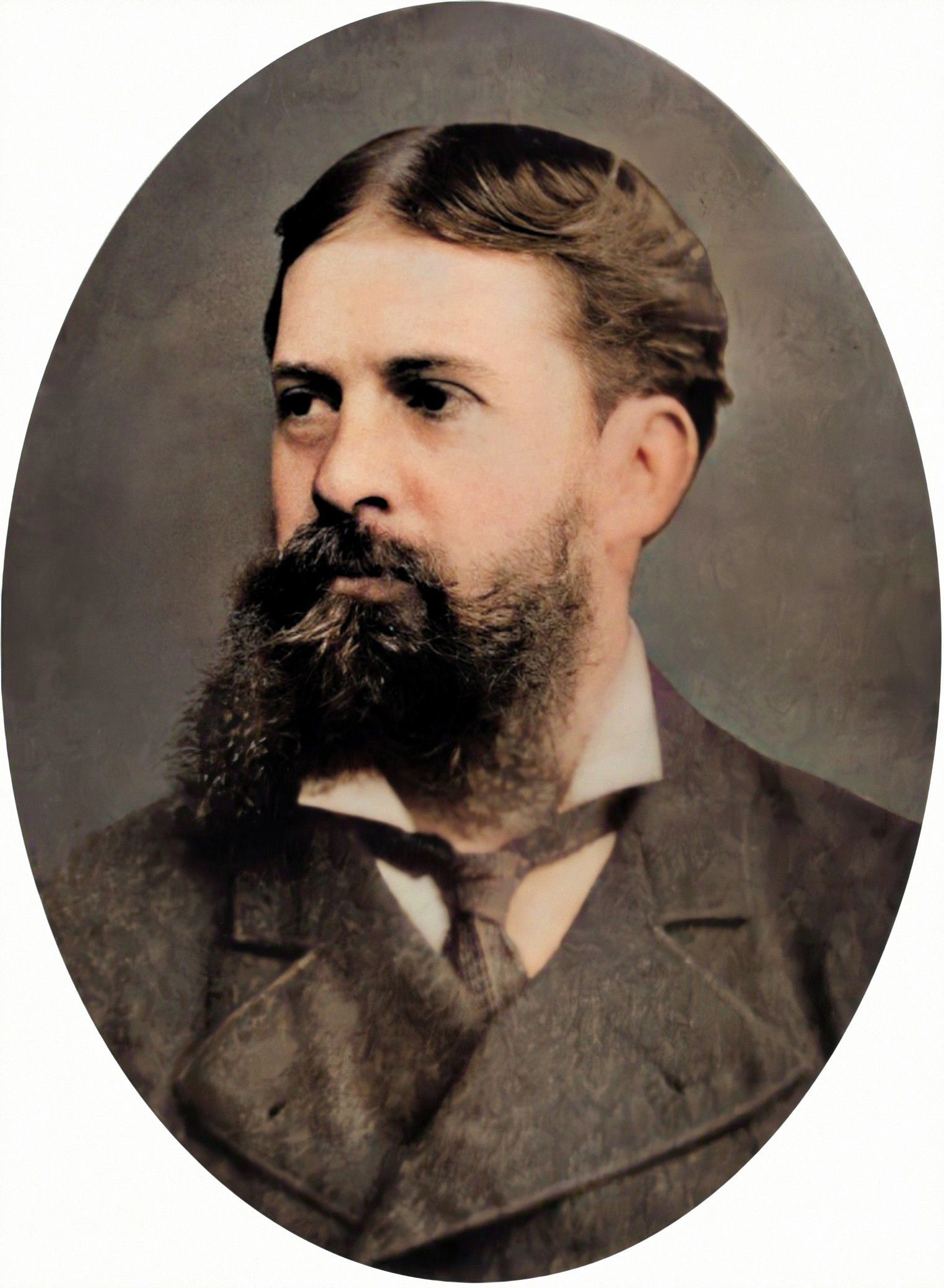
| 10 Quotes | |
| Occup. | Philosopher |
| From | USA |
| Born | September 10, 1839 Cambridge, Massachusetts, USA |
| Died | April 19, 1914 Milford, Pennsylvania, USA |
| Cause | Cancer |
| Aged | 74 years |
| Cite | |
Citation Formats
APA Style (7th ed.)
Charles sanders peirce biography, facts and quotes. (2026, February 11). FixQuotes. https://fixquotes.com/authors/charles-sanders-peirce/
Chicago Style
"Charles Sanders Peirce biography, facts and quotes." FixQuotes. February 11, 2026. https://fixquotes.com/authors/charles-sanders-peirce/.
MLA Style (9th ed.)
"Charles Sanders Peirce biography, facts and quotes." FixQuotes, 11 Feb. 2026, https://fixquotes.com/authors/charles-sanders-peirce/. Accessed 26 Mar. 2026.
Early Life and Background
Charles Sanders Peirce was born on September 10, 1839, in Cambridge, Massachusetts, into the tight braid of scholarship and civic ambition that defined New England intellectual life before the Civil War. His father, Benjamin Peirce, was Harvard's preeminent mathematician and a commanding presence in the household - brilliant, exacting, and convinced that rigorous thinking was a moral discipline. The son absorbed early the atmosphere of instruments, proofs, and observatories, where ideas were not ornaments but tools meant to bite into the real.Peirce's inner life formed under a double pressure: a craving for certainty worthy of mathematics and a temperament prone to volatility, illness, and self-sabotage. From youth he read widely in logic, chemistry, and philosophy, yet he also cultivated a taste for metaphysical audacity and a suspicion of mere verbal systems. America in the 1840s and 1850s offered a paradox he would never resolve - vast democratic energy, and fragile institutional support for sustained, technical inquiry. Peirce would spend a lifetime trying to invent a public role for the kind of mind he had.
Education and Formative Influences
He entered Harvard College in 1855 and graduated in 1859, then earned a Bachelor of Science from Harvard's Lawrence Scientific School in 1863, training that anchored his philosophical imagination in laboratory practice. Kant and the British empiricists mattered, but so did the habits of measurement and error-correction he learned from working scientists; his later pragmatism grew less from anti-metaphysical slogans than from the daily experience of how inquiry actually advances. Around him, Cambridge was becoming a node in a new American research culture, and in the 1870s his conversations with William James and members of the Metaphysical Club helped crystalize his conviction that meaning must be tested by conceivable effects in experience and conduct.Career, Major Works, and Turning Points
Peirce's professional life was largely that of a government scientist: from the early 1860s he worked for the U.S. Coast Survey (later Coast and Geodetic Survey), becoming one of America's leading practitioners of precision measurement, including pendulum experiments to determine gravity. This work trained his logic of inquiry in the ethics of calibration, communal checking, and fallibility. His most influential philosophical writings appeared in bursts: the 1868 "Questions Concerning Certain Faculties Claimed for Man", the 1877-1878 Popular Science Monthly essays "The Fixation of Belief" and "How to Make Our Ideas Clear", and later the "Harvard Lectures" (1903) and "Issues of Pragmaticism" (1905), where he refined his views and insisted on the technical name "pragmaticism" to distinguish them from looser popular versions. Yet his career turned repeatedly against him - a messy personal life, institutional distrust, and a damaging break with Harvard circles helped foreclose an academic post. From the 1890s he lived in increasing isolation and financial distress at Arisbe, his home in Milford, Pennsylvania, producing a vast, difficult body of manuscripts that outstripped his ability to publish.Philosophy, Style, and Themes
Peirce's philosophy begins from the psychology of inquiry: thinking is not an ivory-tower contemplation but a response to irritation, a struggle to move from unsettlement to settled habit. “Doubt is an uneasy and dissatisfied state from which we struggle to free ourselves and pass into the state of belief; while the latter is a calm and satisfactory state which we do not wish to avoid, or to change to a belief in anything else”. In this account his own temperament is audible - restless, easily wounded by uncertainty, yet unwilling to buy peace at the price of self-deception. He distrusted philosophies that protected a system rather than submitted to stubborn facts, remarking that “It will sometimes strike a scientific man that the philosophers have been less intent on finding out what the facts are, than on inquiring what belief is most in harmony with their system”. For him, the moral drama of the mind lay in learning to let the world correct you.His technical achievements underwrite that drama. He helped found modern symbolic logic, introduced the logic of relations, and developed a theory of signs (semiotics) in which meaning is triadic - sign, object, interpretant - and essentially public and revisable. Pragmatism, in his strict sense, is a rule for clarifying concepts by tracing their conceivable practical bearings; it is not anti-theory but a discipline against empty verbalism. Accordingly, belief is not an inner glow but a disposition: “The essence of belief is the establishment of a habit; and different beliefs are distinguished by the different modes of action to which they give rise”. That sentence captures his lifelong bid to weld logic to ethics - inquiry must culminate in habits that steer future reasoning, and the community of inquirers, not the solitary genius, is the medium through which reality is approached.
Legacy and Influence
Peirce died on April 19, 1914, in Milford, largely unknown outside small circles, his greatest work scattered in unpublished pages. Yet the 20th century steadily elevated him into a central architect of modern thought: pragmatism regained depth when scholars returned to his rigorous version; analytic philosophy drew on his logic and theory of reference; semiotics and communication theory found in him a foundational model of meaning as interpretation over time; and philosophy of science adopted his fallibilism, abductive inference, and insistence that inquiry is a communal, self-correcting practice. His enduring influence lies not only in ideas but in a posture - the conviction that reason is a hard-won habit of honesty, secured by methods that let reality answer back.Our collection contains 10 quotes written by Charles, under the main topics: Truth - Deep - Reason & Logic.
Other people related to Charles: Susanne Langer (Philosopher), Josiah Royce (Philosopher)
Charles Sanders Peirce Famous Works
- 1903 Syllabus of Certain Topics of Logic (Essay)
- 1891 A Guess at the Riddle (Essay)
- 1878 How to Make Our Ideas Clear (Essay)
- 1877 The Fixation of Belief (Essay)
- 1877 Illustrations of the Logic of Science (Essay)
- 1867 On a New List of Categories (Essay)
Source / external links