
Charles Spurgeon Biography Quotes 33 Report mistakes
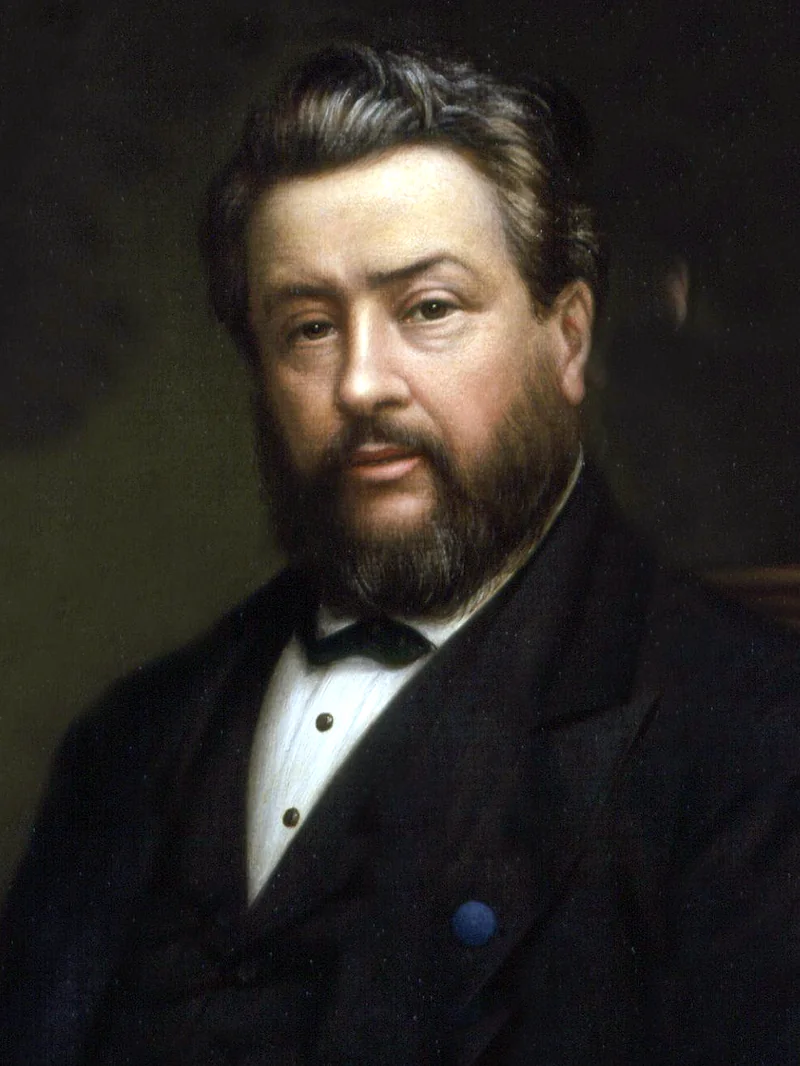
| 33 Quotes | |
| Born as | Charles Haddon Spurgeon |
| Known as | C. H. Spurgeon |
| Occup. | Clergyman |
| From | United Kingdom |
| Born | June 19, 1834 Kelvedon, Essex, England |
| Died | January 31, 1892 Menton, France |
| Aged | 57 years |
| Cite | |
Citation Formats
APA Style (7th ed.)
Charles spurgeon biography, facts and quotes. (2026, February 11). FixQuotes. https://fixquotes.com/authors/charles-spurgeon/
Chicago Style
"Charles Spurgeon biography, facts and quotes." FixQuotes. February 11, 2026. https://fixquotes.com/authors/charles-spurgeon/.
MLA Style (9th ed.)
"Charles Spurgeon biography, facts and quotes." FixQuotes, 11 Feb. 2026, https://fixquotes.com/authors/charles-spurgeon/. Accessed 24 Mar. 2026.
Early Life and Background
Charles Haddon Spurgeon was born on 19 June 1834 in Kelvedon, Essex, and grew up in the overlapping worlds of rural Nonconformity and early Victorian change - railways, factory towns, and a public culture increasingly shaped by print. His father, John Spurgeon, was a Congregational minister, often absent for work, and the boy was largely formed by the steady piety of his mother, Eliza, and by a household where Scripture and prayer were not decor but air. Spurgeon later spoke as a man who never forgot the sound of domestic religion - not sentimental, but weight-bearing - and that early atmosphere gave him both a sense of divine nearness and a dread of self-deception.Much of his childhood was spent in Stambourne with his grandparents; his grandfather, James Spurgeon, ministered at the independent chapel there and stocked a library that a curious, anxious child devoured. Spurgeon read voraciously, and even as a teenager could move from the Puritans to popular tracts with equal ease. Beneath the bookishness ran a stark inner tension: he was lively and humorous in company, yet privately he battled fear of judgment and the feeling that religious knowledge was not the same as being reconciled to God. That pressure - mind racing ahead of assurance - became the furnace in which his later preaching voice was forged.
Education and Formative Influences
Spurgeon never took a university degree, and his education was a patchwork of local schools and self-directed study, but it was unusually intense. As a youth he taught at a school in Newmarket and absorbed the rhetoric of the King James Bible alongside the argumentative clarity of Reformed theology; he also learned to read people, not only books, in the ordinary dramas of town and chapel life. The defining moment came in January 1850 in Colchester, when, diverted by snow into a small Primitive Methodist chapel, he heard a lay preacher press the plain call to "Look unto me, and be ye saved"; the experience broke his long inward siege and gave him a lifelong pattern - conversion as decisive encounter, and preaching as urgent testimony rather than cultivated performance.Career, Major Works, and Turning Points
He began preaching while still a teenager and, after a brief but electrifying ministry at Waterbeach near Cambridge, was called in 1854 to New Park Street Chapel in London, the historic Baptist pulpit associated with Benjamin Keach and John Gill. Crowds quickly outgrew the building; in 1861 the congregation moved to the purpose-built Metropolitan Tabernacle at Elephant and Castle, making Spurgeon the most famous Nonconformist preacher of his age. His sermons were transcribed and published weekly, circulating across the English-speaking world; later collections included the multi-volume New Park Street Pulpit and Metropolitan Tabernacle Pulpit. He built institutions as well as audiences: the Pastor's College (1856) to train preachers, and a web of charities including the Stockwell Orphanage. Turning points came with public controversy and private suffering - the Surrey Gardens Music Hall disaster of 1856, when a false cry of fire caused deaths and left him traumatized; recurrent depression and gout; and, in the 1880s, the "Downgrade Controversy", in which he withdrew from the Baptist Union over what he saw as doctrinal erosion. He died on 31 January 1892 at Menton, France, where he had gone seeking relief, and was buried at West Norwood Cemetery in London.Philosophy, Style, and Themes
Spurgeon preached historic evangelical Calvinism with the confidence of a man who believed reality itself was theological - sin as bondage, grace as invasion, Christ as the only bridge between God and the human conscience. He insisted that conversion was not self-improvement but spiritual resurrection, and he framed human willpower as insufficient to save itself: “A sinner can no more repent and believe without the Holy Spirit's aid than he can create a world”. That conviction did not make him passive; it made him urgent. If salvation was God-given, then proclamation mattered as the appointed means, and the preacher became, in his own self-understanding, a herald pleading with the hearer while trusting the Spirit to make words live.His style joined Puritan substance to journalistic immediacy - short Saxon words, homely images, sudden humor, and a talent for turning doctrine into felt experience. He returned repeatedly to the interior battlefield: the self as both the seat of desire and the place of sabotage, warning that spiritual danger often wore a familiar face - “Beware of no man more than of yourself; we carry our worst enemies within us”. That psychological realism was not bleakness; it was pastoral triage. He spoke to overworked clerks, factory hands, and anxious parents with a steady insistence that worry is not moral wisdom: “Anxiety does not empty tomorrow of its sorrows, but only empties today of its strength”. His sermons therefore became practical theology for Victorian strain - affliction, doubt, temptation, and perseverance - with joy presented as disciplined trust rather than mere temperament.
Legacy and Influence
Spurgeon endures as the emblematic "Prince of Preachers", not only for oratory but for scale: a single pulpit generating a weekly international literature, a training college, and a culture of philanthropic evangelism. His books - especially devotional classics like Morning and Evening and the counsel manual Lectures to My Students - remain in print because they preserve what his age most needed and ours still recognizes: a faith that can argue, comfort, and command the will without flattering it. He helped shape modern Baptist identity, influenced evangelical preaching across denominations, and modeled an uneasy but principled engagement with public controversy, showing how a minister could be both institution-builder and wounded soul - a man whose voice carried because it was tested, and whose influence lasts because it married doctrine to the gritty inner life of ordinary believers.Our collection contains 33 quotes written by Charles, under the main topics: Ethics & Morality - Truth - Wisdom - Resilience - Honesty & Integrity.
Other people related to Charles: Frederic William Farrar (Theologian)