
Charlie Kirk Biography Quotes 78 Report mistakes
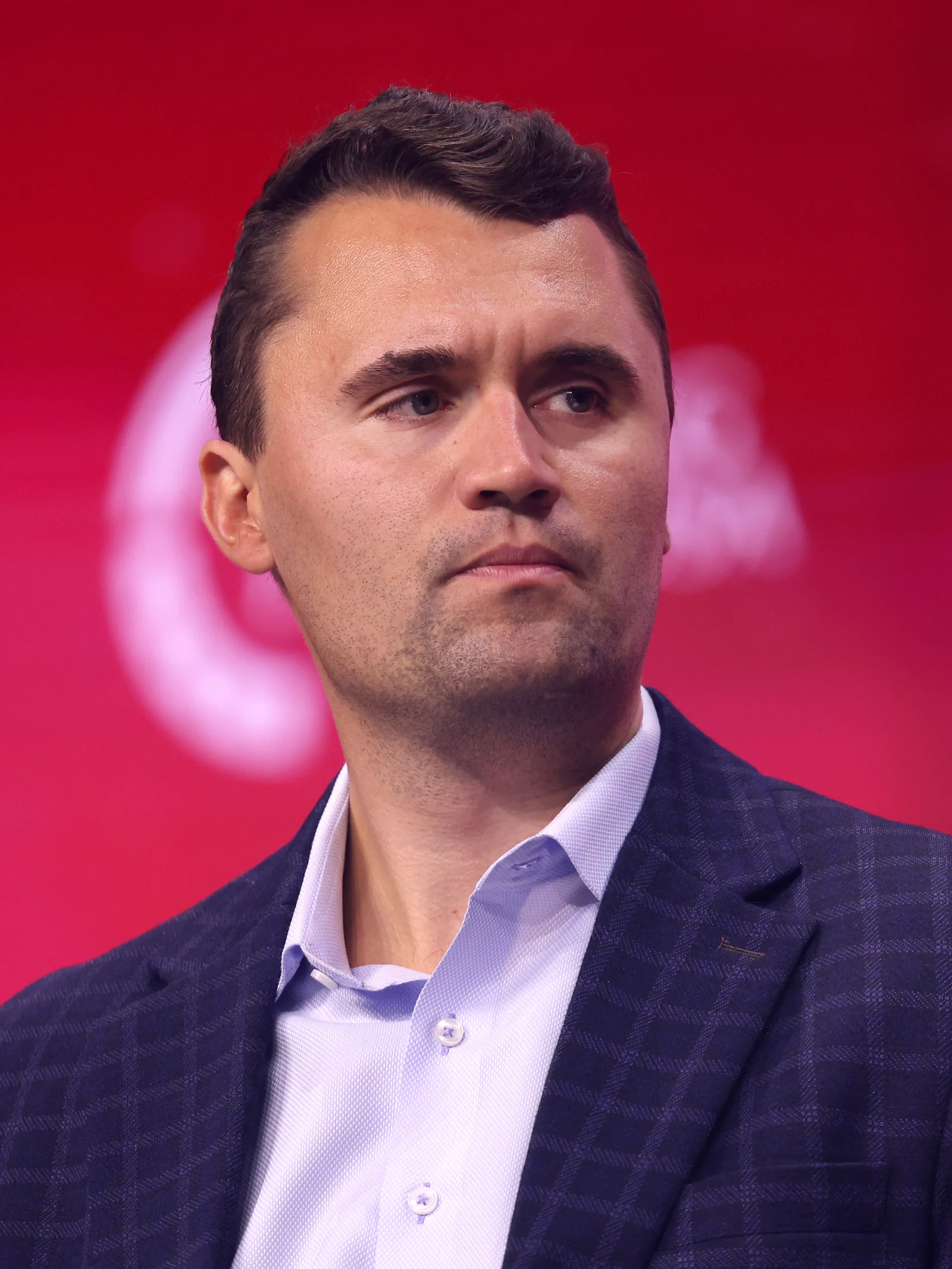
Attr: Gage Skidmore
| 78 Quotes | |
| Born as | Charles James Kirk |
| Occup. | Politician |
| From | USA |
| Born | October 14, 1993 Arlington Heights, Illinois, United States |
| Died | September 10, 2025 Utah, USA |
| Cause | Gunshot wound to the neck |
| Aged | 31 years |
| Cite | |
Citation Formats
APA Style (7th ed.)
Charlie kirk biography, facts and quotes. (2026, February 3). FixQuotes. https://fixquotes.com/authors/charlie-kirk/
Chicago Style
"Charlie Kirk biography, facts and quotes." FixQuotes. February 3, 2026. https://fixquotes.com/authors/charlie-kirk/.
MLA Style (9th ed.)
"Charlie Kirk biography, facts and quotes." FixQuotes, 3 Feb. 2026, https://fixquotes.com/authors/charlie-kirk/. Accessed 27 Mar. 2026.
Early Life and Background
Charles James Kirk was born on October 14, 1993, in the Chicago suburbs of Illinois, a region where prosperous corporate corridors meet older industrial towns and where post-9/11 politics often fused national security talk with arguments about markets, culture, and faith. He grew up in a household that he later framed as conventionally middle-class and civically minded, absorbing early the idea that personal success and national strength were tied to discipline, work, and ownership. The suburban Midwest of his youth also trained him to read politics as a conflict over norms - not only tax rates and regulations, but who gets to define what is respectable, patriotic, or permissible to say.Kirk came of age during the Great Recession and the Obama years, when youth politics was rapidly migrating to social media and when college campuses became symbolic battlegrounds in conservative storytelling. Those pressures - economic anxiety, partisan media, and a widening generational gap on religion and identity - shaped the kind of public figure he would become: less a backroom legislator than an activist-entrepreneur, building institutions, fundraising networks, and a personal brand that treated attention as power. He died on September 10, 2025, after a career spent in the glare of digital politics, where criticism and applause are both immediate and relentless.
Education and Formative Influences
Kirk attended public school in Illinois and briefly enrolled at Harper College before leaving formal higher education, a choice he folded into his critique of academia as both overpriced and ideologically policed. In his telling, the formative curriculum was not a degree program but conservative media, religious conviction, and mentorship from donors and strategists who believed the right needed a youth counterweight to progressive campus organizing. The early 2010s also offered a template: build lists, create sharable content, and convert outrage about "free speech" flashpoints into a durable membership machine.Career, Major Works, and Turning Points
Kirk co-founded Turning Point USA in 2012, turning it from a small youth project into a well-funded conservative organization focused on campus chapters, speaker tours, training conferences, and viral media. He became a prominent surrogate in the Trump era, aligning with a populist-right coalition while keeping a businesslike emphasis on donor relations and institutional growth; his podcasting and speaking circuit expanded his reach beyond campuses into the broader conservative base. He wrote books including "Time for a Turning Point" (2016) and later "The MAGA Doctrine" (2020), works that mixed movement catechism, tactical advice, and a combative critique of progressive institutions. The key turning point was the mid-2010s shift from policy argument to culture-war mobilization: Kirk positioned himself less as a policy technician than as a translator of grievance and identity into action, using controversy as a recruiting tool and treating every confrontation - especially on campuses - as evidence for his thesis about ideological capture.Philosophy, Style, and Themes
Kirk's politics fused free-market property logic, Christian moral anthropology, and a procedural claim about speech: that legitimacy requires open contestation. His rhetorical center of gravity was ownership and control, a theme he cast in stark, almost parental terms: “If you take away what a person owns, you control what that person can do”. Psychologically, the sentence functions as both libertarian axiom and personal warning - a worldview in which dependence is not merely economic but spiritual and civic, and where autonomy must be defended as a prerequisite for dignity. He extended that suspicion from economics into culture, presenting universities, media, and bureaucracies as systems that manufacture conformity by controlling credentials, attention, and language.His style was quick, declarative, and optimized for clips - a debate posture that treated hesitation as surrender and rewarded moral certainty. Even when he spoke the language of dialogue, it was usually in the key of conflict: “If you believe in something, you need to have the courage to fight for those ideas - not run away from them or try and silence them”. Underneath was a theological pessimism about human nature and a corresponding appetite for firm boundaries, captured in his claim, “I believe we're broken by sin upon birth”. The inner life implied by these lines is anxious about decay and coercion - a belief that people and institutions drift toward domination unless restrained - and it explains why his messaging so often cast politics as an emergency of encroachment rather than a slow negotiation over plural goods.
Legacy and Influence
Kirk's enduring impact lay less in legislative accomplishment than in infrastructure: he helped normalize a model of conservative organizing that treats campuses as symbolic terrain, uses podcasts and social video as primary instruments, and builds donor-backed training pipelines for young activists. Supporters credit him with giving right-leaning students a vocabulary and network in environments they experienced as hostile; critics argue he intensified polarization and monetized confrontation. Either way, he exemplified a distinct early-21st-century American political type - the influencer-institutionalist - and his career remains a case study in how modern movements recruit, radicalize, and professionalize in the attention economy.Our collection contains 78 quotes written by Charlie, under the main topics: Truth - Justice - Sarcastic - Leadership - Freedom.
Source / external links