
Charlotte Bronte Biography Quotes 31 Report mistakes
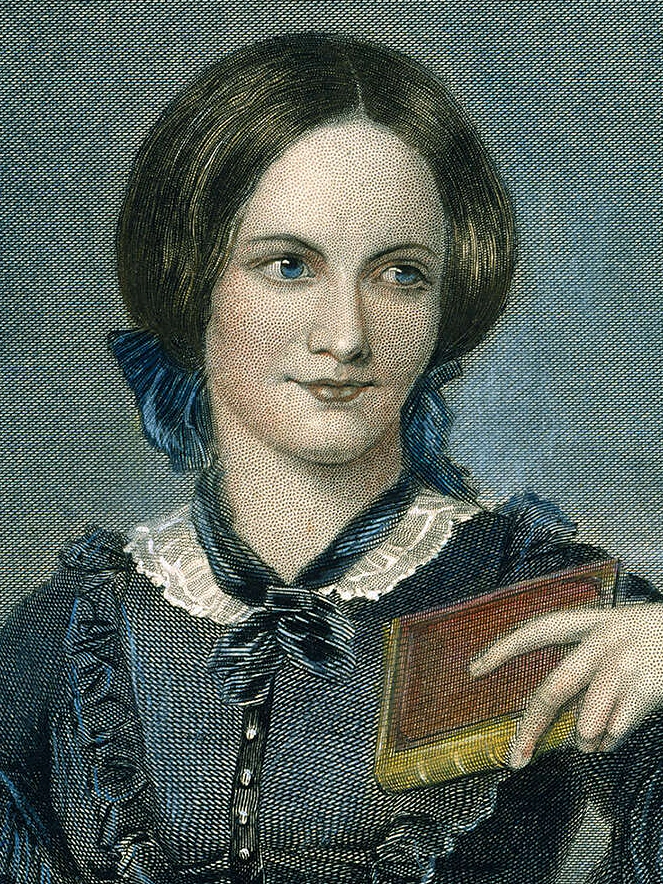
| 31 Quotes | |
| Known as | Currer Bell |
| Occup. | Novelist |
| From | United Kingdom |
| Born | April 21, 1816 Thornton, West Riding of Yorkshire, England |
| Died | March 31, 1855 Haworth, West Riding of Yorkshire, England |
| Aged | 38 years |
| Cite | |
Citation Formats
APA Style (7th ed.)
Charlotte bronte biography, facts and quotes. (2026, February 11). FixQuotes. https://fixquotes.com/authors/charlotte-bronte/
Chicago Style
"Charlotte Bronte biography, facts and quotes." FixQuotes. February 11, 2026. https://fixquotes.com/authors/charlotte-bronte/.
MLA Style (9th ed.)
"Charlotte Bronte biography, facts and quotes." FixQuotes, 11 Feb. 2026, https://fixquotes.com/authors/charlotte-bronte/. Accessed 26 Mar. 2026.
Early Life and Background
Charlotte Bronte was born on 21 April 1816 in Thornton, Yorkshire, the third of six children of Patrick Bronte, an Irish-born Anglican clergyman, and Maria Branwell, from Cornwall. Soon after her birth the family moved to Haworth, a moorland parish whose isolation, harsh weather, and tight-knit dissenting-tinged culture shaped the Brontes' inner weather as much as their daily routines. The parsonage looked onto the graveyard; illness and early death were not abstractions but neighbors.In 1821 Maria Bronte died, leaving Charlotte and her siblings largely in the care of their aunt, Elizabeth Branwell. The household became a forge of private imagination: Charlotte, Branwell, Emily, and Anne invented elaborate sagas - Glass Town, Angria, and later Gondal - filling tiny handmade books with politics, romance, war, and ambition. The intensity of this inward life was not mere play but a strategy for endurance, a way to turn deprivation into narrative control.
Education and Formative Influences
In 1824 Charlotte and her sisters were sent to the Clergy Daughters' School at Cowan Bridge, where cold, hunger, and disease culminated in the deaths of Maria and Elizabeth Bronte; Charlotte's memories fed the depiction of Lowood in Jane Eyre. Later she studied at Roe Head School, Mirfield, forming lasting ties with Mary Taylor and Ellen Nussey, friendships that broadened her intellectual horizon beyond Haworth. Work as a teacher and governess followed, and in 1842 she and Emily traveled to Brussels to study at the Pensionnat Heger, where her intense attachment to Constantin Heger sharpened her understanding of desire, discipline, and humiliation - emotional materials she would transmute into fiction.Career, Major Works, and Turning Points
Financial necessity and artistic urgency drove Charlotte toward publication: in 1846 she, Emily, and Anne issued Poems by Currer, Ellis, and Acton Bell, adopting male pseudonyms to pass the gatekeepers of a skeptical literary market. Charlotte's first novel, The Professor, was rejected; she pivoted to Jane Eyre (1847), a sensation that married Gothic energy to moral realism and a fiercely self-auditing voice. The year of triumph was also a year of collapse: Branwell died in 1848, Emily later that year, and Anne in 1849, leaving Charlotte as the public face of a family suddenly mythologized. She followed with Shirley (1849), a social novel rooted in Yorkshire industrial unrest, and Villette (1853), her most psychologically acute work, shaped by Brussels and by a mature understanding of loneliness. In 1854 she married her father's curate, Arthur Bell Nicholls, after long resistance; she died in Haworth on 31 March 1855, pregnant, amid illness often attributed to hyperemesis gravidarum complicated by infection.Philosophy, Style, and Themes
Bronte wrote from the pressure point where conscience meets longing. Her heroines are not simply rebellious; they are watchful, articulate judges of their own motives, determined to keep self-respect intact even when love, poverty, or social contempt tries to bargain it away. Her narratives insist that feeling must be examined, not merely indulged, and that the self must be earned through repeated acts of perception. That inward severity helps explain why her romantic plots do not drift into wish-fulfillment: “Life is so constructed, that the event does not, cannot, will not, match the expectation”. The sentence distills her psychological realism - a mind trained by loss to distrust easy endings, yet still hungry for meaning.At the same time, Bronte rejected the polite equation of manners with virtue. In her moral universe, the respectable can be cruel, and the irregular can be honorable; “Conventionality is not morality”. Her art repeatedly stages tests of integrity in settings designed to grind it down: charity schools, drawing rooms, churches, and the employment market for single women. She also understood, from the Bronte siblings' shared creative life and from the devastation of bereavement, that attachment could be both refuge and identity: “You know full well as I do the value of sisters' affections: There is nothing like it in this world”. That credo clarifies the tenderness beneath her austerity - the sense that love is precious precisely because it is fragile and time-limited.
Legacy and Influence
Charlotte Bronte helped redefine the English novel by making the interior voice - morally intelligent, socially embattled, and sexually honest within the limits of her era - the engine of plot. Jane Eyre became a template for the modern heroine: poor but principled, desiring yet self-governing, insisting on spiritual and emotional equality. Villette extended that achievement into a more ambiguous, modern register, where narration itself becomes a defense and a confession. Across Victorian literature and beyond, Bronte's influence persists in feminist criticism, in the psychological novel, and in countless retellings that return to her central claim: that a woman's consciousness is not an ornament of the story but its authority.Our collection contains 31 quotes written by Charlotte, under the main topics: Witty One-Liners - Motivational - Ethics & Morality - Truth - Wisdom.
Other people related to Charlotte: Elizabeth Gaskell (Novelist)
Charlotte Bronte Famous Works
- 1857 The Professor (Novel)
- 1853 Villette (Novel)
- 1849 Shirley (Novel)
- 1847 Jane Eyre (Novel)
- 1846 Poems by Currer, Ellis, and Acton Bell (Collection)
- 1831 The Young Men's Magazine (juvenilia) (Collection)