
Chloe Kim Biography Quotes 7 Report mistakes
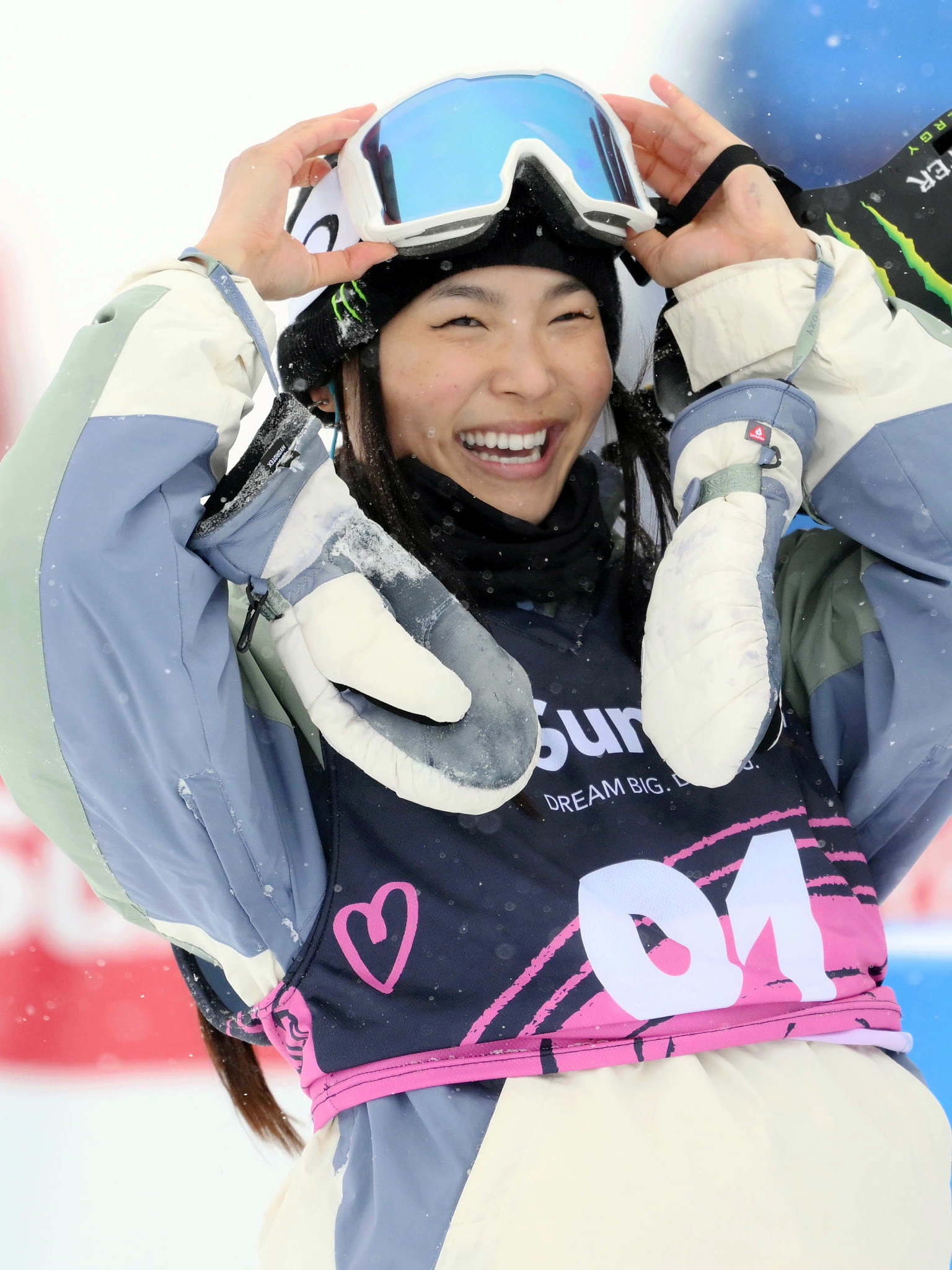
Attr: Snowboarder.com
| 7 Quotes | |
| Occup. | Athlete |
| From | USA |
| Born | April 23, 2000 Long Beach, California, USA |
| Age | 25 years |
| Cite | |
Citation Formats
APA Style (7th ed.)
Chloe kim biography, facts and quotes. (2026, February 23). FixQuotes. https://fixquotes.com/authors/chloe-kim/
Chicago Style
"Chloe Kim biography, facts and quotes." FixQuotes. February 23, 2026. https://fixquotes.com/authors/chloe-kim/.
MLA Style (9th ed.)
"Chloe Kim biography, facts and quotes." FixQuotes, 23 Feb. 2026, https://fixquotes.com/authors/chloe-kim/. Accessed 5 Apr. 2026.
Early Life and Background
Chloe Kim was born April 23, 2000, in Long Beach, California, the daughter of Korean immigrants who had come to the United States pursuing steadier work and wider horizons. She grew up in Southern California at the hinge point between beach culture and the emerging action-sports industry, where skateparks, surf shops, and winter-sport aspirations often shared the same youth pipelines.Her family life shaped both her work ethic and her sense of being between worlds. Kim has spoken often about her father, who structured much of her early training and logistics, and about the quiet, constant labor behind elite sport: early drives, long days, and the emotional economy of a household investing in a dream. That background produced a competitor who could look relaxed on camera while carrying the unglamorous weight of preparation and expectation.
Education and Formative Influences
Kim attended local schools while training year-round, moving between Southern California and snow to build a halfpipe foundation early; by her early teens she was already winning major youth and pro events, including the 2015 X Games, and quickly became one of the most technically ambitious riders in women’s halfpipe. Her formative influences were both technical and cultural: the progression-centric ethos of snowboarding, a sport that rewards invention as much as execution, and a generation raised on social media, where every run is instantly edited into narrative - triumph, failure, or controversy - and where identity is negotiated in public.Career, Major Works, and Turning Points
Kim’s career accelerated with unusual speed: she won the 2016 Winter Youth Olympics and dominated the X Games and World Cup circuit, then became the breakout star of the 2018 PyeongChang Olympics, winning gold in women’s halfpipe at 17 with a final that showcased her amplitude and control under spotlight pressure. She followed with continued X Games success and major event wins, then confronted a different kind of turning point - the psychological strain of constant performance - taking a step back from full-time competition after the 2018 cycle and later enrolling at Princeton University. Her return culminated in another Olympic gold in the halfpipe at Beijing 2022, a rare feat in a sport where injury risk, rapid technical evolution, and media saturation regularly shorten primes.Philosophy, Style, and Themes
Kim’s riding style reads like her personality in motion: buoyant, playful, and outwardly unbothered, but built on meticulous timing and repeatable mechanics. In the halfpipe, where height amplifies both scoring potential and danger, she became a model of modern progression - big airs, clean grabs, and spins delivered with a calm that suggested inner quiet. Yet the most revealing aspect of her public story has been the tension between that calm image and the lived interior of elite sport, especially for a young woman made into a symbol before she was fully grown.Her interviews over the years show an athlete trying to reclaim autonomy from the machinery around her. “If competing wasn’t bringing me joy, then what’s the point?” That statement is less slogan than boundary - a decision to treat joy as a performance metric, not a luxury, and to resist the identity trap where self-worth depends on podiums. She has also insisted on the legitimacy of vulnerability: “I'm a human being too. I get stressed, I cry myself to sleep”. Read psychologically, this is a counter-narrative to the Olympic superhero myth, a way of naming the private costs of public excellence. And she has described the corrosive side of perfectionism with unusual clarity: “I felt pressured to be perfect all the time, and it drained me”. In a sport scored by judges and consumed online in clipped highlights, that pressure is structural - but her response has been to slow the tempo, protect the mind, and return only when motivation feels intrinsic.
Legacy and Influence
Kim’s legacy is twofold: competitive and cultural. Competitively, she helped redefine what women’s halfpipe could look like at the highest level, raising expectations for amplitude, difficulty, and composure, and proving that back-to-back Olympic cycles could be navigated without burning out on schedule. Culturally, she became one of the most recognizable faces of winter sport in the United States in the late 2010s and early 2020s, a Korean American star whose visibility mattered in an industry long centered elsewhere, and an outspoken example of a new athletic maturity - one that treats mental health, rest, and self-respect as part of training, not distractions from it.Our collection contains 7 quotes written by Chloe, under the main topics: Mental Health - Happiness - Stress - Joy.
Source / external links