
Chloé Zhao Biography Quotes 12 Report mistakes
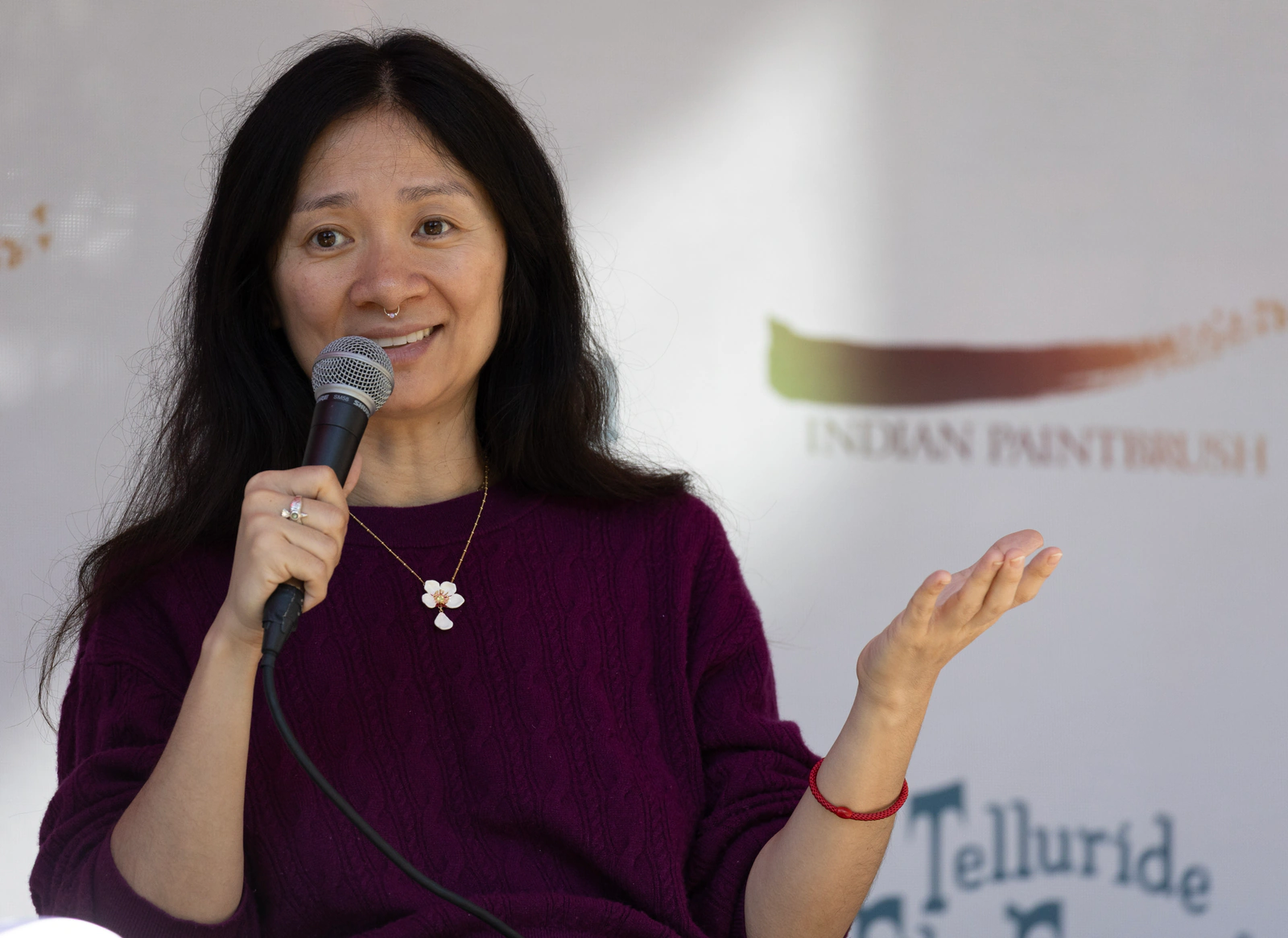
| 12 Quotes | |
| Born as | Zhao Ting |
| Known as | Chloe Zhao |
| Occup. | Director |
| From | China |
| Born | March 31, 1982 Beijing, China |
| Age | 43 years |
| Cite | |
Citation Formats
APA Style (7th ed.)
Chloé zhao biography, facts and quotes. (2026, February 11). FixQuotes. https://fixquotes.com/authors/chloe-zhao/
Chicago Style
"Chloé Zhao biography, facts and quotes." FixQuotes. February 11, 2026. https://fixquotes.com/authors/chloe-zhao/.
MLA Style (9th ed.)
"Chloé Zhao biography, facts and quotes." FixQuotes, 11 Feb. 2026, https://fixquotes.com/authors/chloe-zhao/. Accessed 25 Mar. 2026.
Early Life and Background
Chloe Zhao was born Zhao Ting on March 31, 1982, in Beijing, China, into a country rushing through post-Mao reinvention, where new wealth and new dislocation rose side by side. Her childhood unfolded amid stark contrasts - elite opportunity alongside the psychological pressure of performance and belonging - and she grew up with a widening awareness that identity could be both inherited and improvised.Family life helped form her private compass. She has described a father who valued classical learning, and early exposure to poetry and aphorism gave her a language for moral inquiry before she had one for cinema. That early tension - between the permanence of texts and the volatility of lived experience - later reappeared in her films as a search for intimate truth inside vast landscapes.
Education and Formative Influences
As a teenager Zhao left China, first attending boarding school in the United Kingdom and then moving to the United States, an immigrant trajectory that sharpened her sensitivity to codes of class, accent, and self-invention. She studied political science at Mount Holyoke College in Massachusetts, a training that honed her eye for systems and power without extinguishing her attraction to the individual life, and later pursued film at New York Universitys Tisch School of the Arts, where the traditions of American independent cinema, documentary practice, and location-based realism aligned with her instinct to learn from ordinary people rather than impose a thesis on them.Career, Major Works, and Turning Points
Zhao emerged in the 2010s as a distinctive American independent filmmaker with Songs My Brothers Taught Me (2015), shot on the Pine Ridge Reservation in South Dakota with many nonprofessional performers; it introduced her method of building narrative around real communities and their daily textures. She deepened that approach with The Rider (2017), inspired by rodeo rider Brady Jandreau and shaped around his real injury and recovery, earning major critical acclaim and positioning her as an heir to lyrical neorealism. Her international breakthrough came with Nomadland (2020), adapted from Jessica Bruders nonfiction book and centered on Frances McDormands Fern among older Americans living in vans after economic upheaval; the film won the Golden Lion at Venice and multiple Academy Awards, including Best Director for Zhao. She then made the franchise-scale Eternals (2021), a pivot that tested whether her eye for faces, skies, and moral solitude could survive industrial spectacle, and that very tension - between intimate observation and mythic canvas - became a new axis of her career.Philosophy, Style, and Themes
Zhaos films are built on motion: people driving, drifting, working, healing, leaving, returning. The road is not an aesthetic flourish but an ethical position - a way to resist defining characters by diagnosis, headline, or stereotype. She gravitates toward communities that the center of society depends on and then forgets, and she films them with a patient respect for silence, routine labor, and the unsentimental beauty of place. Her realism is tactile - natural light, wide horizons, lived-in interiors - yet her narratives lean mythic, asking what it means to persist when the social contract frays.Under the quiet surfaces sits a stubborn moral optimism that functions as psychological self-definition. She has framed her worldview as a learned practice rather than naive faith: “I have always found goodness in the people that I met everywhere I went in the world”. That belief becomes method as well as theme, because trust is how her cinema is made: “The thing I learned the most is that if you approach people with openness and without judgment, they will open their lives to you”. And her resistance to pity is deliberate, almost protective - a way of preserving agency for characters who could easily be reduced to symbols of decline: “What I'm interested in is not a story of victimhood. I'm interested in people's resilience and their agency, even in difficult circumstances”. In this light, her spare dialogue and attention to work, weather, and waiting read like a discipline of attention: she insists that dignity is not granted by plot twists, but revealed through how a life is actually lived.
Legacy and Influence
Zhao helped redefine what mainstream audiences expect from American realism in the 21st century, proving that films rooted in non-actors, remote geographies, and economic precarity can reach the highest levels of global prestige without surrendering intimacy. Her Oscar win expanded the horizon for women directors and for Chinese-born artists working in Hollywood, while her Pine Ridge and rodeo films became touchstones for ethically engaged casting and community collaboration. Just as importantly, her work has influenced a generation of filmmakers seeking a humane alternative to cynicism - cinema that listens first, travels lightly, and treats the overlooked not as problems to be solved, but as full protagonists of their own unfinished lives.Our collection contains 12 quotes written by Chloé, under the main topics: Learning - Resilience - Kindness - Movie - Change.
Other people related to Chloé: Frances McDormand (Actress)
Source / external links