
Christian Siriano Biography Quotes 4 Report mistakes
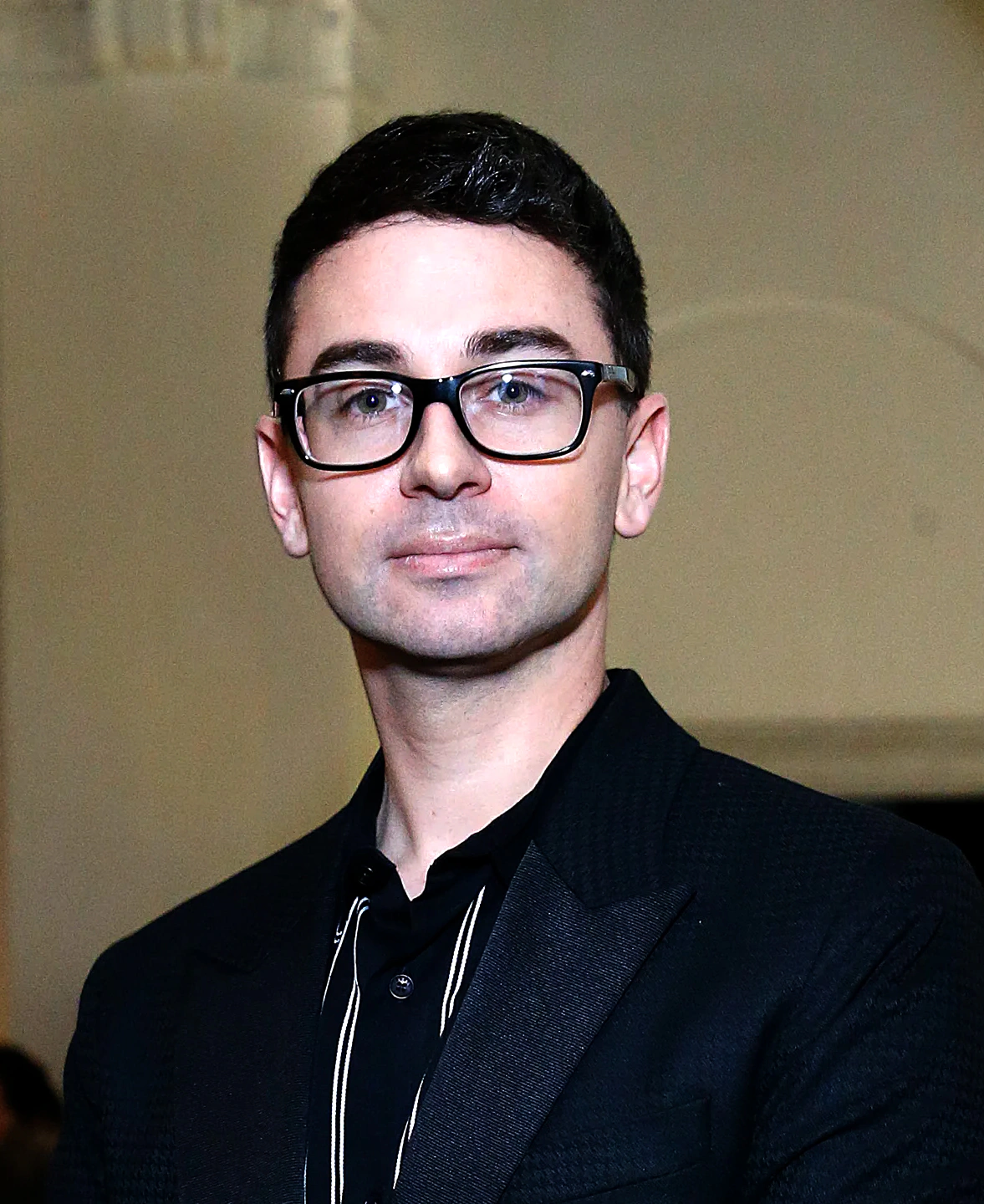
| 4 Quotes | |
| Occup. | Designer |
| From | USA |
| Spouse | Brad Walsh |
| Born | November 18, 1985 Annapolis, Maryland, USA |
| Age | 40 years |
| Cite | |
Citation Formats
APA Style (7th ed.)
Christian siriano biography, facts and quotes. (2026, February 11). FixQuotes. https://fixquotes.com/authors/christian-siriano/
Chicago Style
"Christian Siriano biography, facts and quotes." FixQuotes. February 11, 2026. https://fixquotes.com/authors/christian-siriano/.
MLA Style (9th ed.)
"Christian Siriano biography, facts and quotes." FixQuotes, 11 Feb. 2026, https://fixquotes.com/authors/christian-siriano/. Accessed 5 Mar. 2026.
Early Life and Background
Christian Siriano was born on November 18, 1985, in Annapolis, Maryland, a small coastal city whose nautical, upper-middle-class polish never quite matched his temperament. He has described the setting with affectionate distance: “Well I am from Annapolis Maryland. I went to High school in Baltimore, but I grew up in Annapolis. It was a cute town. We lived on a waterfront community. It was good, even though I don't really fit the preppy boater kind of style”. That early sense of being visually and socially miscast became less a wound than a compass, pushing him toward worlds where theatricality and self-invention were virtues.Family support, and the presence of a sister involved in dance, helped fashion become less a hobby than a language. As a child he absorbed performance from the wings - the way clothes move, signal character, and manufacture confidence. In later recollections, his origin story is not about glamour but about attention: watching, sketching, and learning that a garment can be an argument for who gets to be seen.
Education and Formative Influences
Siriano trained at the American InterContinental University in London, where proximity to European fashion history and working ateliers sharpened his eye for craft and silhouette, and he interned with Vivienne Westwood and Alexander McQueen - houses that treated fashion as a high-drama art form with rigorous construction underneath. Those experiences, combined with an American instinct for pop immediacy, formed a designer fluent in both couture fantasy and the media age that would soon demand designers be personalities as well as makers.Career, Major Works, and Turning Points
In 2008, at just 22, Siriano won season four of "Project Runway", leveraging reality television into a rare, durable fashion business at a moment when the industry was beginning to fuse runways with celebrity and social platforms. He launched the Christian Siriano brand, built a reputation for bold color, sculptural shapes, and event dressing, and expanded into fragrance, accessories, and collaborations while maintaining a New York-based studio. A pivotal shift came as his visibility grew through red-carpet moments and high-profile clients - including dressing figures like Michelle Obama and, notably, outfitting performers such as Billy Porter, whose tuxedo-gown at the 2019 Oscars became a cultural flashpoint for gendered dress codes. Siriano also drew wide praise for publicly offering to dress actress Leslie Jones in 2018 when designers would not, a gesture that crystallized his long-running commitment to broader size inclusion and to treating visibility as part of design labor.Philosophy, Style, and Themes
Siriano understands fashion as a form of performance rooted in childhood fascination and self-driven obsession: “It was something I was more interested in myself. When I went to see my sister dance at ballet, I was really into costumes and the arts, and my family was also supportive of whatever me and my sister wanted to do. I would say I pushed myself the most to be into design”. That psychology - ambition built from internal pressure rather than permission - helps explain his persistent productivity and his appetite for spectacle: he designs as if the wearer is stepping into light, and the garment must hold the moment.Yet he resists the idea that drama equals disguise. “I hate the terminology of 'costume' because my clothes are not costumes at all. I think they're high fashion, avant-garde, and more couture, definitely, and yes, some of my pieces are not particularly wearable, but I wouldn't say they're costumes, I'd say they're more couture”. This is not semantic fussiness; it is a statement of dignity for the craft and for the client. In Siriano's work, exaggeration is disciplined by construction, and fantasy is framed as legitimacy - a bid to place plus-size bodies, queer self-presentation, and high-octane color inside the same serious, atelier-minded conversation as traditional couture.
Legacy and Influence
Siriano's enduring influence lies in proving a post-2000s path: a designer can emerge from reality TV without becoming disposable, can court celebrity while defending technique, and can translate inclusive casting and sizing into a business principle rather than a marketing slogan. In an era increasingly attentive to who fashion serves, his brand has helped normalize the expectation that major red-carpet glamour should be available across sizes and identities, and his most memorable looks have functioned as cultural punctuation marks - garments that do not merely decorate a person, but argue for the right to be seen on one's own terms.Our collection contains 4 quotes written by Christian, under the main topics: Art - Nostalgia - Career.
Source / external links