
Christopher Dawson Biography Quotes 30 Report mistakes
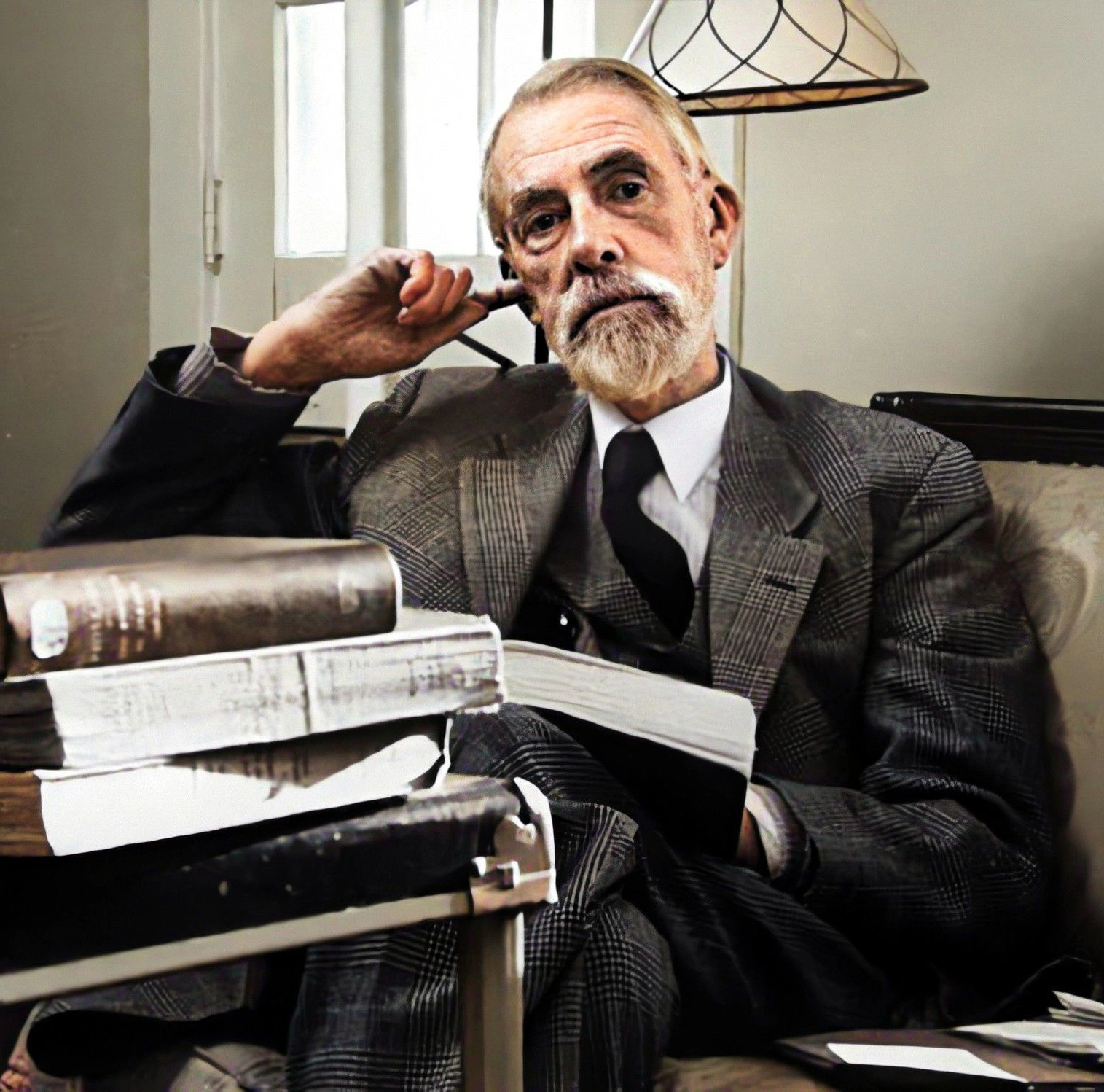
| 30 Quotes | |
| Occup. | Writer |
| From | England |
| Born | October 12, 1889 |
| Died | May 25, 1970 |
| Aged | 80 years |
| Cite | |
Citation Formats
APA Style (7th ed.)
Christopher dawson biography, facts and quotes. (2026, February 11). FixQuotes. https://fixquotes.com/authors/christopher-dawson/
Chicago Style
"Christopher Dawson biography, facts and quotes." FixQuotes. February 11, 2026. https://fixquotes.com/authors/christopher-dawson/.
MLA Style (9th ed.)
"Christopher Dawson biography, facts and quotes." FixQuotes, 11 Feb. 2026, https://fixquotes.com/authors/christopher-dawson/. Accessed 6 Mar. 2026.
Early Life and Background
Christopher Henry Dawson was born on October 12, 1889, in Hay Castle, near Hay-on-Wye on the Welsh border, into an English Catholic family whose life combined land, books, and a sense of older Europe. His father, a military officer, died when Dawson was young, and the household moved in the orbit of his mother and a circle of relatives and tutors. The border country mattered: it was a landscape of layered memory, where Norman, Welsh, and English histories sat close together, and it trained Dawson early to see culture as something embodied in place, ritual, and continuity rather than in abstract ideas.He came of age as late-Victorian confidence gave way to the shocks of the twentieth century. The First World War did not make him a soldier, but it made him a witness: mass politics, propaganda, and the mechanization of life pressed on every serious mind. In an era that increasingly defined progress in technical and economic terms, Dawson gravitated toward the long view of civilizations and the quieter forces that hold societies together when ideologies fracture.
Education and Formative Influences
Dawson was educated at Winchester College and studied at Trinity College, Oxford, reading modern history. At Oxford he absorbed the discipline of historical method while turning against narrow political narratives; he read widely in anthropology, comparative religion, and continental historical writing, and he followed the Catholic revival in English letters as well as the ferment of French and German thought. The intellectual atmosphere of prewar Oxford and the postwar crisis in European confidence helped fix his central question: what deep sources generate a civilization, and what happens when those sources are denied or exhausted?Career, Major Works, and Turning Points
After the war Dawson lived largely as an independent scholar and public intellectual, writing essays and books that made him one of the most recognizable Catholic historians in the English-speaking world. His reputation was established by The Age of the Gods (1928), Progress and Religion (1929), and The Making of Europe (1932), followed by Religion and the Rise of Western Culture (1950), which clarified his thesis that religion is the dynamic center of cultural formation. He wrote against the background of totalitarianism, world war, and the Cold War, arguing that secular states, when severed from inherited moral capital, tend to generate substitute faiths. In 1958 he became the first holder of the Stillman Chair of Roman Catholic Studies at Harvard University, a late institutional recognition that also underscored his outsider status: he remained less a university specialist than a synthesizer of long periods, a diagnostician of civilizational health. He died on May 25, 1970, after returning to England.Philosophy, Style, and Themes
Dawson treated history as the biography of cultures, and cultures as the outward expression of spiritual commitments. He argued that economics and politics explain much, but not the inner propulsion of a society - its symbols, moral imagination, and sense of destiny. In his account, the West was not simply a machine for growth but a fragile moral tradition, and he stated the point with the directness of a controversialist: “As I have pointed out, it is the Christian tradition that is the most fundamental element in Western culture. It lies at the base not only of Western religion, but also of Western morals and Western social idealism”. That insistence was not nostalgia; it was a claim about cultural causality, and it carried an implicit warning that a civilization that forgets its sacred sources will misunderstand itself.His prose was lucid, compressed, and comparative, moving from monastic reform to modern mass society with the same underlying psychological concern: what human beings will sacrifice for, and what they become when sacrifice is reduced to comfort. “If man limits himself to a satisfied animal existence, and asks from life only what such an existence can give, the higher values of life at once disappear”. This was Dawson the moral realist, distrustful of utopias and of political movements that promised salvation through technique; he believed the desire for transcendence, if repressed, returns in distorted forms. That is why he distrusted righteous violence as much as cynical power: “As soon as men decide that all means are permitted to fight an evil, then their good becomes indistinguishable from the evil that they set out to destroy”. The sentence reveals an inner temperamental discipline - a fear of spiritual self-deception - and a historian's sense that modern barbarism can be born from ideals when conscience is subordinated to strategy.
Legacy and Influence
Dawson left no school in the narrow academic sense, but he helped shape twentieth-century Christian humanism and the postwar debate about secularization by giving it historical depth and a vocabulary of culture, religion, and social imagination. Read alongside contemporaries such as T.S. Eliot and later invoked by scholars of civilizational history, he remains influential less for any single archival discovery than for a method: treating religion as a primary historical force and modernity as a spiritual problem as well as a political one. In an age tempted to reduce human meaning to consumption or ideology, Dawson endures as a diagnostician of the West's inner life - and as a writer who insisted that civilizations die first in the realm of belief, long before they collapse in institutions.Our collection contains 30 quotes written by Christopher, under the main topics: Ethics & Morality - Wisdom - Justice - Writing - Freedom.
Christopher Dawson Famous Works
- 1967 The Formation of Christendom (Book)
- 1961 The Crisis of Western Education (Book)
- 1950 Religion and the Rise of Western Culture (Book)
- 1932 The Making of Europe (Book)
- 1929 Progress and Religion (Book)
- 1928 The Age of the Gods (Book)
Source / external links