
Christopher Dodd Biography Quotes 28 Report mistakes
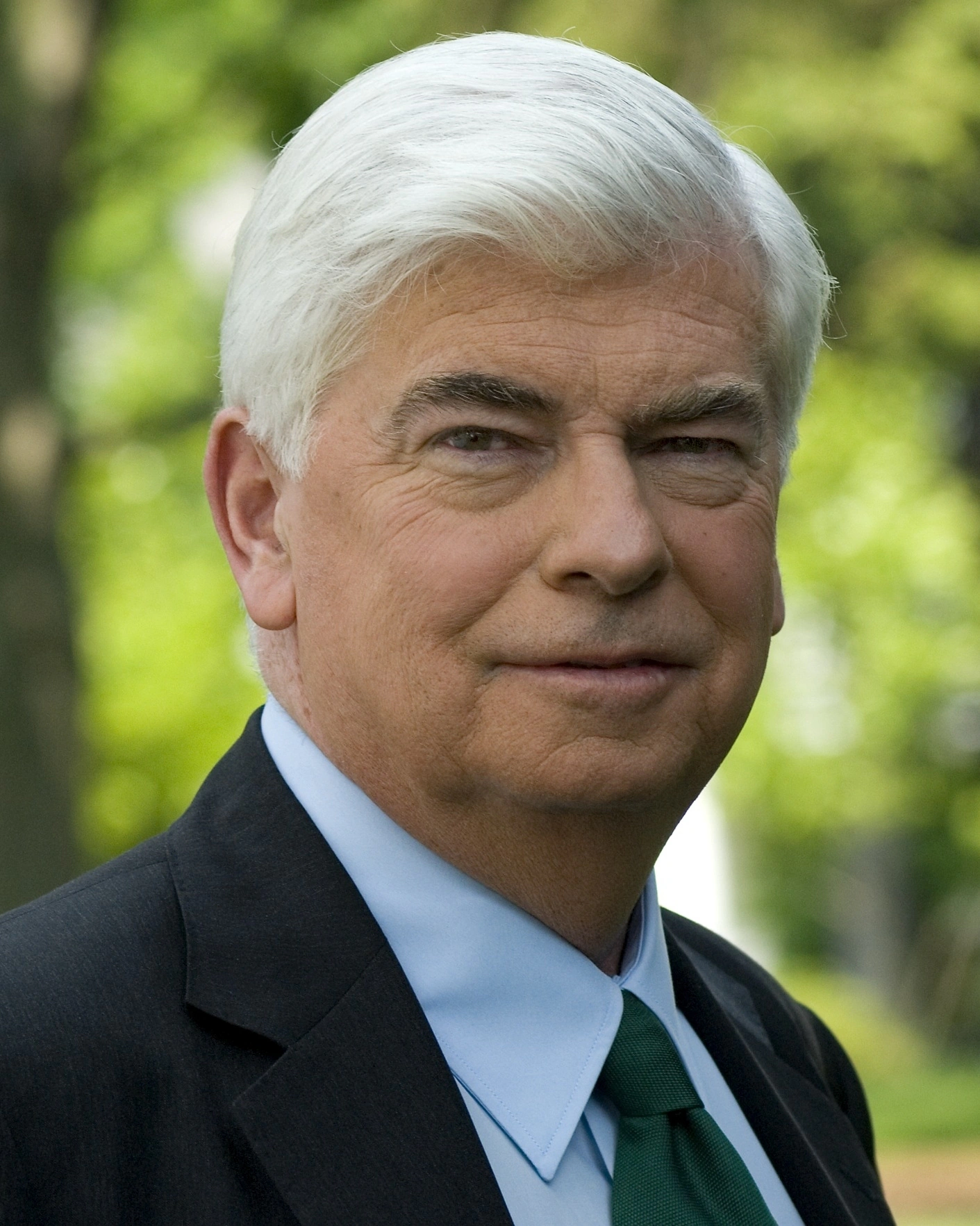
| 28 Quotes | |
| Occup. | Politician |
| From | USA |
| Born | May 27, 1944 |
| Age | 81 years |
| Cite | |
Citation Formats
APA Style (7th ed.)
Christopher dodd biography, facts and quotes. (2026, February 11). FixQuotes. https://fixquotes.com/authors/christopher-dodd/
Chicago Style
"Christopher Dodd biography, facts and quotes." FixQuotes. February 11, 2026. https://fixquotes.com/authors/christopher-dodd/.
MLA Style (9th ed.)
"Christopher Dodd biography, facts and quotes." FixQuotes, 11 Feb. 2026, https://fixquotes.com/authors/christopher-dodd/. Accessed 26 Mar. 2026.
Early Life and Background
Christopher John Dodd was born on May 27, 1944, in Willimantic, Connecticut, into a family where public life was less an abstraction than a household climate. His father, Thomas J. Dodd, rose from federal prosecutor to U.S. senator, and the younger Dodd grew up watching the rituals of constituent service, the pressures of Washington, and the moral ambiguity that can cling to power. That inheritance was double-edged: it offered a clear pathway into politics, but it also exposed him early to scrutiny and to the ways reputation can be won and lost.Connecticut in Dodd's youth was transitioning from mill-town economies to a more diversified mix of insurance, aerospace, and suburban growth. Dodd carried a distinctly Connecticut sensibility into adulthood - pragmatic, institution-minded, and sensitive to how national policy lands in small cities and working communities. The shadow of his father's later censure by the Senate did not merely haunt the family name; it sharpened Dodd's own preoccupation with credibility, rules, and the reputational fragility of democratic institutions.
Education and Formative Influences
Dodd attended Georgetown Preparatory School and then Providence College, graduating in 1966, before earning a law degree from the University of Louisville in 1972. Between those degrees he served in the U.S. Peace Corps in the Dominican Republic, an experience that grounded his politics in lived encounters with poverty, governance, and U.S. influence abroad. The arc from Catholic schooling to Peace Corps service to law trained him to treat politics as both moral argument and administrative craft, with a lifelong emphasis on rights, social protection, and the legitimacy that comes from patient institution-building rather than theatrical rupture.Career, Major Works, and Turning Points
Dodd entered electoral politics as a reform-minded Democrat, serving in the U.S. House (1975-1981) and then in the U.S. Senate (1981-2011) for Connecticut. In the Senate he became closely identified with civil liberties and social policy, but his most consequential imprint came through committee power: as chair of the Senate Banking Committee and as a central author of the 2010 Dodd-Frank Wall Street Reform and Consumer Protection Act, drafted in the aftermath of the 2008 financial crisis to tighten oversight, create the Consumer Financial Protection Bureau, and curb systemic risk. Other defining moments included his work on family and education policy, his role in Latin America and human-rights debates of the 1980s, and his visibility during the post-9/11 era as the country recalibrated security and liberty. He ran for the Democratic presidential nomination in 2008, then withdrew; in 2010 he announced retirement from the Senate, later serving as chairman and CEO of the Motion Picture Association (2011-2017), where he pivoted from legislating to representing an industry in global and technological transition.Philosophy, Style, and Themes
Dodd's political psychology blended empathy with procedural faith: he believed durable reform is built through coalition work, hearings, and negotiated text, not only through rhetoric. His instinct was protective - for families buffeted by illness, aging, and financial shocks - and that protective impulse shaped both his legislative priorities and his public language. “Working families need to know that we will work to protect their health needs, promote the development of safe, effective medicines, and guarantee patient rights”. The sentence reads like a mission statement for a senator who saw citizenship as a promise enforced by policy detail: regulation as moral instrument, and government as the place where private vulnerability becomes a public responsibility.He also framed policy as intergenerational stewardship, returning repeatedly to children, seniors, and the long horizon of consequences. “Our nation's children are our greatest asset and our most precious treasure”. In Dodd's worldview, that was not sentimentalism but a governing criterion - a way to justify education spending, child welfare protections, and a politics of prevention rather than repair. Even his approach to environmental policy, often presented in economic terms, carried a similar ethic of balance and continuity: “We learned that economic growth and environmental protection can and should go hand in hand”. The line reveals his characteristic refusal of false binaries, and it helps explain why he was often at his strongest in the committee room, where tradeoffs could be engineered into workable law.
Legacy and Influence
Dodd's legacy is most visible in the architecture of modern financial regulation: Dodd-Frank reshaped bank supervision, consumer protection, and crisis-response tools, even as parts of it were contested, amended, and politically re-litigated. He also left a durable imprint on the Democratic Party's late-20th-century move toward rights-focused, institution-centered governance - a belief that liberty and security, growth and regulation, markets and protections must be continuously negotiated rather than resolved once and for all. For admirers, he modeled the senator as craftsman - imperfect, ambitious, and occasionally entangled in the transactional culture of Washington, yet capable of turning crisis into statute. For critics, his career illustrates how deeply the legitimacy of reform depends on public trust. Either way, Dodd remains a defining figure of the era when Congress tried to reassert control over a fast-moving economy and a newly volatile political age.Our collection contains 28 quotes written by Christopher, under the main topics: Nature - Leadership - Freedom - Parenting - Equality.
Source / external links