
Christopher Marlowe Biography Quotes 25 Report mistakes
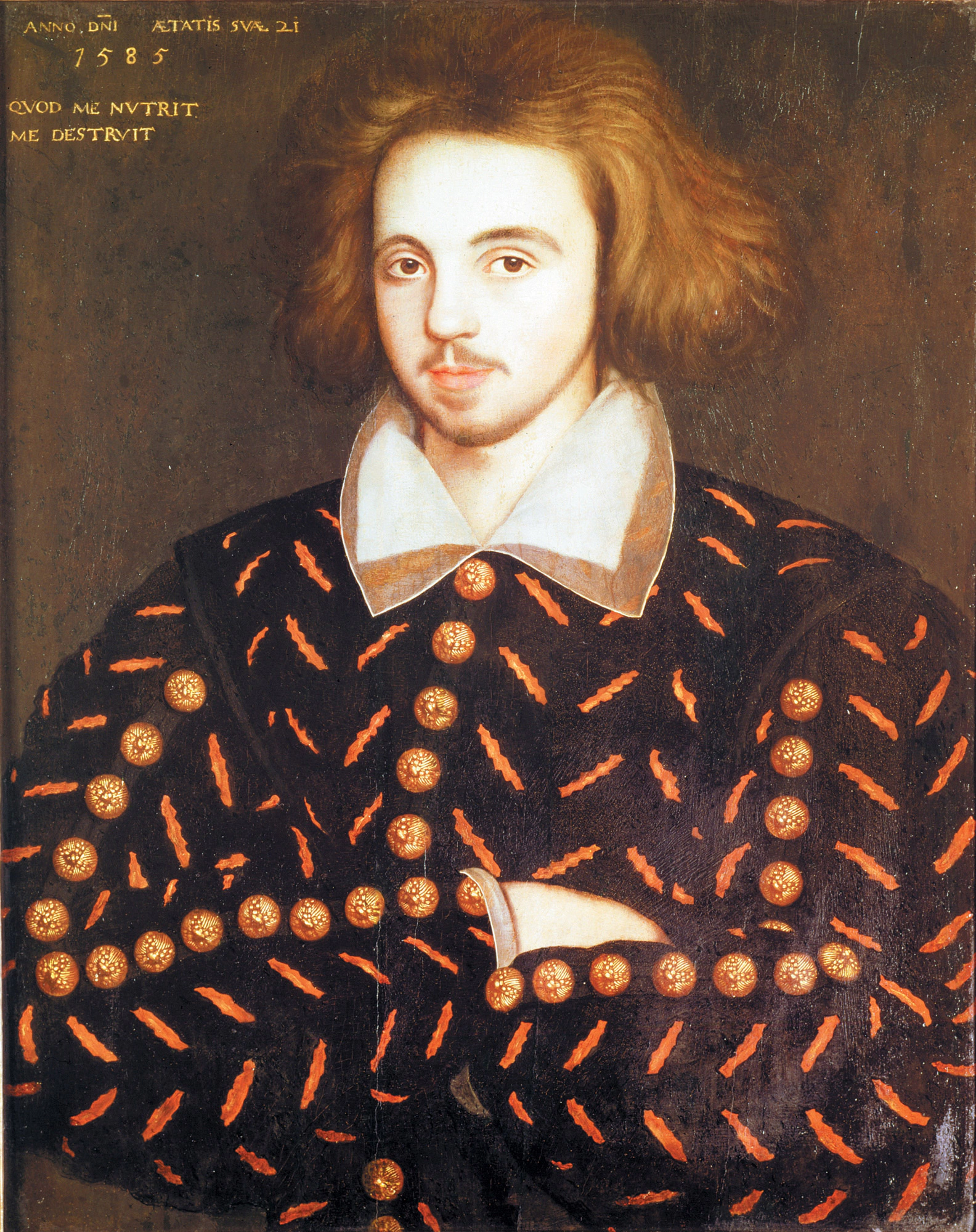
Attr: British School
| 25 Quotes | |
| Occup. | Dramatist |
| From | England |
| Born | February 26, 1564 England |
| Died | May 30, 1593 England |
| Cause | Murder |
| Aged | 29 years |
| Cite | |
Citation Formats
APA Style (7th ed.)
Christopher marlowe biography, facts and quotes. (2026, February 11). FixQuotes. https://fixquotes.com/authors/christopher-marlowe/
Chicago Style
"Christopher Marlowe biography, facts and quotes." FixQuotes. February 11, 2026. https://fixquotes.com/authors/christopher-marlowe/.
MLA Style (9th ed.)
"Christopher Marlowe biography, facts and quotes." FixQuotes, 11 Feb. 2026, https://fixquotes.com/authors/christopher-marlowe/. Accessed 28 Mar. 2026.
Early Life and Background
Christopher Marlowe was born on 26 February 1564 in Canterbury, Kent, the son of John Marlowe, a shoemaker, and Katherine Arthur. He grew up in a city where cathedral processions, civic hierarchy, and the traffic of pilgrims and officials made power feel both ceremonial and contested. England under Elizabeth I was tightening its Protestant settlement while living in fear of Catholic plots and foreign invasion - a climate that trained ambitious minds to read public piety and private motive as separate languages.From early on Marlowe belonged to that new class of bright provincial boys lifted by grammar-school discipline and patronage into the national conversation. Canterbury School drilled him in Latin rhetoric and classical history, but also in the logic of authority: who commands, who obeys, and what stories keep a realm coherent. The mix of provincial hardship and humanist aspiration would later surface in his heroes - men who speak like kings even when they begin as outsiders, and who treat the world as something to be seized by will.
Education and Formative Influences
In 1580 he entered Corpus Christi College, Cambridge, as a scholarship student, taking his BA in 1584 and his MA in 1587. His later reputation for dangerous opinions began in these years, when classical authors (Ovid, Lucan, Seneca) and the new Machiavellian language of reason-of-state met the pressures of Elizabethan surveillance. In 1587 university authorities hesitated to grant his degree, and the Privy Council intervened, praising his "faithful dealing" for the queen - a rare public hint that he had been used in government service, likely in intelligence work connected to the tense politics of Catholic recusancy.Career, Major Works, and Turning Points
By the late 1580s Marlowe was in London writing for the public stage as it became the citys most potent mass medium. Tamburlaine the Great (c. 1587) announced a new dramatic amplitude - blank verse driven by conquest-hunger and metaphysical swagger - followed by Doctor Faustus (c. 1592), The Jew of Malta (c. 1589-90), Edward II (c. 1592), and The Massacre at Paris (c. 1593). His circle overlapped with hard-edged writers and patrons, and his life accrued legal shadows: a 1589 street affray, accusations of irreligion in 1593, and association with the so-called "School of Night" milieu of freethinking courtiers and scholars. On 30 May 1593, at a lodging house in Deptford, he was killed at age 29 by Ingram Frizer during a dispute in the company of men tied to patronage and espionage. The official inquest called it self-defense, but the circumstances have never stopped reading like a final scene from his own plays - intimate, political, and abruptly fatal.Philosophy, Style, and Themes
Marlowe wrote at the hinge where medieval moral order was giving way to Renaissance appetite - for knowledge, for dominion, for the self as its own authority. His protagonists do not simply sin; they theorize their sins, turning desire into argument. In that spirit, the bravura line “I count religion but a childish toy, and hold there is no sin but ignorance”. captures the psychological core of Marlowes theater: a mind that wants permission to think without punishment, and therefore tries to redefine guilt as mere lack of understanding. The pose is not simple atheism so much as a provocation - a way to test how far language can push against the fences of creed and law in a state that polices belief.Stylistically he fused classical grandeur with street-level ruthlessness, making blank verse sound like a drumbeat of ambition. He was fascinated by the theater of power and its fragility, able to puncture a crown with a single metaphor: “What are kings, when regiment is gone, but perfect shadows in a sunshine day?” That skepticism runs beside moments of pure intoxicating spectacle, as when conquest becomes its own narcotic: “Is it not passing brave to be a King and ride in triumph through Persepolis?” The oscillation between disenchantment and rapture is the Marlovian signature - a soul split between seeing through the world and wanting to own it, between the insight that rule is performance and the craving to be the star performer.
Legacy and Influence
Marlowe died before he could age into revision or retreat, leaving a compact body of work that nonetheless reprogrammed English drama. He helped establish the dominance of blank verse, the charisma of the overreacher, and the idea that the stage could argue about theology and statecraft as fiercely as any pulpit or council chamber. Shakespeare learned from him and competed with him; later writers returned to Marlowe for the thrill of transgressive intelligence and the tragic logic of ambition. Across four centuries his plays continue to feel modern because they treat belief, identity, and power as constructed - and therefore combustible - insisting that the deepest drama is not only what men do, but what they dare themselves to think.Our collection contains 25 quotes written by Christopher, under the main topics: Witty One-Liners - Ethics & Morality - Wisdom - Justice - Friendship.
Other people related to Christopher: Thomas Nash (Writer), Herbert Lom (Actor), Thomas Lodge (Dramatist)
Source / external links