
Christopher Morley Biography Quotes 37 Report mistakes
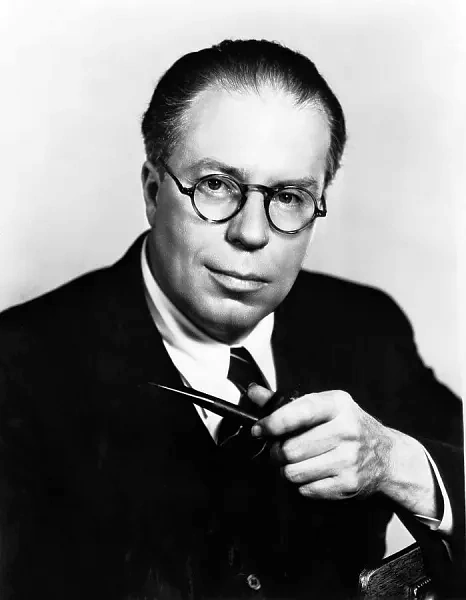
Attr: Fine Art Storehouse
| 37 Quotes | |
| Occup. | Author |
| From | USA |
| Born | May 5, 1890 Haverford, Pennsylvania, USA |
| Died | March 28, 1957 Roslyn, New York, USA |
| Aged | 66 years |
| Cite | |
Citation Formats
APA Style (7th ed.)
Christopher morley biography, facts and quotes. (2026, February 11). FixQuotes. https://fixquotes.com/authors/christopher-morley/
Chicago Style
"Christopher Morley biography, facts and quotes." FixQuotes. February 11, 2026. https://fixquotes.com/authors/christopher-morley/.
MLA Style (9th ed.)
"Christopher Morley biography, facts and quotes." FixQuotes, 11 Feb. 2026, https://fixquotes.com/authors/christopher-morley/. Accessed 25 Mar. 2026.
Early Life and Background
Christopher Morley was born on May 5, 1890, in Bryn Mawr, Pennsylvania, into a household where reading was treated as both pleasure and duty. His father, Frank Morley, was a prominent mathematician and longtime editor at the publishing house Macmillan, and the talk of books, manuscripts, and intellectual life was ordinary conversation at home. That mixture of domestic warmth and professional literary traffic gave Morley an early sense that writing was not simply art but a craft practiced among real working people.He came of age in the confident, restless America that bridged the Gilded Age and the modern city: expanding rail lines, booming newspapers, and the quickening pace of urban life. Morley absorbed the period's faith in progress while also noticing its loneliness and noise, a tension that would later animate his portraits of streets, commuters, and small pleasures. Even as a young man he cultivated a genial, clubbable persona, but friends noted a private seriousness underneath - a conviction that everyday life needed defending against abstraction and haste.
Education and Formative Influences
Morley studied at Haverford College and then went to Oxford as a Rhodes Scholar, an experience that sharpened his ear for talk and argument while deepening his love of English literary tradition. Oxford gave him both ballast and provocation: the discipline of close reading and the temptation to puncture solemnity with humor. When he returned to the United States, he carried an Oxonian confidence in the essay as a form of thinking aloud, and a Quaker-adjacent respect for plainness from Haverford - influences that helped him write criticism and fiction that sounded conversational without being careless.Career, Major Works, and Turning Points
Morley became one of the defining American men of letters of the early twentieth century through journalism, editing, novels, and a distinctive kind of literary fellowship. He worked at Doubleday, Page and later built a high-profile newspaper career, writing columns and criticism in New York while shaping public taste for books as both serious objects and everyday companions. In 1919 he helped found the Baker Street Irregulars, a Sherlock Holmes society that treated fandom as erudition with a wink, and in 1924 he and friends launched the Three Hours for Lunch Club, turning midtown wandering into a literary ritual. His major books include the novel "Kitty Foyle" (1939), which won the National Book Award and was adapted for film, and "Thunder on the Left" (1925), among a long shelf of essays and verse that celebrated bookstores, cities, and the comic dignity of ordinary work. A key turning point was his maturation from bright columnist into moral observer: by the 1930s and 1940s, his humor increasingly carried a tenderness toward aspiration, romance, and the right to live unhurriedly in a mechanized age.Philosophy, Style, and Themes
Morley's prose is built on hospitality: an open door to the reader, a belief that intelligence should feel like companionship rather than examination. His tone, often breezy on the surface, masks an ethical insistence that modern life must not grind down the inner self. He prized attention as a social virtue and a creative method, and he framed conversation as an art of receptivity rather than performance: “There is only one rule for being a good talker - learn to listen”. The line sounds like a party maxim, but it also reveals Morley's psychology - he distrusted ego, worried about people talking past one another, and saw listening as the antidote to the era's speed.A second strand in Morley is the constant effort to reconcile enchantment with disillusion. He wrote about cities as places that elevate and bruise at once, refusing both pastoral nostalgia and metropolitan cynicism: “All cities are mad: but the madness is gallant. All cities are beautiful: but the beauty is grim”. That doubleness - gallant/grim - is his signature lens, and it explains why his work could praise the romance of daily life while keeping its shadows in view. Underneath the jokes lives a serious claim about how to measure a life: “There is only one success - to be able to spend your life in your own way”. In Morley, independence is not rebellion for its own sake; it is an inward permission to choose books, friendships, walks, and work that do not betray one's temperament.
Legacy and Influence
Morley died on March 28, 1957, but his influence persists in American literary journalism, the essay-as-companionable-walk, and the culture of bookish communities that treat reading as both pleasure and shared identity. He helped normalize a public role for the critic who is neither academic nor salesman - someone who can praise, tease, and guide a general audience without surrendering standards. "Kitty Foyle" remains his most widely remembered single title, yet his broader legacy is tonal: a model of humane wit, civic curiosity, and a steadfast defense of the inner life amid modern clamor.Our collection contains 37 quotes written by Christopher, under the main topics: Witty One-Liners - Motivational - Ethics & Morality - Truth - Wisdom.
Other people related to Christopher: Henry Seidel Canby (Critic), William R. Benet (Writer)
Christopher Morley Famous Works
- 1919 The Haunted Bookshop (Novel)
- 1917 Parnassus on Wheels (Novel)