
Chuck Palahniuk Biography Quotes 43 Report mistakes
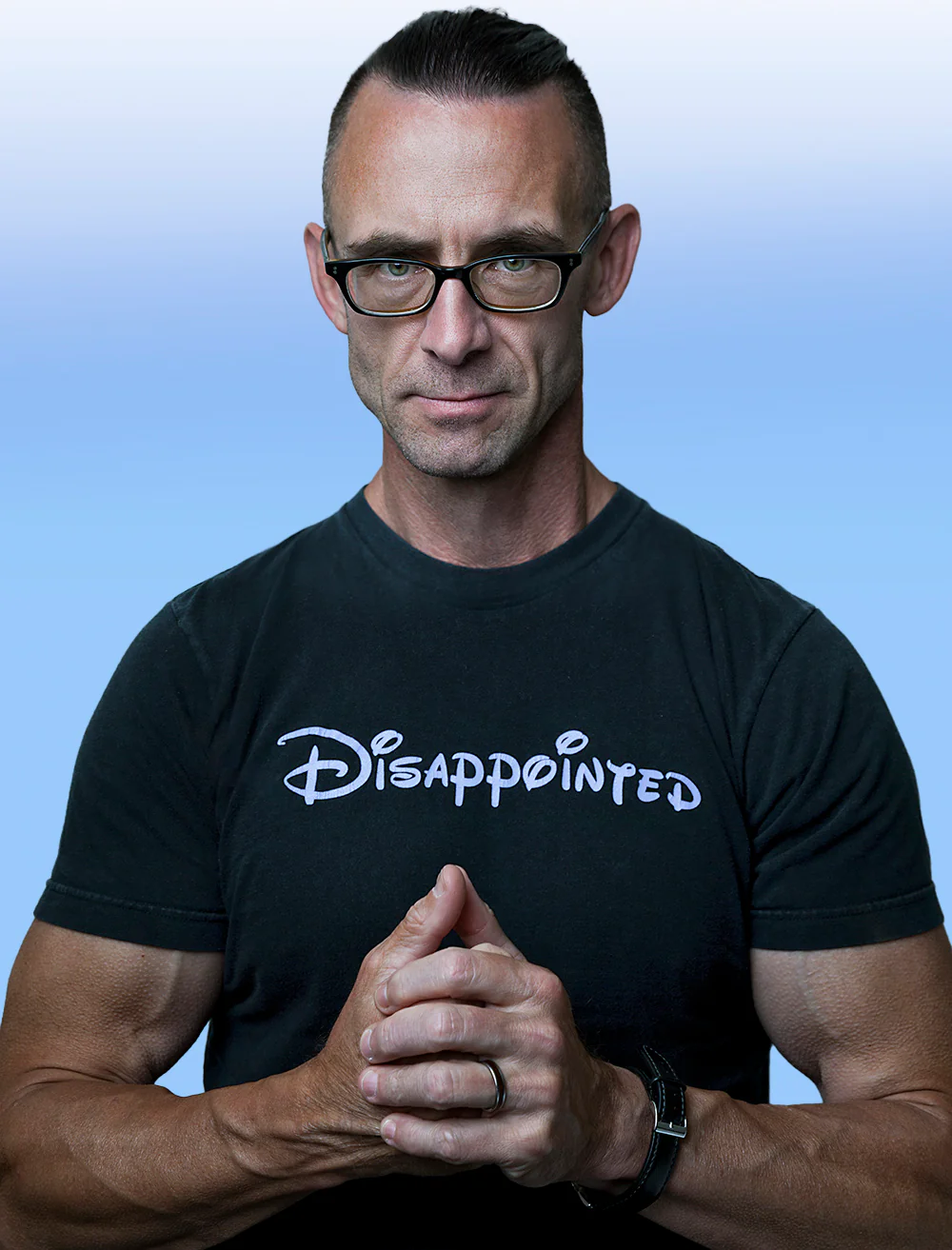
| 43 Quotes | |
| Born as | Charles Michael Palahniuk |
| Occup. | Novelist |
| From | USA |
| Spouse | Mariana Palahniuk |
| Born | February 21, 1962 Pasco, Washington, USA |
| Age | 64 years |
| Cite | |
Citation Formats
APA Style (7th ed.)
Chuck palahniuk biography, facts and quotes. (2026, February 11). FixQuotes. https://fixquotes.com/authors/chuck-palahniuk/
Chicago Style
"Chuck Palahniuk biography, facts and quotes." FixQuotes. February 11, 2026. https://fixquotes.com/authors/chuck-palahniuk/.
MLA Style (9th ed.)
"Chuck Palahniuk biography, facts and quotes." FixQuotes, 11 Feb. 2026, https://fixquotes.com/authors/chuck-palahniuk/. Accessed 25 Mar. 2026.
Early Life and Background
Charles Michael "Chuck" Palahniuk was born on February 21, 1962, in the USA and raised largely in the Pacific Northwest, with family roots and early years tied to Washington state and nearby rural communities. His childhood straddled blue-collar reality and a landscape of logging towns, highways, and marginal spaces - the kinds of places where people reinvent themselves or simply disappear. That geography later surfaced in his fiction as a moral weather system: damp, grim, and intimate, where the everyday can turn feral without warning.His parents divorced when he was young, and he spent stretches of childhood with grandparents, a domestic arrangement that sharpened his sense of hidden family stories and the unspoken bargains people make to keep going. A pivotal trauma arrived later when his father was killed by his father's girlfriend's ex-partner, a crime that ended in a death sentence for the perpetrator. The event did not turn Palahniuk into a conventional moralist; instead it deepened his obsession with the collision between private grief and public narrative, and with the way violence becomes both spectacle and myth.
Education and Formative Influences
Palahniuk attended the University of Oregon, studying journalism, and he carried that training into his mature style: compressed scenes, hard transitions, concrete detail, and the reporter's instinct for the telling fact that exposes a whole social system. After college he worked in Portland, Oregon, including industrial and technical jobs, and later volunteered with hospice and with organizations that put him close to people at their most unguarded. Those years did not simply provide material; they disciplined his gaze, teaching him how people talk when they are afraid, ashamed, or trying to leave a trace of meaning behind.Career, Major Works, and Turning Points
He emerged in the 1990s as a distinctive American novelist of acceleration, alienation, and black comedy. His breakthrough was Fight Club (1996), first drafted from an earlier short story and then published into a culture anxious about consumerism, masculinity, and corporate sameness; the 1999 film adaptation amplified his reach and locked many of his lines into the era's shared vocabulary. He followed with Survivor (1999), Invisible Monsters (written earlier, published 1999), Choke (2001), Lullaby (2002), Diary (2003), Haunted (2005), Rant (2007), and later works including Snuff (2008), Tell-All (2010), and the Fight Club 2 and 3 comic continuations, building a career that moved between transgressive satire and surprisingly tender attention to damaged inner lives. A major turning point came with the murder of his father, which pressed his writing toward harsher questions about cruelty, responsibility, and the stories people tell to survive what should be unsurvivable; another came with sudden fame after Fight Club, which made him a public symbol of rebellion even as his books warned how easily rebellion becomes another product.Philosophy, Style, and Themes
Palahniuk's work is often described as transgressive, but its engine is existential: a hunger to feel real in a world that sells prefabricated identities. He writes in clipped, rhythmic bursts - repetition as incantation, lists as liturgy, punchlines as scalpels - and he prefers narrators who are unreliable not because they lie, but because they are built from coping mechanisms. Bodies in his books are not decorative; they are evidence, sites of labor, addiction, illness, sex, and damage, a counterargument to sanitized consumer life. The plots tend to be pressure cookers: a secret, a ritual, a double life, a congregation of outsiders, and then an eruption that reveals what everyone has been rehearsing for all along.Psychologically, Palahniuk returns to the idea that identity is a costume assembled under threat, and he dramatizes the modern fear that the future has become a kind of trap. “When did the future switch from being a promise to a threat?” His characters respond by courting risk as proof of existence, as if injury were the last honest credential: “I just don't want to die without a few scars”. Yet beneath the bravado is a relentless memento mori that treats choice as a burden no one can outsource - “You have a choice. Live or die. Every breath is a choice. Every minute is a choice. To be or not to be”. The paradox is central to his appeal: he stages nihilism to expose a desire for meaning, and he mocks self-help language while quietly asking what kind of help might actually work when the soul is starving.
Legacy and Influence
Palahniuk helped define late-20th-century American postmodern popular fiction, bridging underground shock tactics and mainstream readability, and he became a key reference point for discussions of masculinity, consumer culture, and the commodification of rebellion after the Cold War. Fight Club in particular turned into a cultural Rorschach test, misread as a manifesto by some and recognized by others as a satire of that very misreading - a novel about how the hunger for authenticity can be hijacked by spectacle. His influence persists in contemporary fiction, film, and online storytelling that favors the confessional voice, the twist that reframes trauma, and the darkly comic autopsy of everyday life; even when imitated, his best work remains difficult to domesticate because it insists that the psyche is not tidy, and that the stories we tell are often the only way we learn what we have done to ourselves.Our collection contains 43 quotes written by Chuck, under the main topics: Witty One-Liners - Ethics & Morality - Truth - Dark Humor - Love.
Chuck Palahniuk Famous Works
- 2008 Snuff (Novel)
- 2007 Rant (Novel)
- 2005 Haunted (Novel)
- 2003 Diary (Novel)
- 2002 Lullaby (Novel)
- 2001 Choke (Novel)
- 1999 Invisible Monsters (Novel)
- 1999 Survivor (Novel)
- 1996 Fight Club (Novel)
Source / external links