
Claes Oldenburg Biography Quotes 1 Report mistakes
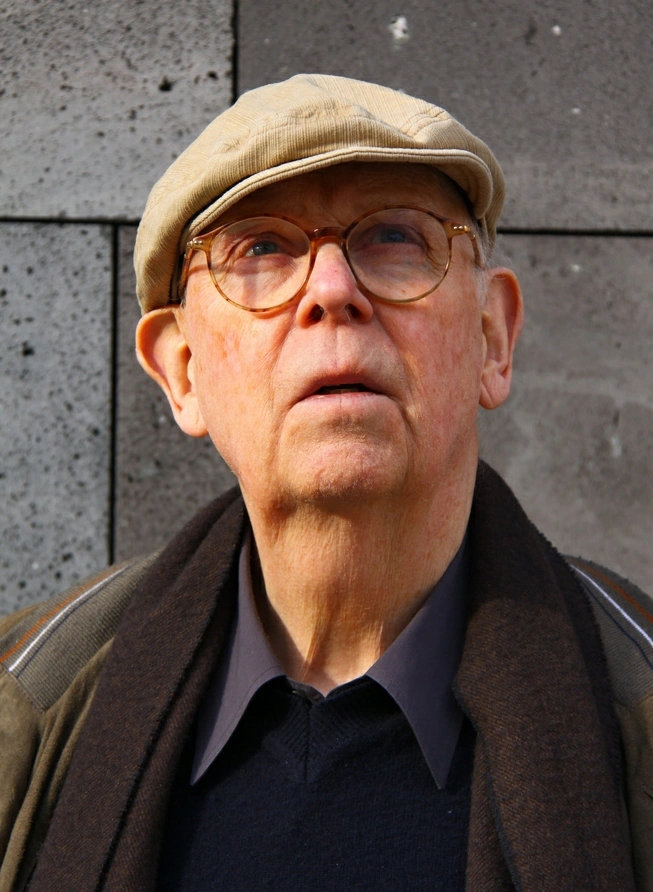
| 1 Quotes | |
| Occup. | Sculptor |
| From | Sweden |
| Spouses | Patty Mucha (1960-1970) Coosje van Bruggen (1977-died 2009) |
| Born | January 28, 1929 Stockholm, Sweden |
| Age | 97 years |
| Cite | |
Citation Formats
APA Style (7th ed.)
Claes oldenburg biography, facts and quotes. (2026, February 11). FixQuotes. https://fixquotes.com/authors/claes-oldenburg/
Chicago Style
"Claes Oldenburg biography, facts and quotes." FixQuotes. February 11, 2026. https://fixquotes.com/authors/claes-oldenburg/.
MLA Style (9th ed.)
"Claes Oldenburg biography, facts and quotes." FixQuotes, 11 Feb. 2026, https://fixquotes.com/authors/claes-oldenburg/. Accessed 26 Mar. 2026.
Early Life and Background
Claes Oldenburg was born on January 28, 1929, in Stockholm, Sweden, into a family shaped by diplomacy and the itinerant life of the interwar years. His father, Gosta Oldenburg, served in the Swedish foreign service, and the household moved in step with postings and international currents. That early exposure to borders, languages, and civic ritual became an unlikely prelude to an art devoted to public objects - not monuments of leaders, but monuments of things.In 1936 the family settled in Chicago, a city whose industrial muscle, lakefront weather, and hard-edged architecture left a permanent imprint. Oldenburg later described it with ambivalent awe, as a place where beauty and blunt force coexisted. The Great Depression's long shadow, followed by wartime mobilization, made the city a theater of production and consumption, and the young Oldenburg learned to read meaning in storefront displays, machinery, and the ordinary props of American life.
Education and Formative Influences
Oldenburg studied at Yale University in the late 1940s and early 1950s, where he absorbed art history and trained as much by looking as by making; he contributed drawings to the Yale Daily News and graduated in 1950. Afterward he returned to Chicago for further study at the School of the Art Institute of Chicago, working in the period's pragmatic ecosystem of jobs, illustrations, and studio time. The cultural backdrop mattered: Abstract Expressionism dominated the New York conversation, advertising and mass design saturated daily experience, and a younger generation began testing how far art could extend into objects, environments, and performance.Career, Major Works, and Turning Points
Moving to New York in 1956, Oldenburg gravitated to the Downtown scene that would soon be labeled Pop, though his path was more theatrical and bodily than glossy. In the early 1960s he staged "The Street" and "The Store", turning the city itself into subject and material: plaster, papier-mache, and paint became mock consumer goods and rough urban fragments, sold as if they were both sculpture and merchandise. He expanded into happenings and performances, including "Snapshots from the City", treating art as an event in which objects behaved like characters. A decisive turning point came in the mid-1960s with his soft sculptures - oversized vinyl and fabric versions of everyday items that sagged, folded, and slumped, such as the soft toilet and other domestic forms that made solidity seem like a social convention. From 1976 onward, his partnership with Coosje van Bruggen transformed his scale and public presence: together they produced monumental outdoor works that turned civic space into a witty, disorienting encounter, including "Clothespin" (Philadelphia, 1976), "Spoonbridge and Cherry" (Minneapolis, 1985-88), "The Shuttlecocks" (Kansas City, 1994), and "Dropped Cone" (Cologne, 2001). Oldenburg died in 2022, having made the everyday newly strange for more than six decades.Philosophy, Style, and Themes
Oldenburg's core intuition was that the modern psyche is organized by objects - their textures, promises, and commands - and that sculpture could reveal those hidden pressures by altering scale and material. An everyday thing, enlarged to the size of architecture or collapsed into cloth, became a portrait of desire and anxiety at once. His early Chicago imprint carried a particular metaphysical charge: “Chicago has a strange metaphysical elegance of death about it”. Read psychologically, the sentence is less morbid than diagnostic - a recognition that cities confer meaning through decay, industry, and repetition, and that the ordinary can feel haunted precisely because it is so ubiquitous.That awareness fueled his signature inversions. Hard commodities went soft; private utensils went public; humor arrived with a faint undertow of vulnerability. The sagging, sewn forms refuse heroic permanence and instead dramatize time, gravity, and fatigue - qualities people typically project onto their own bodies. His monuments with van Bruggen sharpened the paradox: the objects are absurdly familiar, yet their new scale makes them oppressive, protective, or oddly tender, as if civic life were built from the same impulses as the kitchen drawer. Oldenburg's work insists that modern culture is not just represented by products - it is emotionally lived through them.
Legacy and Influence
Oldenburg helped expand the definition of sculpture from carved or cast form into a broader field that could include environments, performance, textiles, and public comedy with serious consequences. He became central to Pop Art while also diverging from its cool surfaces, favoring vulnerability, tactility, and a street-level theater of materials. His public works set a template for late-20th-century civic sculpture that could be playful without being decorative, and his soft objects opened pathways for artists working in fabric, installation, and the politics of scale. In turning the overlooked into the monumental - and the monumental into something that could droop - he taught audiences to question what a society venerates, and why.Our collection contains 1 quotes written by Claes, under the main topics: Mortality.
Other people related to Claes: Red Grooms (Sculptor), Jay Chiat (Businessman)
Source / external links