
Clarence Darrow Biography Quotes 40 Report mistakes
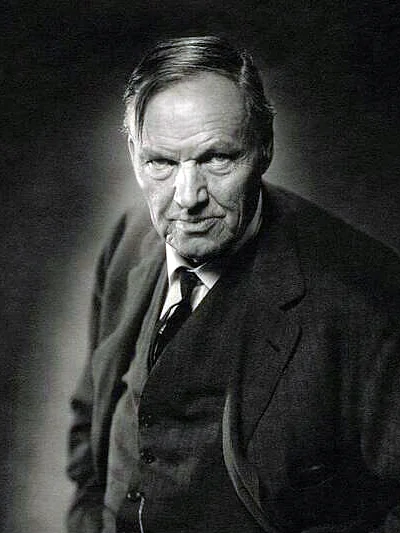
| 40 Quotes | |
| Occup. | Lawyer |
| From | USA |
| Born | April 18, 1857 Kinsman, Ohio |
| Died | March 13, 1938 Chicago, Illinois |
| Aged | 80 years |
| Cite | |
Citation Formats
APA Style (7th ed.)
Clarence darrow biography, facts and quotes. (2026, February 2). FixQuotes. https://fixquotes.com/authors/clarence-darrow/
Chicago Style
"Clarence Darrow biography, facts and quotes." FixQuotes. February 2, 2026. https://fixquotes.com/authors/clarence-darrow/.
MLA Style (9th ed.)
"Clarence Darrow biography, facts and quotes." FixQuotes, 2 Feb. 2026, https://fixquotes.com/authors/clarence-darrow/. Accessed 6 Mar. 2026.
Early Life and Background
Clarence Seward Darrow was born on April 18, 1857, in rural Farmington, Ohio, a village shaped by abolitionist memory and post-Civil War argument. His father, Amirus Darrow, was a freethinking, anti-slavery Universalist with a restless library; his mother, Emily Eddy Darrow, was politically alert and socially reform-minded. In a household where Scripture competed with Voltaire and where the moral certainty of the era was treated as a question rather than a command, Darrow learned early to distrust piety that required cruelty.The Midwest that raised him also showed him the hard arithmetic of power: farmers squeezed by railroads, workers disciplined by employers and courts, and small-town reputations enforced like law. Darrow grew into a lanky, intense observer with a stage actor's instinct for audience and a skeptic's instinct for motive. Long before he became a celebrity advocate, he was already collecting the same human materials he would later put before juries - fear, pride, shame, and the desperate desire to be seen as right.
Education and Formative Influences
He attended Allegheny College briefly and then the University of Michigan, leaving without a degree, and read law in the old apprenticeship style before admission to the Ohio bar in 1878. The education that mattered most was not formal: it was the era's collisions between evangelical certainty and Darwinian science, between Gilded Age fortunes and industrial misery, and between legal doctrine and lived experience. Moving to Chicago in 1887, Darrow found a city where trials were public theater and where the labor question was not theoretical; it was written in bruises, eviction notices, and the aftershocks of Haymarket.Career, Major Works, and Turning Points
Darrow rose from corporate counsel for the Chicago and Northwestern Railway to a cause lawyer for labor, a turn sharpened by the Pullman Strike and the jailing of Eugene V. Debs in 1894. His national reputation came through a string of sensational defenses that were never only about the defendant: the McNamara brothers case (1911) tested his labor alliances and ended in personal scandal and a bruising acquittal from bribery charges; the Leopold and Loeb sentencing hearing (1924) became his masterpiece of mitigation, arguing against the death penalty with a psychological and social lens; the Scopes "Monkey Trial" (1925) made him the most visible courtroom opponent of fundamentalism, crossing swords with William Jennings Bryan in Dayton, Tennessee; later, his role in the Sweet trials (1925-1926) in Detroit put racial self-defense and the right to a home at the center of American law. He also wrote widely, including the reflective, combative memoir The Story of My Life (1932), and remained a public intellectual until his death on March 13, 1938, in Chicago.Philosophy, Style, and Themes
Darrow's inner life was a contest between tenderness for the trapped and contempt for the smug. He distrusted moral posturing because he had watched it license punishment, and he treated the courtroom as a ritual that could be turned, for a moment, toward mercy. His humor was a weapon and a shield: “The world is made up for the most part of morons and natural tyrants, sure of themselves, strong in their own opinions, never doubting anything”. That sentence is not merely insult; it is diagnosis - a fear of certainty hardened into cruelty, and a plea for doubt as a civic virtue.His rhetoric worked by enlarging context until a crime looked less like a wicked choice than a human outcome. In the Leopold and Loeb case he spoke for hours not to deny guilt but to relocate it amid youth, intellect, ambition, and a modern city's cold glamour, insisting that society should be judged by how it punishes. His politics were not utopian; they were reciprocal: “You can only protect your liberties in this world by protecting the other man's freedom”. For Darrow, freedom was not a private possession but a shared climate, and law was legitimate only when it served real people rather than abstract rules - “Laws should be like clothes. They should be made to fit the people they serve”. That principle linked his labor defenses, his anti-lynching instincts, his battles against censorship, and his relentless campaign against the death penalty.
Legacy and Influence
Darrow endures as the American lawyer who made mitigation and civil liberty feel like moral realism rather than softness, and who treated the jury not as a technical endpoint but as the public's conscience. Later generations of defense attorneys, civil libertarians, and trial advocates borrowed his method: cross-examination as moral inquiry, closing argument as social history, and skepticism as compassion. He helped normalize the idea that poverty, ideology, race, and psychology belong in legal judgment, and he left a template for courtroom argument that is still taught, imitated, and debated - not because he was always right, but because he insisted that the law must face the human being it is about to crush.Our collection contains 40 quotes written by Clarence, under the main topics: Witty One-Liners - Wisdom - Truth - Justice - Friendship.
Other people related to Clarence: Edgar Lee Masters (Poet), William Jennings Bryant (Politician)