
Claud Cockburn Biography Quotes 7 Report mistakes
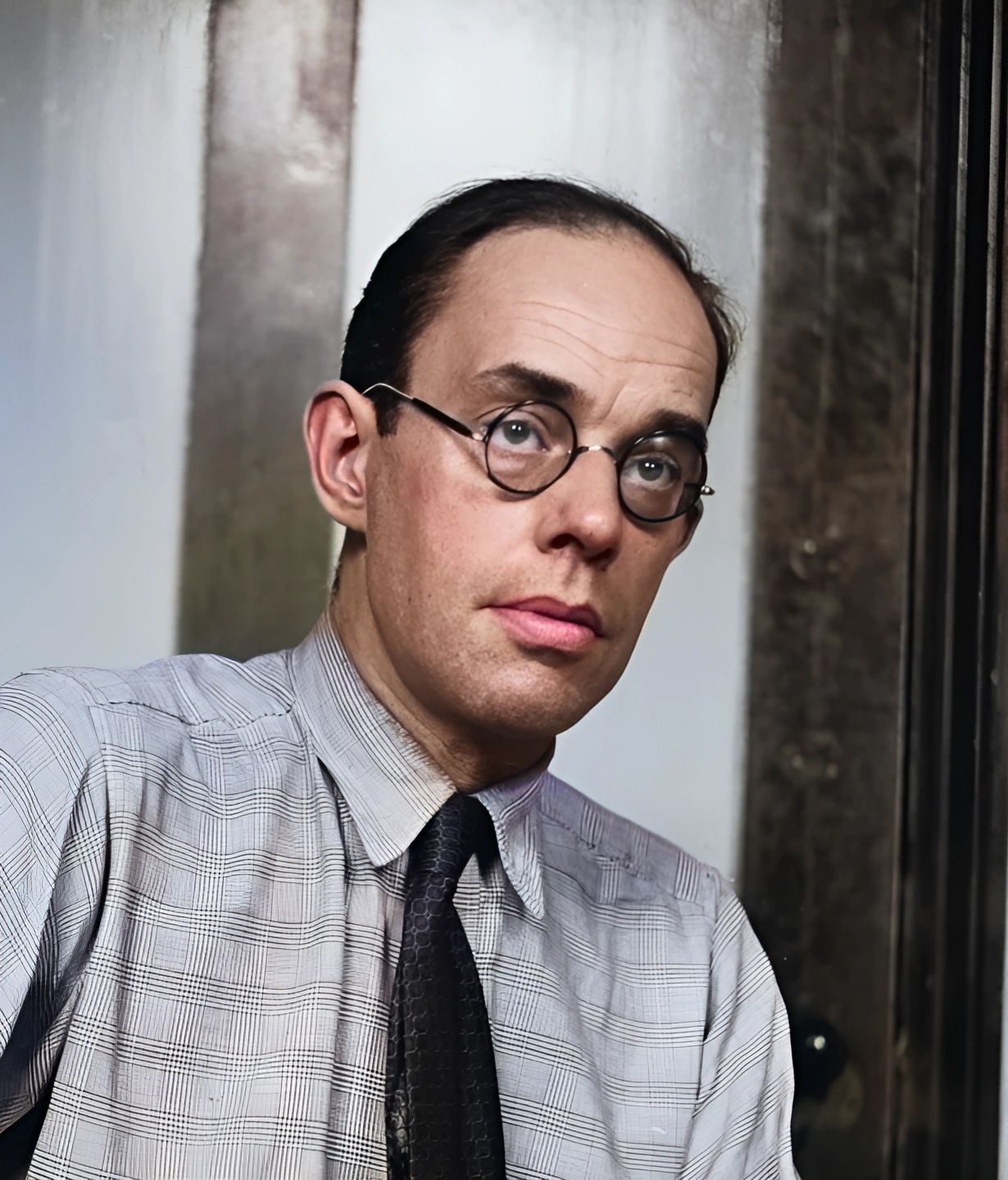
| 7 Quotes | |
| Born as | Francis Claud Cockburn |
| Occup. | Journalist |
| From | United Kingdom |
| Born | April 12, 1904 Peking, Qing Dynasty |
| Died | December 15, 1981 Andalusia, Spain |
| Aged | 77 years |
| Cite | |
Citation Formats
APA Style (7th ed.)
Claud cockburn biography, facts and quotes. (2026, February 11). FixQuotes. https://fixquotes.com/authors/claud-cockburn/
Chicago Style
"Claud Cockburn biography, facts and quotes." FixQuotes. February 11, 2026. https://fixquotes.com/authors/claud-cockburn/.
MLA Style (9th ed.)
"Claud Cockburn biography, facts and quotes." FixQuotes, 11 Feb. 2026, https://fixquotes.com/authors/claud-cockburn/. Accessed 6 Mar. 2026.
Early Life and Background
Francis Claud Cockburn was born on April 12, 1904, in the United Kingdom, into an establishment-adjacent world that he would spend a lifetime scrutinizing. He was raised in a family whose connections to public life and the professions gave him early access to the accents, assumptions, and evasions of ruling-class Britain - the very material he later turned into satire, exposé, and polemic.Coming of age in the shadow of World War I and the brittle confidence of the interwar order, Cockburn developed a temperament that mixed skepticism with relish: he enjoyed the theater of politics but distrusted its declared motives. The era trained him to hear what was not said - the coded loyalties, the clubbable half-truths, the sudden panics of elites - and it also taught him that public narratives could be manufactured as deliberately as policy.
Education and Formative Influences
Cockburn was educated at Keble College, Oxford, where the habits of argument and the social geography of British power were on display at close range; Oxford did not so much convert him as clarify the system he would later anatomize. In the 1920s and 1930s he gravitated toward radical politics and anti-fascist commitments, and the widening gulf between official reassurances and European realities became his defining apprenticeship: the rise of Hitler, the spin surrounding appeasement, and the cozy traffic between press, diplomats, and financiers sharpened his sense that "news" was often the most respectable disguise for influence.Career, Major Works, and Turning Points
After early journalistic work, Cockburn became best known for his insurgent reporting and for creating the newsletter The Week (launched in 1933), a London-based bulletin that punctured the polite fictions of diplomacy and exposed the drift toward war with a tone of informed impatience. He reported from Europe and later from the United States, wrote widely, and published books that blended reportage with political diagnosis, including his autobiography In Time of Trouble and writings on the Spanish Civil War and the machinery of propaganda; across decades he remained a figure who could be admired for fearless independence and criticized for ideological partialities, especially where Communist fronts and Soviet narratives intersected with anti-fascist solidarity. The turning point of his career was the 1930s, when he chose not the prestige lane of access journalism but the riskier trade of adversarial intelligence - cultivating sources, reading budgets and communiques like literature, and treating official statements as raw material for forensic contradiction.Philosophy, Style, and Themes
Cockburn's psychological engine was suspicion disciplined into method. His most famous maxim, “Never believe anything until it has been officially denied”. was not merely a quip but a working rule born from watching ministries, embassies, and press offices manage perception as actively as events. To him, denial signaled sensitivity; sensitivity signaled a real stake; and a real stake suggested a hidden story. The joke carries a darker implication: that modern governance requires organized untruths, and that the citizen is expected to cooperate by mistaking ceremony for candor.His style fused epigram with close-grained political reading. The deadpan headline “Small earthquake in Chile. Not many dead”. captures how he mocked the reduction of human experience into casual copy - and how he weaponized understatement to expose what journalism normalizes. He also understood temptation, not only as personal vice but as a structural force in public life; “Never underestimate the effectiveness of a straight cash bribe”. reads like a punchline, yet in his work it functions as a theory of institutions, explaining why certain stories vanish, why certain careers glide upward, and why moral language often blooms where accountability is thinnest. Under the wit is a bracing view of the world: power is less mystical than it pretends, and corruption is frequently banal, transactional, and therefore trackable.
Legacy and Influence
Cockburn died on December 15, 1981, leaving behind a model of journalism that treated politics as a contest over reality itself. His influence runs through later traditions of investigative reporting, media criticism, and the adversarial newsletter culture that prizes sources and pattern recognition over press-conference transcription; he also remains a cautionary example of how fierce anti-fascism and anti-imperial passion can sometimes narrow a writer's skepticism when allies are involved. Still, his enduring gift is methodological: he taught readers to read official language as an artifact with motives, and to hear in the confident voice of authority the quiet possibility of evasion.Our collection contains 7 quotes written by Claud, under the main topics: Witty One-Liners - Dark Humor - War - Career.
Other people related to Claud: Alexander Cockburn (Lawyer)
Claud Cockburn Famous Works
- 1956 A Discord of Trumpets (Memoir)
- 1951 Beat the Devil (Novel)
Source / external links