
Claude Debussy Biography Quotes 19 Report mistakes
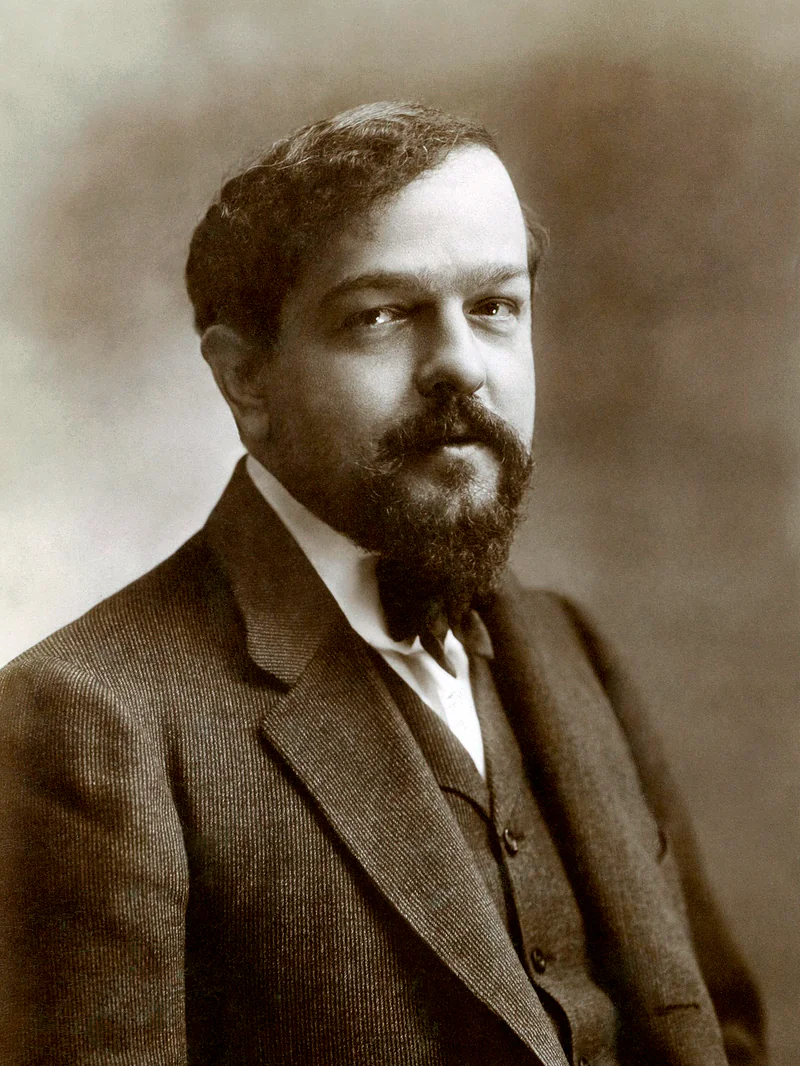
| 19 Quotes | |
| Born as | Achille-Claude Debussy |
| Occup. | Composer |
| From | France |
| Born | August 22, 1862 Saint-Germain-en-Laye, France |
| Died | March 25, 1918 Paris, France |
| Cause | rectal cancer |
| Aged | 55 years |
| Cite | |
Citation Formats
APA Style (7th ed.)
Claude debussy biography, facts and quotes. (2026, February 11). FixQuotes. https://fixquotes.com/authors/claude-debussy/
Chicago Style
"Claude Debussy biography, facts and quotes." FixQuotes. February 11, 2026. https://fixquotes.com/authors/claude-debussy/.
MLA Style (9th ed.)
"Claude Debussy biography, facts and quotes." FixQuotes, 11 Feb. 2026, https://fixquotes.com/authors/claude-debussy/. Accessed 6 Mar. 2026.
Early Life and Background
Achille-Claude Debussy was born on August 22, 1862, in Saint-Germain-en-Laye, west of Paris, into a modest, unsettled household. His father, Manuel-Achille Debussy, moved between trades and political enthusiasms; his mother, Victorine, came from working-class origins. The family was not musically eminent, and Debussy did not grow up inside a conservatory dynasty - he grew up amid the social churn of the Second Empire and the sharp aftershocks of the Franco-Prussian War and the Paris Commune. That instability mattered: from early on he learned to distrust grand public slogans and to prize private sensation.His first serious musical encouragement came through family connections rather than institutional planning, with lessons that revealed an unusually sensitive ear and a dislike for the dutiful, march-like rhetoric of much salon music. Paris in the 1870s was rebuilding itself in stone and spectacle, but Debussy was already drawn to what escaped the straight line: color, half-light, and the psychological pull of atmosphere. The future composer of seascapes and nocturnes began as a boy for whom sound was not a sermon but a place to live.
Education and Formative Influences
In 1872 he entered the Paris Conservatoire, studying piano and then composition (notably with Ernest Guiraud) while resisting the institution's emphasis on correct procedure. A pivotal apprenticeship followed in the early 1880s as pianist and musical companion to Nadezhda von Meck, Tchaikovsky's patron, traveling and absorbing Russian repertoire and a broader sonic palette. Winning the Prix de Rome in 1884 with the cantata L'Enfant prodigue brought the expected residency at the Villa Medici, but Debussy found Rome aesthetically stifling; back in Paris he gravitated toward Symbolist circles, Mallarme's salons, and the shock of non-European sound at the 1889 Exposition Universelle - especially Javanese gamelan, whose layered time and timbre suggested a way out of Germanic argument and into resonance.Career, Major Works, and Turning Points
Debussy's mature career unfolded in Paris as he remade French music from the inside, often through works that looked small on paper but were radical in hearing. The Prelude a l'apres-midi d'un faune (1894) announced a new kind of orchestral speech: sensuous, suspended, allergic to triumph. His only completed opera, Pelleas et Melisande (1902), transformed Maeterlinck's play into intimate musical theater where psychology is carried by inflection and orchestral shadow rather than aria display. Personal turmoil ran alongside artistic consolidation: his affair with Emma Bardac and divorce scandal culminated in their marriage (1908), and in 1905 the birth of his daughter Claude-Emma ("Chouchou") softened his private life even as he guarded his independence. The great orchestral triptych La mer (1905), the Images and Nocturnes, the piano worlds of Estampes (1903), L'isle joyeuse (1904), the two books of Preludes (1910, 1913), and the late Etudes (1915) map a composer constantly refining touch and proportion. During World War I he composed under the strain of illness and occupation anxiety, beginning a planned set of six sonatas (1915-17) as a deliberately lean, "French" answer to catastrophe; he died in Paris on March 25, 1918, during German shelling, a public end to a life that had prized private listening.Philosophy, Style, and Themes
Debussy's inner doctrine was sensory and anti-doctrinal: he distrusted systems that claim to explain feeling after the fact. “Some people wish above all to conform to the rules, I wish only to render what I can hear. There is no theory. You have only to listen. Pleasure is the law”. That is not laziness but a psychological wager - that authenticity begins in perception, and that the composer must protect the ear from moralizing habits. He cultivated modes, whole-tone and pentatonic fields, parallel harmonies, and rhythmic breathing that feels natural rather than counted, as if music were weather rather than architecture.Yet he was never merely a painter of surfaces. His precision of attack, pedaling, and orchestration suggests a mind anxious about falsity, forever pruning rhetoric to reach a more naked sensation. “How much has to be explored and discarded before reaching the naked flesh of feeling”. This discarding is audible in the way his climaxes often dissolve instead of conquer, and in his love of ambiguity - the half-said, the nearly remembered. Even his most quoted paradox, “Art is the most beautiful of all lies”. , reads as self-defense: if art is a lie, it must be an exquisitely truthful one about how consciousness moves, how desire flickers, how memory edits. The sea in La mer is not geography; it is the mind's restless surface, disciplined into form without losing its shimmer.
Legacy and Influence
Debussy redirected the course of modern music by proving that harmony could be color, that form could be inference, and that intensity need not arrive as mass. His innovations fed French successors (Ravel, later Messiaen), catalyzed early 20th-century orchestration, and traveled outward into Stravinsky's timbral thinking, Bartok's modal modernism, and even jazz harmony and film scoring, where atmosphere becomes narrative. He also changed what listeners expect from musical time: not a march toward resolution, but an art of attention, where meaning is made in the act of hearing. In an era obsessed with progress and power, Debussy left a quieter revolution - a discipline of sensual truth.Our collection contains 19 quotes written by Claude, under the main topics: Art - Music - Nature - Deep.
Other people related to Claude: Maurice Ravel (Composer), James Huneker (Writer), Erik Satie (Composer)