
Claudia Kennedy Biography Quotes 1 Report mistakes
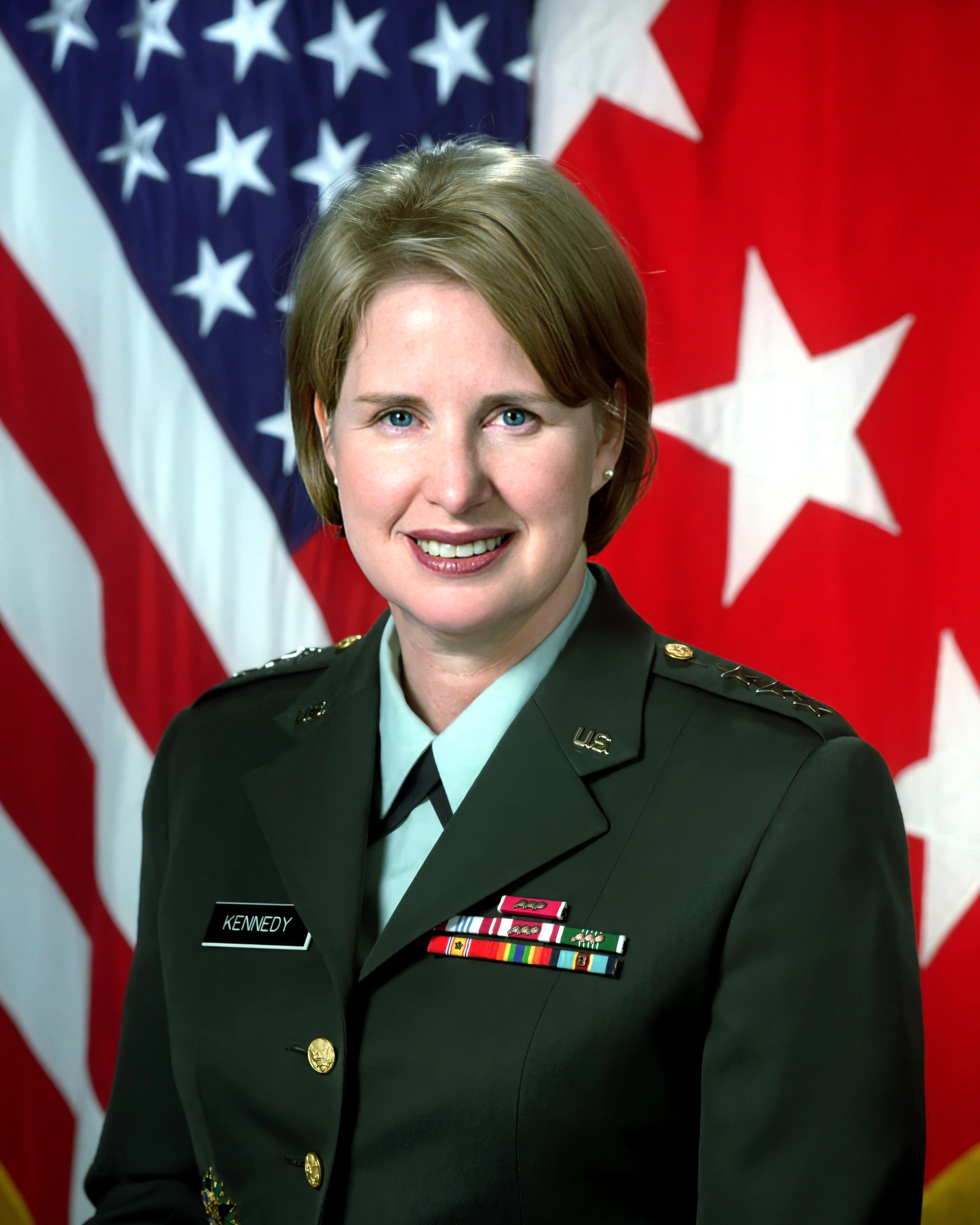
| 1 Quotes | |
| Born as | Claudia Jean Kennedy |
| Occup. | Soldier |
| From | USA |
| Born | July 14, 1947 Frankfurt, Germany |
| Age | 78 years |
| Cite | |
Citation Formats
APA Style (7th ed.)
Claudia kennedy biography, facts and quotes. (2026, February 11). FixQuotes. https://fixquotes.com/authors/claudia-kennedy/
Chicago Style
"Claudia Kennedy biography, facts and quotes." FixQuotes. February 11, 2026. https://fixquotes.com/authors/claudia-kennedy/.
MLA Style (9th ed.)
"Claudia Kennedy biography, facts and quotes." FixQuotes, 11 Feb. 2026, https://fixquotes.com/authors/claudia-kennedy/. Accessed 26 Mar. 2026.
Early Life and Background
Claudia Jean Kennedy was born on July 14, 1947, in the United States, coming of age in an era when military service and public authority were still coded as overwhelmingly male. The postwar Army she would later enter was both a ladder of national mobility and a rigid culture of hierarchy, with women often steered toward narrow specialties and judged by standards that were simultaneously exacting and informal.Her early years unfolded against the widening social turbulence of the 1950s and 1960s - civil rights battles, Vietnam, and a generational argument over duty and dissent. Those crosscurrents mattered to Kennedy because they reframed what patriotism could look like: not only obedience to command, but also insistence that institutions honor their own stated principles. That tension between loyalty and critique would become a defining axis in her inner life and public reputation.
Education and Formative Influences
Kennedy pursued an education that supported a professional military trajectory at a time when women were still fighting for credibility inside uniformed systems. Her formative influences were less about a single mentor than about the lived tutorial of mixed expectations: to be exceptional yet unthreatening, to lead without being labeled abrasive, and to absorb the Army's emphasis on standards while navigating the quiet skepticism that greeted women who sought command authority rather than supportive roles.Career, Major Works, and Turning Points
Kennedy built her career as a US Army officer during the long transition from the Vietnam-era force to the post-Cold War institution, when the service was professionalizing, modernizing, and slowly opening pathways for women into senior leadership. She eventually became the first woman to serve as a three-star general in the Army, a milestone that made her simultaneously a symbol of institutional progress and a lightning rod for cultural anxieties about gender and command. Her tenure at the highest levels was marked by the central paradox of trailblazing: the more she represented inclusion, the more her personal conduct, leadership style, and private life were treated as a referendum on whether women "belonged" in the top ranks. A major turning point came when she became publicly associated with questions of institutional accountability and personal vulnerability - issues that many soldiers experience, but few senior leaders discuss openly without consequence.Philosophy, Style, and Themes
Kennedy's philosophy centered on the idea that military effectiveness is inseparable from moral credibility. She argued, in effect, that cohesion built on silence is brittle, and that an Army that cannot police itself invites political and cultural erosion from outside. Her most revealing formulation - “The Army damages itself when it doesn't live up to its own values”. - captures a mindset shaped by insider loyalty rather than outsider hostility. Psychologically, it suggests a leader who internalized the institution's ideals so completely that hypocrisy felt like a personal wound, not merely a policy problem.In style, Kennedy was often described as direct, standards-driven, and unromantic about bureaucracy. That bluntness could read as severity in a culture that still expected senior women to perform warmth as a form of permission to lead. Yet the deeper theme in her public stance was the cost of professionalism when systems mishandle power: when rank shields misconduct, when reporting carries career risk, when the burden of "keeping the unit together" is placed on those most exposed. Kennedy's willingness to speak in value-language rather than partisan language made her critique harder to dismiss as ideology; it framed reform as a combat multiplier - an argument that integrity is not a soft virtue but an operational necessity.
Legacy and Influence
Claudia Kennedy's enduring influence lies in the double legacy of firsts and friction. As the Army's first female lieutenant general, she widened the imaginable future for women in uniform, not by symbolic presence alone but by occupying the space where policy, command culture, and personnel decisions intersect. At the same time, the controversies that surrounded her later career helped force a broader conversation about accountability, gendered scrutiny, and the gap between official values and lived experience. In biographies of the modern US Army, she remains a case study in what trailblazers often endure: being praised as progress while simultaneously being tested, publicly and privately, as if the institution were measuring the risk of change through the life of a single person.Our collection contains 1 quotes written by Claudia, under the main topics: Military & Soldier.
Source / external links