
Claus von Stauffenberg Biography Quotes 2 Report mistakes
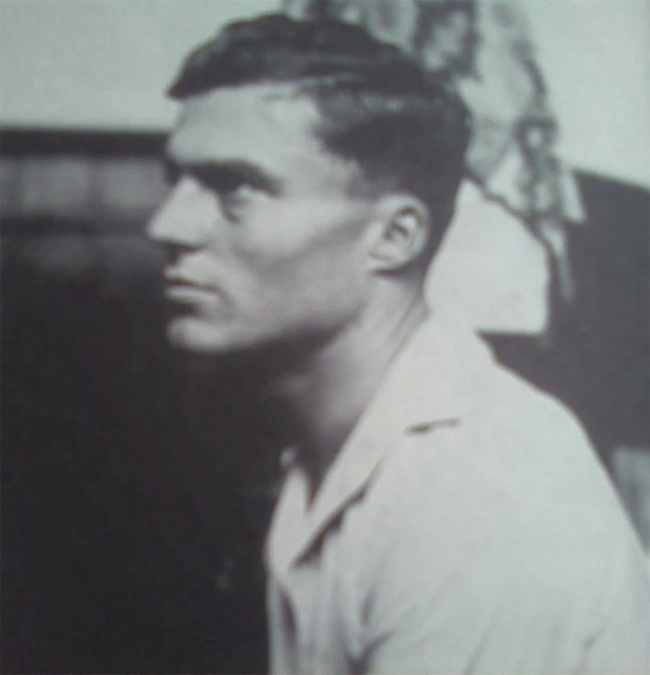
| 2 Quotes | |
| Born as | Claus Philipp Maria Schenk |
| Known as | Claus Schenk Graf von Stauffenberg |
| Occup. | Soldier |
| From | Germany |
| Born | November 15, 1907 Jettingen, Kingdom of Bavaria, German Empire |
| Died | July 20, 1944 Berlin, Nazi Germany |
| Cause | Execution by firing squad |
| Aged | 36 years |
| Cite | |
Citation Formats
APA Style (7th ed.)
Claus von stauffenberg biography, facts and quotes. (2026, February 11). FixQuotes. https://fixquotes.com/authors/claus-von-stauffenberg/
Chicago Style
"Claus von Stauffenberg biography, facts and quotes." FixQuotes. February 11, 2026. https://fixquotes.com/authors/claus-von-stauffenberg/.
MLA Style (9th ed.)
"Claus von Stauffenberg biography, facts and quotes." FixQuotes, 11 Feb. 2026, https://fixquotes.com/authors/claus-von-stauffenberg/. Accessed 27 Mar. 2026.
Early Life and Background
Claus Philipp Maria Schenk Graf von Stauffenberg was born on November 15, 1907, at Jettingen Castle in the Kingdom of Wurttemberg, into a Catholic Swabian noble family whose identity mixed courtly tradition with service to the state. His father, Alfred Schenk Graf von Stauffenberg, was Oberhofmarschall to the last king of Wurttemberg, while his mother, Caroline von Uxkull-Gyllenband, came from Baltic-German aristocracy. Claus grew up alongside his brothers Berthold and Alexander in a household where history was not an abstraction but a lived inheritance - duty, honor, and a cultivated inner life reinforced by music, poetry, and ritual.Germany of his youth moved from imperial certainty to Weimar fracture: defeat in 1918, revolution, inflation, and political street violence. The Stauffenbergs were neither democratic enthusiasts nor crude reactionaries; they were conservative nationalists who longed for renewal and order. Like many of his class, Claus initially greeted the rise of National Socialism with guarded hope that it might restore national cohesion and overcome Versailles humiliation, even as its vulgarity and racial radicalism grated against his Catholic and aristocratic sensibilities. That early ambivalence would later sharpen into moral revulsion as he watched the regime turn war into a system of criminality.
Education and Formative Influences
Stauffenberg was educated privately and through elite circles that prized classical culture; he and his brothers were close to the poet Stefan George, whose "George-Kreis" fused aesthetics, hierarchy, and a quasi-spiritual ideal of a "new Reich" grounded in character rather than mass politics. Georgean language of inward discipline and sacrificial responsibility helped form Stauffenberg's self-conception as an officer called to more than obedience. In 1926 he entered the Reichswehr, the small professional army of Weimar, and was shaped by its severe standards and its paradox: it cultivated apolitical professionalism while harboring many officers hostile to the republic and susceptible to authoritarian solutions.Career, Major Works, and Turning Points
Commissioned into the cavalry, Stauffenberg became known for intelligence, speed of judgment, and charisma; after mechanization rendered cavalry obsolete, he shifted into staff work and rose within the army that Hitler expanded into the Wehrmacht. He served in Poland (1939) and in the West (1940), and then as a staff officer in the invasion of the Soviet Union, where the war's ideological cruelty and the regime's contempt for law deepened his break with Hitler. Posted to North Africa in 1943, he was gravely wounded in an air attack near Tunis - losing his right hand, two fingers of his left hand, and an eye - yet returned to duty with fierce concentration. By 1943-44, as Chief of Staff to General Friedrich Olbricht at the Ersatzheer (Reserve Army) in Berlin, he stood at the hinge of power that conspirators needed: access to Hitler and control of the emergency plan "Valkyrie". On July 20, 1944, he carried a bomb to the Wolfsschanze headquarters; the explosion failed to kill Hitler, and the coup in Berlin collapsed amid confusion and wavering nerve. That night Stauffenberg was shot at the Bendlerblock after a summary court-martial; his last reported words invoked a "holy Germany", a final attempt to salvage meaning from ruin.Philosophy, Style, and Themes
Stauffenberg's inner life was a struggle to reconcile the officer's creed of loyalty with an older Catholic conscience and a Georgean ideal of noble responsibility. He did not begin as a democrat, and he imagined a post-Hitler Germany led by conservative reformers rather than parties; yet his trajectory shows how proximity to state violence can convert tradition into resistance. The more he saw - mass shootings in the East, the lawlessness of the SS state, the strategic insanity of Hitler's personal rule - the more he came to believe that obedience without moral judgment was itself a crime.His style as a conspirator was impatient, operational, almost tactical: he wanted an act that would cut through endless debate. In his moral vocabulary, the deed had to answer both faith and reason: “We took this challenge before our Lord and our conscience, and it must be done, because this man, Hitler, he is the ultimate evil”. That sentence reveals a psychology of absolutes, but also of self-indictment - he frames assassination not as heroism, but as a burden accepted under judgment. Strategically, he was equally unsparing about the regime's command culture; the chaos of overlapping authorities and Hitler's interventions convinced him that Germany was being driven toward catastrophe. “If our most highly qualified General Staff officers had been told to work out the most nonsensical high level organization for war which they could think of, they could not have produced anything more stupid that that which we have at present”. The contempt is not merely technical; it is the language of a professional who realizes that a state that cannot tell the truth about itself will eventually demand lies from everyone.
Legacy and Influence
After 1945, Stauffenberg became a contested symbol: to some, a belated traitor; to others, the face of "another Germany" that refused total complicity. West Germany gradually elevated July 20 as a civic lesson in conscience against unlawful authority, and the Bundeswehr adopted resistance to criminal orders as part of its ethical foundation. Historians continue to debate his politics and the limits of the conservative resistance, yet his significance endures in the clarity of the moment he chose: a wounded officer, formed by tradition, deciding that the highest loyalty lay not in serving a ruler but in refusing the state's descent into absolute evil.Our collection contains 2 quotes written by Claus, under the main topics: Ethics & Morality - War.
Source / external links