
Clementine Paddleford Biography Quotes 3 Report mistakes
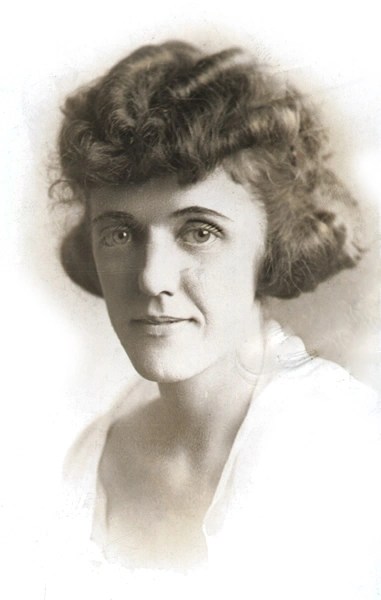
| 3 Quotes | |
| Occup. | Journalist |
| From | USA |
| Born | September 27, 1898 |
| Died | November 13, 1967 |
| Aged | 69 years |
| Cite | |
Citation Formats
APA Style (7th ed.)
Clementine paddleford biography, facts and quotes. (2026, February 11). FixQuotes. https://fixquotes.com/authors/clementine-paddleford/
Chicago Style
"Clementine Paddleford biography, facts and quotes." FixQuotes. February 11, 2026. https://fixquotes.com/authors/clementine-paddleford/.
MLA Style (9th ed.)
"Clementine Paddleford biography, facts and quotes." FixQuotes, 11 Feb. 2026, https://fixquotes.com/authors/clementine-paddleford/. Accessed 6 Mar. 2026.
Early Life and Background
Clementine Paddleford was born on September 27, 1898, in the rural Midwest of the United States, a region whose grain elevators, church suppers, and hotel dining rooms would later reappear in her prose as a living national map. She grew up during the last years of the Progressive Era, when rail travel stitched towns to cities and newspapers taught Americans to imagine themselves as one public. That atmosphere shaped her earliest instincts: to treat everyday life as reportable, and to look for character not in grand speeches but in how people ate, hosted, and made do.Her family life left her with a hard-edged self-reliance that she never wore as a slogan. The admonition often associated with her - “Never grow a wishbone, daughter, where you backbone ought to be”. - captures the emotional key of her upbringing: endurance as a daily practice. The young Paddleford carried that backbone into an adulthood defined by relentless travel and deadlines, in a country moving from horse and wagon to highways, from parlor cooking to brand-name kitchens, and from local identity to mass culture.
Education and Formative Influences
Paddleford trained as a journalist in the early 20th century, learning to report with speed and clarity at a time when women were still steered toward society pages even as they proved indispensable to the newsroom. She absorbed the discipline of the wire story and the human curiosity of feature writing, but she also developed a reporter's faith that the small, verified detail can unlock a larger truth. The era's shifts - World War I, Prohibition, the rise of national advertising, and the modernization of home economics - gave her a subject that was both intimate and public: how Americans cooked, shopped, and ate in changing times.Career, Major Works, and Turning Points
By the 1930s and 1940s Paddleford had become one of the most recognizable voices in American food journalism, writing for major newspapers and magazines and building a reputation not as a recipe compiler but as a traveling correspondent of the national table. Her signature method was to go on the road - diners, depots, cafes, hotel kitchens, immigrant neighborhoods - and report what people actually served, what they called it, and why it mattered to them. A major turning point came when she intensified her travel-based reporting after serious illness left her partially paralyzed; rather than retreat, she turned mobility into a professional ethic, transforming food writing into a kind of cultural fieldwork. In an age before "foodie" became an identity, she made regional cooking legible to a broad public and treated local dishes as evidence of history, migration, and aspiration.Philosophy, Style, and Themes
Paddleford's writing rests on a moral psychology of attention: look closely enough at a plate and you can see a community's economy, climate, and pride. She favored concrete, sensuous description as a way to honor ordinary expertise, and her metaphors often flash with the precision of a reporter's notebook. When she can pause over color and modesty in a vegetable - “A tiny radish of passionate scarlet, tipped modestly in white”. - she is not being merely decorative. She is signaling a worldview in which the smallest domestic object deserves the same careful seeing as politics or war, and in which beauty is often the byproduct of thrift and seasonality.Underneath that sensual surface sits a tougher creed. The backbone line - “Never grow a wishbone, daughter, where you backbone ought to be”. - reads like a family proverb, but in her work it becomes a professional stance: keep moving, keep asking, do not romanticize scarcity, and do not sentimentalize the people you are writing about. Even her humor can be edged with social diagnosis. “Beer is the Danish national drink, and the Danish national weakness is another beer”. carries the brisk, amused candor of someone who uses food and drink to sketch national character without pretending that appetite is innocent. Her themes return again and again to resilience, migration, regional identity, and the democratic idea that a country can be understood through the meals it repeats.
Legacy and Influence
Paddleford died on November 13, 1967, after a career that helped define what American food journalism could be: reported, mobile, culturally literate, and skeptical of easy nostalgia. She anticipated later generations of travel-driven food writers by treating recipes as documents and restaurant meals as interviews, and she broadened the authority of women in journalism by claiming a beat that was both domestic and nationally significant. Her enduring influence lies in the method as much as the voice - the insistence that the United States is not one cuisine but many local histories, and that a serious writer can find the country's soul in a lunch counter, a church basement supper, or a market stall where a small radish tells a big story.Our collection contains 3 quotes written by Clementine, under the main topics: Witty One-Liners - Daughter - Food.
Clementine Paddleford Famous Works
- 1966 The Great American Cookbook (Book)
- 1960 How America Eats (Book)
- 1958 A Flower for My Mother (Book)