
Cleobulus Biography Quotes 8 Report mistakes
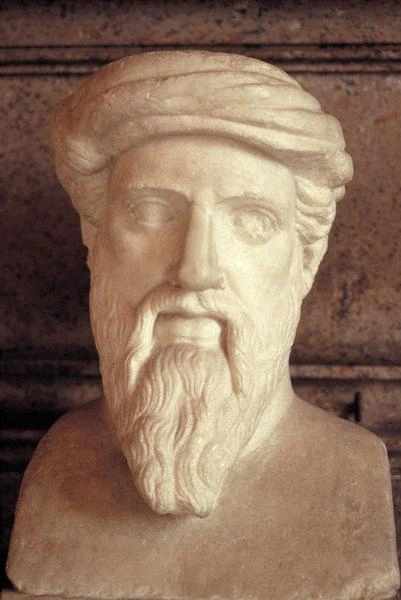
| 8 Quotes | |
| Born as | Κλεόβουλος |
| Occup. | Poet |
| From | Greece |
| Born | 600 BC Lindus, Rhodes |
| Died | 500 BC |
| Cite | |
Citation Formats
APA Style (7th ed.)
Cleobulus biography, facts and quotes. (2026, February 11). FixQuotes. https://fixquotes.com/authors/cleobulus/
Chicago Style
"Cleobulus biography, facts and quotes." FixQuotes. February 11, 2026. https://fixquotes.com/authors/cleobulus/.
MLA Style (9th ed.)
"Cleobulus biography, facts and quotes." FixQuotes, 11 Feb. 2026, https://fixquotes.com/authors/cleobulus/. Accessed 3 Apr. 2026.
Early Life and Background
Cleobulus (Kleoboulos, Greek: Kleoboulos), born around 600 BCE and traditionally said to have died around 500 BCE, belongs to the half-historical, half-legendary circle of the Seven Sages of Greece. Ancient sources place him on Rhodes, most often in the Dorian city of Lindos, at a time when Greek communities were negotiating the pressures of aristocratic faction, expanding trade networks, and the rising appeal of the strongman lawgiver - the "tyrant" in its archaic sense. That he is remembered as both ruler and poet is itself a clue to the era: prestige came not only from arms and lineage but from the capacity to frame communal life in memorable, quotable counsel.The surviving portrait is built from later testimony - especially Diogenes Laertius and other compilers who preserved apothegms, anecdotes, and a handful of poetic lines. Cleobulus is usually described as a man of physical strength and practical intelligence, a public figure who cultivated order without the flamboyant brutality later associated with tyranny. His Lindian setting also mattered: Rhodes sat at a crossroads of Aegean and Near Eastern currents, and the island's prosperity made civic stability, fair dealing, and reputation unusually tangible concerns. In such a place, moral counsel could be civic policy by another name.
Education and Formative Influences
Tradition makes Cleobulus widely traveled and broadly educated, though details are uncertain; some ancient reports connect him with Egyptian learning, a common trope for early Greek sages meant to signal antiquity, geometry, and priestly discipline. More securely, he emerges from the Dorian culture of gnomic poetry - compact, rhythmic instruction designed for public circulation and recall. Like other archaic wisdom figures, he stands at the meeting point of song, law, and proverb: the symposium and the assembly were both arenas where a line of verse could guide behavior, shame an opponent, or define what counted as "measure" in a community still standardizing its norms.Career, Major Works, and Turning Points
Cleobulus is best known as the ruler of Lindos and as a maker of maxims and riddling verse, a poet in the archaic sense of a "maker" of public speech. Later authors credit him with composing songs and riddles and even attribute to him an epigrammatic talent, with his sayings treated as portable ethics for daily life. The turning point of his life, insofar as the sources allow, was the consolidation of Lindian order under his leadership - the sort of success that, in Greek memory, proved a man's wisdom more persuasively than metaphysical speculation. His fame then traveled as sages were collected into canonical lists; by the classical period and beyond, Cleobulus had become less a biographical individual than a named vessel for a distinctive moral stance: disciplined, civic-minded, and wary of excess.Philosophy, Style, and Themes
Cleobulus speaks in the idiom of balance, a psychology shaped by the instability of archaic fortune and the fragility of civic peace. “The middle course is the best”. The sentence is more than etiquette - it is self-management. To recommend the middle is to distrust the part of the self that rushes toward display, vengeance, or certainty, and to treat character as something governed like a city: by limiting extremes before they harden into faction. In a polis environment where honor competitions could spiral into vendetta, moderation was not blandness but risk control.His counsel also treats happiness as a discipline under stress, not a gift of luck. “Learn to bear bravely changes of fortune”. Behind the line is an inner stance: the wise person anticipates reversal, rehearses loss, and refuses to let external shifts dictate inner collapse. Cleobulus extends the same realism to the social microclimate that shapes a life - neighbors, kin, and the unavoidable proximity of others. “A bad neighbor is a misfortune, as much as a good one is a great blessing”. The theme is concrete: virtue is lived locally, and the moral life is not purely inward. His style - short, polished, and portable - suits a world where wisdom needed to travel by memory, and where a single line could function as both personal therapy and public policy.
Legacy and Influence
Cleobulus endures less through a stable corpus than through a type: the sage-poet as civic governor, whose authority rests on measured speech and the ability to compress ethics into aphorism. Later generations used him as a patron of moderation, a counterweight to heroic excess and a reminder that political leadership could be justified by steadiness rather than spectacle. In the long afterlife of Greek gnomic tradition - from classroom moralizing to statesmen's commonplaces - Cleobulus's name became shorthand for practical wisdom: a conviction that human life is governed by change, proximity, and limits, and that the finest art of living is to choose a workable measure and keep it.Our collection contains 8 quotes written by Cleobulus, under the main topics: Wisdom - Resilience - Health - Embrace Change.
Source / external links