
Clifford Geertz Biography Quotes 32 Report mistakes
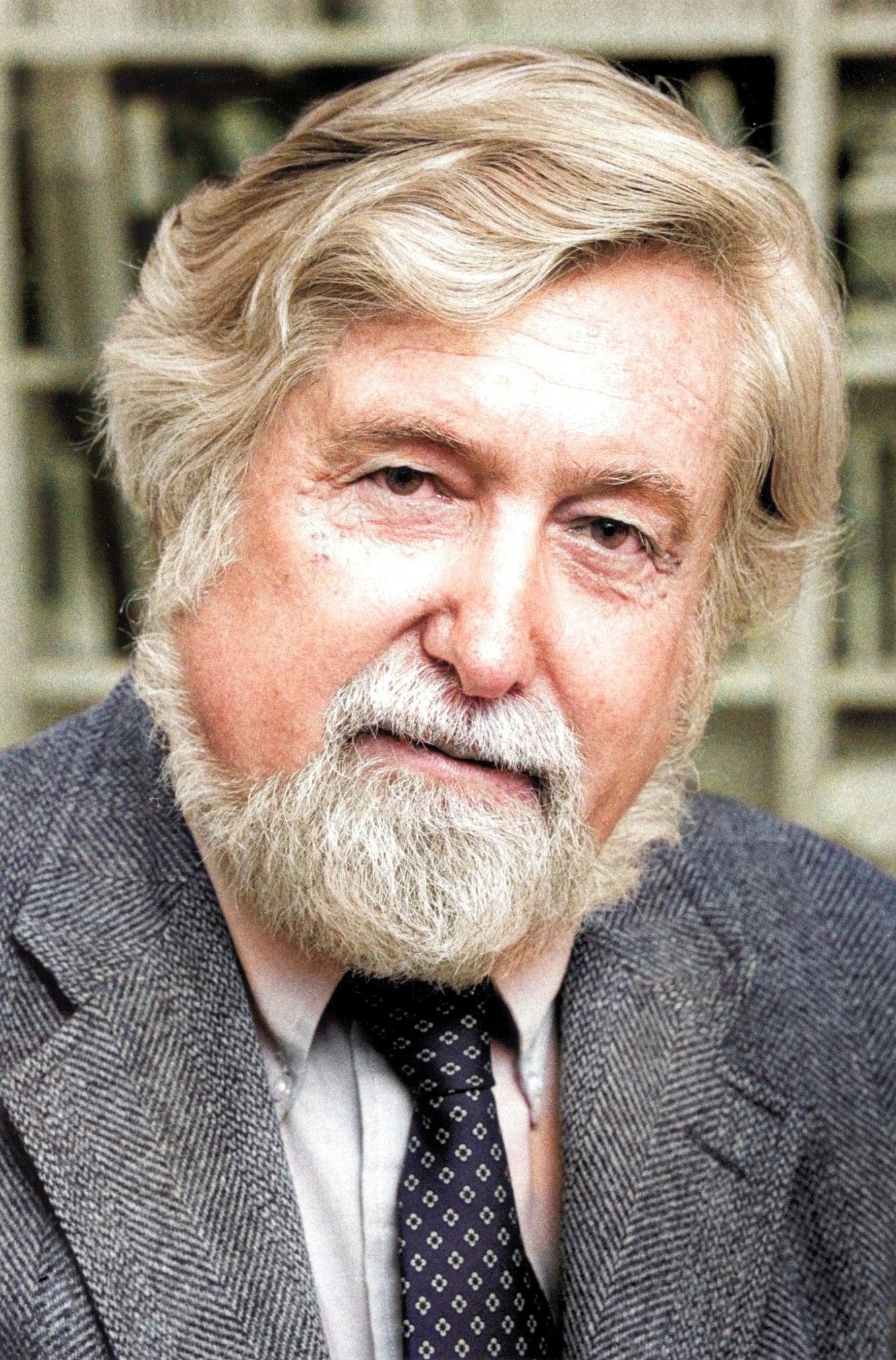
| 32 Quotes | |
| Born as | Clifford James Geertz |
| Occup. | Scientist |
| From | USA |
| Born | August 23, 1926 San Francisco, U.S. |
| Died | October 30, 2006 Philadelphia, U.S. |
| Cause | Complications with heart surgery |
| Aged | 80 years |
| Cite | |
Citation Formats
APA Style (7th ed.)
Clifford geertz biography, facts and quotes. (2026, February 11). FixQuotes. https://fixquotes.com/authors/clifford-geertz/
Chicago Style
"Clifford Geertz biography, facts and quotes." FixQuotes. February 11, 2026. https://fixquotes.com/authors/clifford-geertz/.
MLA Style (9th ed.)
"Clifford Geertz biography, facts and quotes." FixQuotes, 11 Feb. 2026, https://fixquotes.com/authors/clifford-geertz/. Accessed 5 Mar. 2026.
Early Life and Background
Clifford James Geertz was born on August 23, 1926, in San Francisco, California, and came of age in the long shadow of the Great Depression and World War II - an era that trained American intellectuals to see culture, ideology, and power as matters of life and death. After Navy service during the war, he entered adulthood with the practical seriousness of a veteran and the curiosity of someone who had watched national myths mobilize whole populations.That double consciousness - pragmatic and interpretive - never left him. Geertz was not an anthropologist who sought refuge in remote timelessness; he tracked how modernity, nationalism, religion, and capitalism reorganized everyday life. The United States after 1945 was expanding its universities and its global reach at the same time, and Geertz would turn that moment into a new kind of social science: one that could speak to policy-minded modernizers yet refuse to reduce human meaning to variables.
Education and Formative Influences
Geertz studied at Antioch College and then entered Harvard Universitys Department of Social Relations, a mid-century experiment that fused anthropology, sociology, and psychology. He completed his PhD in 1956 and was shaped by Talcott Parsons and the broader postwar push for integrative theory, but he resisted grand system-building in favor of close reading of social life. Fieldwork in Indonesia (notably Java, Bali, and other settings) and later in Morocco became the real forge: the experience of living inside other peoples categories convinced him that interpretation - not measurement alone - was the unavoidable gateway to explanation.Career, Major Works, and Turning Points
After appointments that included the University of Chicago (where interpretive anthropology found an influential home) and later the Institute for Advanced Study in Princeton, Geertz became the most visible American anthropologist of his generation. His early monographs on Indonesia, such as The Religion of Java (1960) and Agricultural Involution (1963), connected local forms of belief and labor to colonial history and economic change. Islam Observed (1968) paired Indonesia and Morocco to show how a shared religious tradition could generate sharply different public styles. The decisive turning point was The Interpretation of Cultures (1973), which gathered essays - including his famous analysis of Balinese cockfighting - into a manifesto for "thick description" and for anthropology as the interpretive study of meaning in public life. Later works such as Local Knowledge (1983) and Works and Lives (1988) widened the argument: ethnography was not just data collection but also writing, judgment, and moral positioning.Philosophy, Style, and Themes
Geertz built a science of culture that refused the old split between laboratory certainty and literary understanding. He insisted that explanation in anthropology was inseparable from interpretation, and he bristled at disciplinary insecurity: “Anthropology never has had a distinct subject matter, and because it doesn't have a real method, there's a great deal of anxiety over what it is”. For Geertz, that anxiety was not a defect to be cured by importing methods wholesale from elsewhere; it was an honest symptom of a field whose object is meaning - slippery, contested, and embedded in symbols, rituals, and institutions.His prose was lucid, allusive, and deliberately essayistic, using case studies as arguments rather than as mere illustrations. He rejected the idea that one could cleanly separate observation from narration: “If there's ever a place where you can't argue that you can put the facts over here and the text over there and see if they fit, it is surely in anthropology”. This was not relativism as laziness, but a psychological stance of disciplined modesty: a willingness to admit that the ethnographer is always implicated, always translating. In that vein he also defended an intellectual middle ground against sterile culture wars: “I think the perception of there being a deep gulf between science and the humanities is false”. His recurring themes - religion as a model of reality and a model for reality, nationalism as moral imagination, law as local knowledge, and everyday performance as social theory - all served one aim: to show how people build worlds they can inhabit and justify.
Legacy and Influence
Geertz died on October 30, 2006, in the United States, leaving behind a vocabulary and a posture that spread far beyond anthropology - into history, political theory, religious studies, legal scholarship, and literary criticism. He made ethnography respectable as interpretive argument, legitimized style as part of method, and trained generations to treat symbols and practices as analytically central rather than ornamental. Even critics who faulted him for underplaying material inequality or for offering portraits too composed for their own good still worked in terrain he helped define: the conviction that culture is not a residual category but a causal medium, and that understanding human beings requires reading what they do as carefully as one reads what they say.Our collection contains 32 quotes written by Clifford, under the main topics: Wisdom - Truth - Writing - Freedom - Deep.
Other people related to Clifford: Marvin Harris (Scientist), Stephen Greenblatt (Critic)
Clifford Geertz Famous Works
- 1983 Local Knowledge: Further Essays in Interpretive Anthropology (Book)
- 1980 Negara: The Theatre State in Nineteenth-Century Bali (Book)
- 1973 The Interpretation of Cultures (Book)
- 1973 Deep Play: Notes on the Balinese Cockfight (Essay)
- 1963 Peddlers and Princes: Social Development and Economic Change in Two Indonesian Towns (Book)
- 1960 The Religion of Java (Book)
Source / external links