
Clive James Biography Quotes 9 Report mistakes
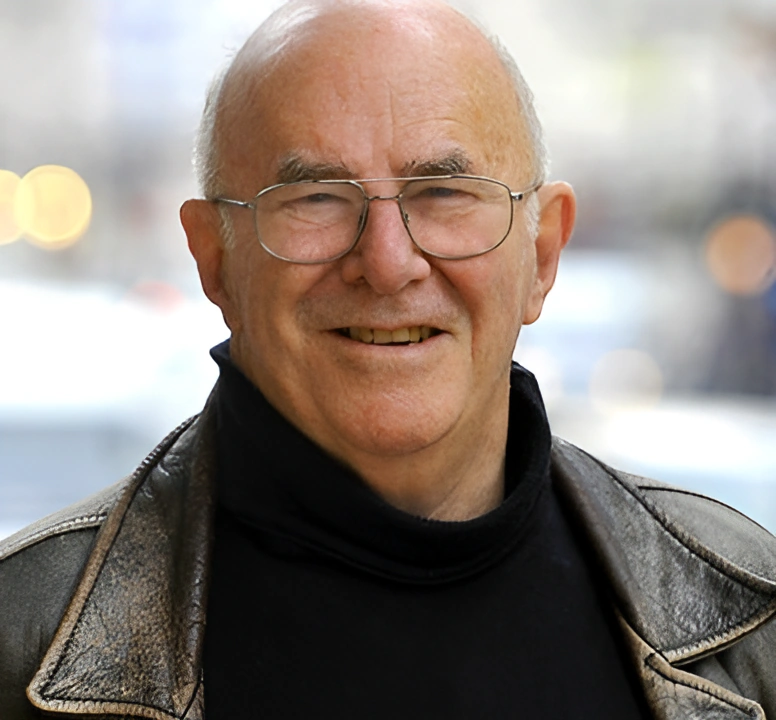
| 9 Quotes | |
| Born as | Vivian Leopold James |
| Occup. | Author |
| From | Australia |
| Born | October 7, 1939 Kogarah, Sydney, Australia |
| Died | November 24, 2019 Cambridge, England, UK |
| Cause | Leukemia |
| Aged | 80 years |
| Cite | |
Citation Formats
APA Style (7th ed.)
Clive james biography, facts and quotes. (2026, February 11). FixQuotes. https://fixquotes.com/authors/clive-james/
Chicago Style
"Clive James biography, facts and quotes." FixQuotes. February 11, 2026. https://fixquotes.com/authors/clive-james/.
MLA Style (9th ed.)
"Clive James biography, facts and quotes." FixQuotes, 11 Feb. 2026, https://fixquotes.com/authors/clive-james/. Accessed 27 Mar. 2026.
Early Life and Background
Clive James was born Vivian Leopold James on October 7, 1939, in Sydney, New South Wales, and grew up in an Australia still shaped by war, churchgoing respectability, and class-coded aspiration. His childhood was marked by a shattering absence: his father, Albert James, was captured by the Japanese during World War II and died as a prisoner of war when Clive was still young. The grief hardened into a lifelong sensitivity to the ways public stories edit private pain - and to the cost of pretending that stoicism is the same thing as strength.Raised largely by his mother, he moved through suburbs and schools with a talent for language that doubled as a social instrument and an emotional shield. Even early on he cultivated the stance that would later define him: the boy from the periphery who learns to look at the center with a steady gaze, both admiring and unsentimental. That outsider confidence, paired with a hunger for cosmopolitan culture, prepared him for the decisive leap from Australia to Britain, where he would turn displacement into a writing method.
Education and Formative Influences
James studied at the University of Sydney, becoming involved with student journalism and the argumentative culture of campus writing, where wit was not decoration but proof of attention. He absorbed modern poetry, the essay tradition, and the abrasive clarity of good criticism, while also noticing how institutions manufacture status. Scholarships took him to Cambridge in the early 1960s, when British intellectual life was loosening under postwar affluence, satire, and television - an era whose new mediums and old hierarchies gave him a stage and a target at once.Career, Major Works, and Turning Points
Settling in the UK, he built a career as a critic, essayist, poet, memoirist, and broadcaster, with a public persona that made erudition seem conversational. His television criticism in particular turned the supposedly disposable into a diagnostic tool for modern life, culminating in collections like "Visions Before Midnight" and "The Crystal Bucket". He ranged widely: poetry volumes and translations, cultural essays, the sharply observed memoir "Unreliable Memoirs", and the later, expansive "Cultural Amnesia", a compendium of portraits and moral arguments about the 20th century. A major turning point came late: after being diagnosed with terminal leukemia in 2010, he wrote with intensified candor, shaping final books and essays that treated mortality not as a theme but as a deadline, and turning his own diminishing time into a last instrument of clarity.Philosophy, Style, and Themes
James wrote as a comic moralist: laughter as a way of telling the truth without softening it. His style joined high literacy to plain speech, moving from Dante or Primo Levi to a game show without changing key, because for him culture was a single field in which attention mattered more than pedigree. He distrusted prestige that had not been earned in public and disliked any pose that tried to replace perception. The critic in him was always also a memoirist - someone using description to test his own reactions, and using self-mockery to keep perception honest.His best aphorisms reveal his psychology: a modern mind alert to power, to illusion, and to the trap of public recognition. “It is only when they go wrong that machines remind you how powerful they are”. reads as a joke about technology but also as a personal rule about systems - families, nations, careers - whose force you only feel when they fail you. He treated fame as a risky substitute for inner substance, insisting that “A life without fame can be a good life, but fame without a life is no life at all”. , a line that doubles as self-warning from a man who made a living in public while insisting on a private core. And his defense of popular media - “Anyone afraid of what he thinks television does to the world is probably just afraid of the world”. - shows his refusal to blame instruments for reality, and his belief that criticism should begin with curiosity rather than contempt.
Legacy and Influence
James endures as one of the great Anglophone essayists of his generation - an Australian who became a defining voice in British cultural life without surrendering the outsider's angle of view. He helped legitimize television and pop culture as subjects worthy of serious intelligence, while also modeling a criticism that could be both learned and funny without becoming smug. His memoirs broadened the idea of literary autobiography into something at once intimate and panoramic, and his late work offered a rare example of public writing that faced death without melodrama. For readers and younger critics, his lasting lesson is methodological: look harder, read wider, and never confuse cleverness with truth.Our collection contains 9 quotes written by Clive, under the main topics: Witty One-Liners - Wisdom - Writing - Meaning of Life - Technology.
Frequently Asked Questions
- Clive James died of cancer: Yes, Clive James died of cancer, specifically leukemia and emphysema.
- Clive James funeral: Clive James' funeral was a private ceremony held in late 2019.
- Where is Clive James buried: Clive James is buried in the village of Luberon, France.
- Clive James poem Be more kind: Clive James wrote the poem 'Leçons de Ténèbres,' which bears the theme of being kind.
- Who are Clive James daughters: Clive James' daughters are Lucinda and Claerwen James.
- What did Clive James died of: Clive James died of leukemia.
- How old was Clive James? He became 80 years old
Clive James Famous Works
- 2015 Poetry Notebook: Reflections on the Intensity of Language (Book)
- 2007 Cultural Amnesia (Book)
- 2003 The Book of My Enemy (Book)
- 1985 Falling Towards England (Book)
- 1980 Unreliable Memoirs (Book)
Source / external links