
Coco Chanel Biography Quotes 37 Report mistakes
| 37 Quotes | |
| Born as | Gabrielle Bonheur Chanel |
| Occup. | Designer |
| From | France |
| Born | August 19, 1883 Saumur, France |
| Died | January 10, 1971 Paris, France |
| Aged | 87 years |
| Cite | |
Citation Formats
APA Style (7th ed.)
Coco chanel biography, facts and quotes. (2026, February 1). FixQuotes. https://fixquotes.com/authors/coco-chanel/
Chicago Style
"Coco Chanel biography, facts and quotes." FixQuotes. February 1, 2026. https://fixquotes.com/authors/coco-chanel/.
MLA Style (9th ed.)
"Coco Chanel biography, facts and quotes." FixQuotes, 1 Feb. 2026, https://fixquotes.com/authors/coco-chanel/. Accessed 6 Mar. 2026.
Early Life and Background
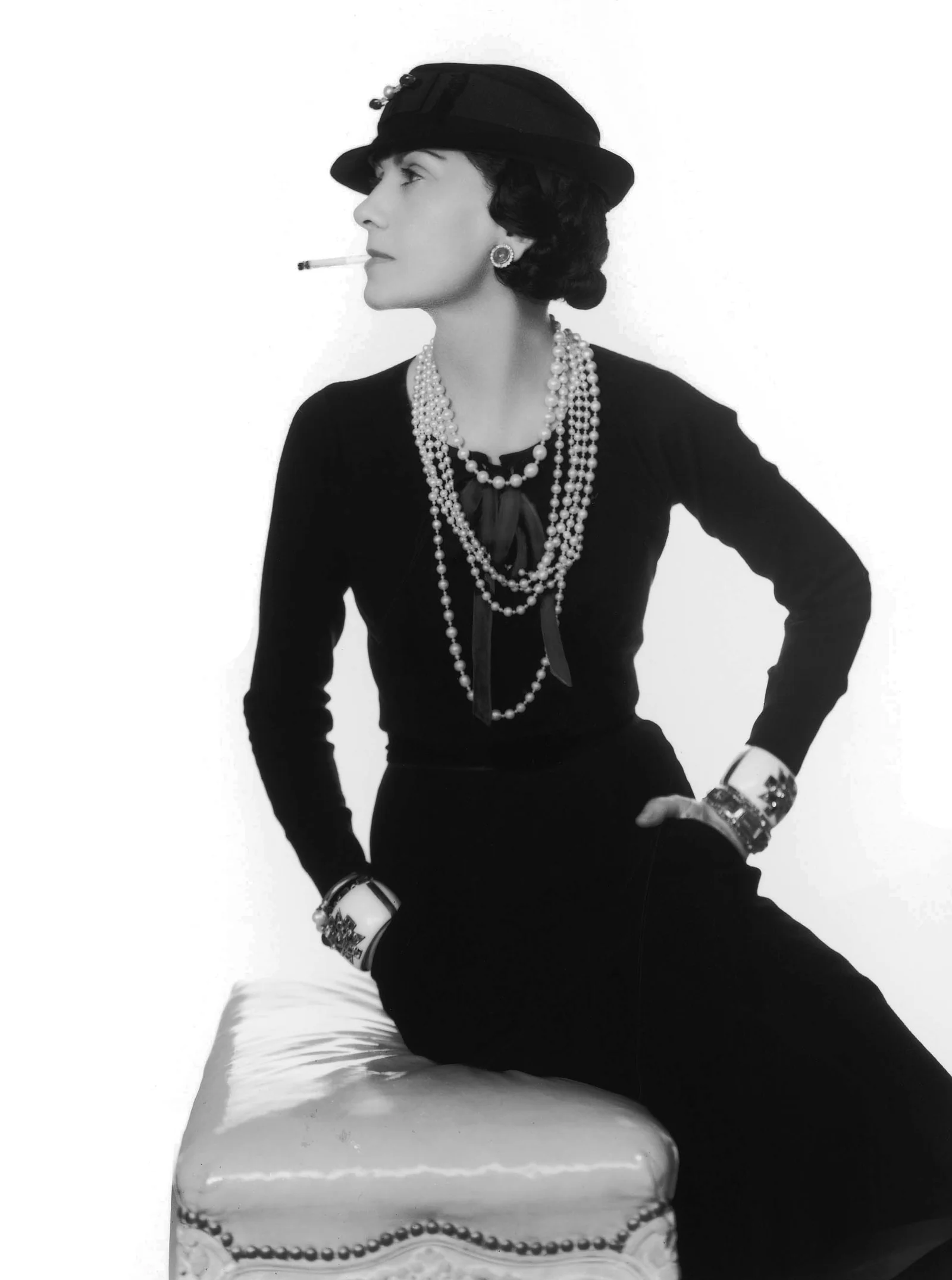
Gabrielle Bonheur Chanel was born on 1883-08-19 in Saumur, Maine-et-Loire, France, into a precarious working-class life shaped by itinerancy and loss. Her mother died when Gabrielle was a child, and her father, an unstable peddler, left her and her sisters in the care of the convent-run orphanage at Aubazine. That early severance - a world of strict rules, plain uniforms, and the geometry of monastic spaces - gave her both a scar and a template: discipline, restraint, and an aversion to sentimentality that later read as modernity.As a young woman she moved through the liminal spaces available to poor, ambitious girls of the Belle Epoque: shop work, needlework, and the stage. In Moulins she sang in cafes-concerts, where the nickname "Coco" attached itself to her persona - part song, part branding, part self-invention. The period trained her eye for how women were looked at and remembered, and taught her that survival could be engineered through presentation, speed, and a hard refusal to accept the role assigned by birth.
Education and Formative Influences
Chanel was not formally educated in art or design; her formation was practical and observational. At Aubazine she learned to sew, but more importantly absorbed an aesthetic of clean lines and repetition; later, in the orbit of wealthy patrons like Etienne Balsan and then Arthur "Boy" Capel, she encountered English tailoring, sport clothes, and the ease of menswear. Capel in particular helped finance her first ventures and sharpened her taste for understatement, while Paris before and after World War I exposed her to modernism, new money, and the hunger for mobility - social and physical - that would soon demand new clothes.Career, Major Works, and Turning Points
Chanel opened a hat shop in Paris in 1910, expanded to Deauville in 1913, and to Biarritz in 1915, using jersey and simple cuts to answer wartime scarcity and a changing female life. In the 1920s she became an institution: the Chanel suit, costume jewelry that treated imitation as intentional design, and the little black dress as a uniform of controlled allure. In 1921 she launched Chanel No. 5 with perfumer Ernest Beaux, then struck a controversial 1924 deal with Pierre and Paul Wertheimer to scale production - a partnership that made the scent global and seeded decades of resentment. Her trajectory was later stained by her World War II choices: she lived at the Hotel Ritz during the German occupation, pursued a wartime attempt to regain control of No. 5, and had an affair with a German officer, Hans Gunther von Dincklage; after the Liberation she left for Switzerland. In 1954, against critics who called her outdated beside Dior's New Look, she returned with a revised suit and a relentless defense of comfort, proportion, and movement, working until her death in Paris on 1971-01-10.Philosophy, Style, and Themes
Chanel built a philosophy of elegance as subtraction, an ethic that doubled as autobiography: strip away what constricts, keep what works, and let the woman - not the ornament - be the event. She distrusted display for its own sake, arguing that class was not a price tag but a line you would not cross: “Some people think luxury is the opposite of poverty. It is not. It is the opposite of vulgarity”. This was less moralism than self-defense, a way to patrol the border between her origins and the salons she entered, and to make refinement a method rather than a pedigree.Her style treated clothing like structure and identity like craft. “Fashion is architecture: it is a matter of proportions”. The sentence reveals her inner logic: balance over abundance, silhouette over surface, a body allowed to breathe and move - jersey, tweed, pockets, flat comfort turned into authority. Yet she also understood the theater of memory and the psychology of attention: “Dress shabbily, and they remember the dress; dress impeccably, and they remember the woman”. The goal was not invisibility but control - to make the wearer legible as composed, competent, and unencumbered, the opposite of the decorative confinement she associated with the old order.
Legacy and Influence
Chanel reshaped 20th-century dress by making simplicity aspirational and by translating menswear codes into a new language of feminine power, while Chanel No. 5 became a benchmark for modern branding and the mythology of scent. Her legacy is inseparable from contradiction: a designer who freed bodies yet policed taste, an icon of independence whose life was entangled with patrons, lovers, and compromised wartime choices. Still, the Chanel suit, the little black dress, the quilted bag, two-tone shoes, and the very idea that elegance can be engineered through restraint remain enduring templates, continually revived because they answer a recurring modern desire - to look effortless while feeling in command.Our collection contains 37 quotes written by Coco, under the main topics: Witty One-Liners - Wisdom - Art - Mortality - Sarcastic.
Source / external links