
Colin Powell Biography Quotes 49 Report mistakes
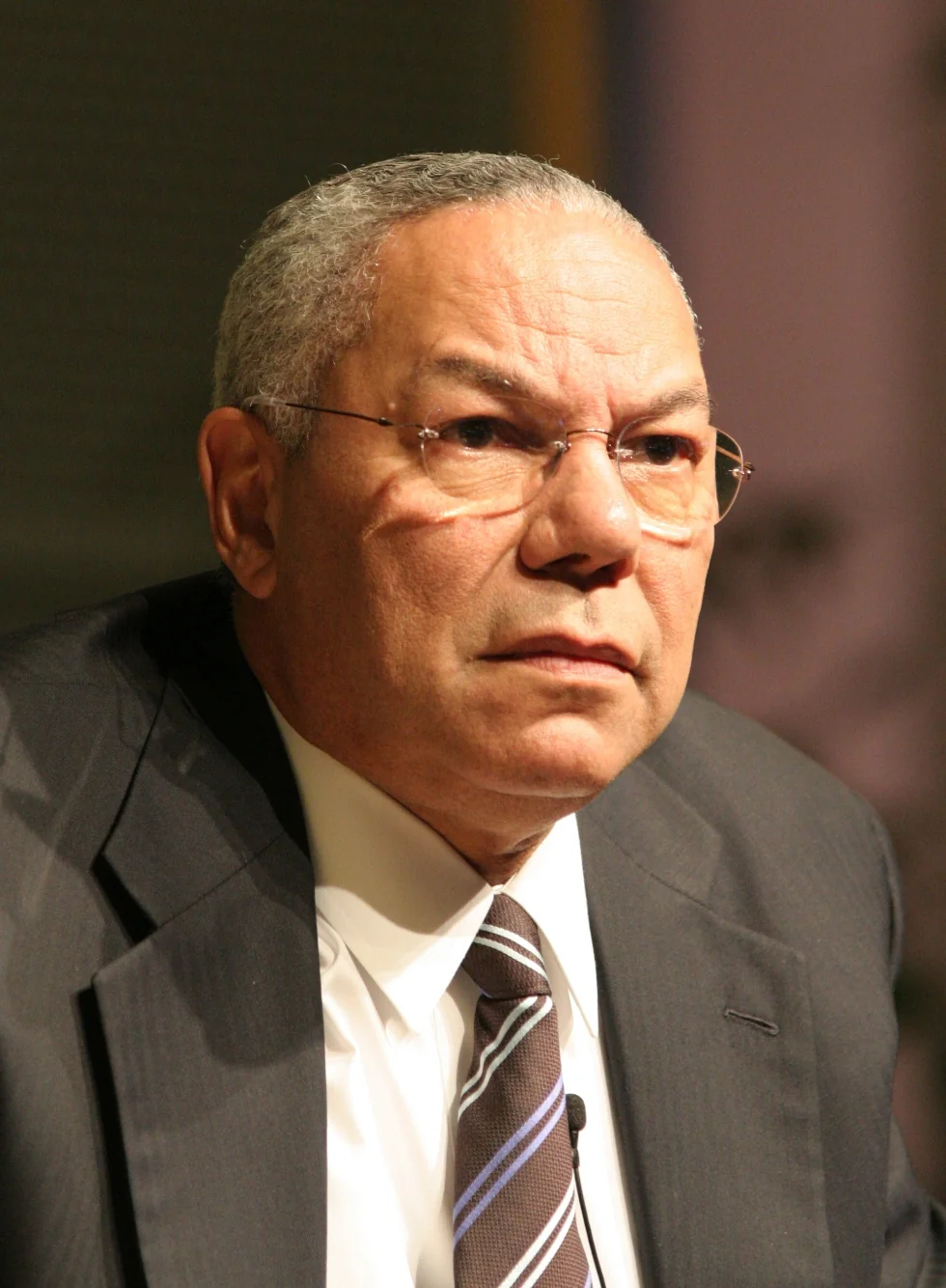
| 49 Quotes | |
| Occup. | Statesman |
| From | USA |
| Born | April 5, 1937 |
| Age | 88 years |
| Cite | |
Citation Formats
APA Style (7th ed.)
Colin powell biography, facts and quotes. (2026, February 11). FixQuotes. https://fixquotes.com/authors/colin-powell/
Chicago Style
"Colin Powell biography, facts and quotes." FixQuotes. February 11, 2026. https://fixquotes.com/authors/colin-powell/.
MLA Style (9th ed.)
"Colin Powell biography, facts and quotes." FixQuotes, 11 Feb. 2026, https://fixquotes.com/authors/colin-powell/. Accessed 5 Mar. 2026.
Early Life and Background
Colin Luther Powell was born on April 5, 1937, in Harlem, New York City, to Jamaican immigrant parents, Maud Ariel McKoy and Luther Theophilus Powell. His family soon settled in the South Bronx, where Powell grew up amid the pressures and possibilities of a mid-century metropolis shaped by war mobilization, postwar migration, and rigid racial ceilings. The Powell household prized steadiness, churchgoing respectability, and education as a route out of insecurity - a temperament that later surfaced in his public persona: controlled, courteous, and unusually attentive to consequences.The Bronx of Powell's youth was also a school in practical pluralism. He moved through neighborhoods where ethnicity, unions, and city politics mixed in daily life, and where ambition had to be disciplined by realism. Friends and teachers remembered him as likable rather than flashy, someone who watched how authority worked and learned to earn trust. This early, quiet apprenticeship in how institutions distribute power helped form a man who would later rely on procedure, loyalty, and coalition building as moral tools, not just career tactics.
Education and Formative Influences
Powell attended the City College of New York, earning a degree in geology in 1958, but his decisive formation came through the Reserve Officers' Training Corps. ROTC offered him structure, mentorship, and a meritocratic ladder that rewarded composure under pressure. Commissioned into the U.S. Army, he entered a Cold War officer corps learning hard lessons from Korea and adapting to an accelerating conflict in Vietnam; his earliest professional influences were not theorists but commanders, staff officers, and the lived mechanics of how decisions made in Washington ricochet through units in the field.Career, Major Works, and Turning Points
Powell rose through infantry and staff roles, serving two tours in Vietnam (including recovering from wounds and later surviving a helicopter crash while helping rescue others), experiences that hardened his skepticism about open-ended war aims and bureaucratic optimism. He became a rising Washington operator - a White House Fellow, then senior military assistant to Secretary of Defense Caspar Weinberger, and later National Security Advisor to President Ronald Reagan (1987-1989). In 1989 he was appointed Chairman of the Joint Chiefs of Staff, the youngest and first African American to hold the post, guiding the U.S. military through the end of the Cold War and the 1991 Gulf War, where his emphasis on clear objectives and overwhelming force helped define what came to be called the Powell Doctrine. After retiring, he reentered public life as Secretary of State under President George W. Bush (2001-2005), navigating the shock of September 11 and the diplomatic battles of the War on Terror; his February 2003 U.N. presentation on Iraq's alleged weapons programs - later discredited - became a profound turning point, both for his reputation and for his own stated sense of regret.Philosophy, Style, and Themes
Powell's inner life, as visible through his leadership maxims and career choices, revolved around responsibility under uncertainty: the moral cost of delay, the duty to confront bad information, and the need to protect people from leaders' vanity. He built his authority not on ideological heat but on managerial clarity and a soldier's insistence that real life punishes self-deception. “Bad news isn't wine. It doesn't improve with age”. The line is not just pragmatic; it is psychological self-discipline - an instruction to face reality early, before denial metastasizes into catastrophe. It also reflects Powell's bruising experience of Vietnam and his later fear of repeating strategic drift.His style was institutional, not theatrical: listen widely, decide, then execute with relentless attention to basics. “Never neglect details. When everyone's mind is dulled or distracted the leader must be doubly vigilant”. In Powell, detail was not pedantry but a form of care - a way to make large systems humane by preventing preventable failure. Yet his ethic carried a built-in tension: loyalty to chain of command versus loyalty to truth. “Don't let your ego get too close to your position, so that if your position gets shot down, your ego doesn't go with it”. That warning reads as self-therapy for power: a guardrail against the intoxicating need to be right. In the Iraq episode, admirers and critics alike saw how hard that separation can be when institutional momentum, imperfect intelligence, and political commitment converge.
Legacy and Influence
Powell remains a defining American statesman-soldier of the late 20th and early 21st centuries: a barrier-breaking officer whose calm competence broadened the image of who could embody national authority, and a strategist whose doctrine shaped debates about when - and how - the U.S. should use force. His influence persists in civil-military norms, leadership literature, and the cautionary memory of Iraq, where his stature amplified a case that later unraveled. The enduring portrait is therefore layered: an exemplar of professionalism and decency inside vast institutions, and a reminder that integrity also demands the courage to resist - not merely manage - the tide of history when facts, morality, and policy diverge.Our collection contains 49 quotes written by Colin, under the main topics: Witty One-Liners - Motivational - Justice - Sarcastic - Leadership.
Other people related to Colin: Hannah Storm (Journalist), Frank Carlucci (Politician), John Negroponte (Diplomat), Hans Blix (Diplomat), Ahmed Chalabi (Statesman), Jean-Bertrand Aristide (Statesman), Douglas Feith (Public Servant), Dominique de Villepin (Diplomat), William J. Perry (Politician), Rand Beers (Soldier)