
Collin C. Peterson Biography Quotes 4 Report mistakes
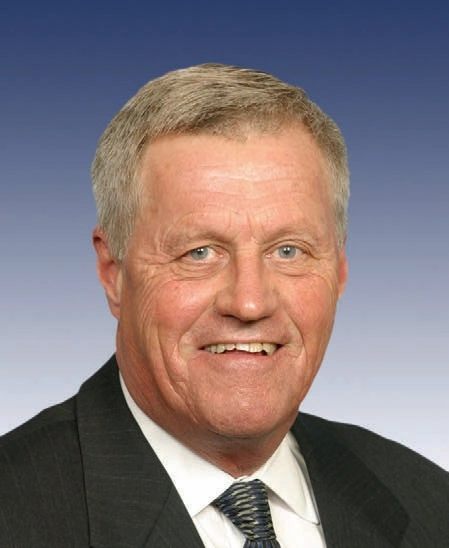
| 4 Quotes | |
| Born as | Collin Clark Peterson |
| Occup. | Politician |
| From | USA |
| Born | June 29, 1944 Fargo, North Dakota |
| Age | 81 years |
| Cite | |
Citation Formats
APA Style (7th ed.)
Collin c. peterson biography, facts and quotes. (2026, February 14). FixQuotes. https://fixquotes.com/authors/collin-c-peterson/
Chicago Style
"Collin C. Peterson biography, facts and quotes." FixQuotes. February 14, 2026. https://fixquotes.com/authors/collin-c-peterson/.
MLA Style (9th ed.)
"Collin C. Peterson biography, facts and quotes." FixQuotes, 14 Feb. 2026, https://fixquotes.com/authors/collin-c-peterson/. Accessed 5 Mar. 2026.
Early Life and Education
Collin Clark Peterson was born on June 29, 1944, in Fargo, North Dakota, and grew up just across the Red River in western Minnesota, a landscape of small towns, prairie, and rich farmland that would shape his life and political priorities. He attended Minnesota State University Moorhead, where he studied accounting, and went on to become a certified public accountant. The discipline and pragmatism of accounting informed his later reputation as a detail-oriented lawmaker who favored numbers over rhetoric and who evaluated proposals by their practical effects on rural communities.Early Career and Minnesota Politics
Before entering national politics, Peterson built a career in finance and business services, working with farmers and small enterprises in the Red River Valley. He first sought federal office in the 1980s, but his path to Washington ran through St. Paul. He served in the Minnesota Senate beginning in the late 1970s, gaining experience in budgeting and agriculture issues. Those years acquainted him with commodity groups, farm cooperatives, rural electric associations, and county officials who would later be important allies. He twice challenged Republican Congressman Arlan Stangeland for a U.S. House seat during the 1980s, coming up short before ultimately defeating him in 1990, a victory built on patient organizing and a profile that fit the district's moderate-conservative temperament.Election to Congress and the Seventh District
Sworn into the U.S. House in January 1991, Peterson represented Minnesota's Seventh Congressional District for three decades. The district, one of the nation's most rural and later one of its most Republican-leaning to be held by a Democrat, required a representative skilled at retail politics and constituency service. Peterson invested heavily in relationships with county commissioners, farm leaders, cooperative boards, and local chambers of commerce. He made frequent visits to grain elevators, sugar beet receiving stations, dairy barns, ethanol plants, and county fairs, emphasizing hands-on knowledge of agriculture. His electoral strength rested on trust built with producers and small-town civic leaders more than on national party branding.Committee Leadership and Farm Policy
Agriculture policy became Peterson's signature. He served continuously on the House Committee on Agriculture, chairing it from 2007 to 2011 and again from 2019 to 2021, and acting as ranking member in between. In these roles he worked closely with Republican counterparts including Bob Goodlatte, Frank Lucas, and Mike Conaway, as well as Senate partners such as Tom Harkin, Debbie Stabenow, and Pat Roberts. Across the 2002, 2008, 2014, and 2018 farm bills, Peterson focused on crop insurance, conservation programs, dairy safety nets, and rural development. He was a staunch defender of the sugar program, reflecting the interests of Red River Valley sugar beet growers and cooperatives that anchor the region's economy.His chairmanships spanned administrations from George W. Bush to Barack Obama and Donald Trump, requiring regular negotiation with the U.S. Department of Agriculture, including secretaries Tom Vilsack and Sonny Perdue. He often positioned the committee as a bipartisan workshop to solve problems: reconciling commodity program differences, protecting nutrition programs while pursuing administrative efficiencies, and responding to crises from floods to trade disruptions. During the 2018 farm bill endgame, he helped broker a final compromise with Senate leaders that preserved a broad, bipartisan package, underscoring his reputation as a dealmaker grounded in the needs of producers.
Political Profile and Key Votes
Peterson was known as a conservative Democrat and an early figure in the Blue Dog Coalition, alongside members such as John Tanner and Charlie Stenholm. He emphasized fiscal restraint, supported gun rights, and often bucked his party's leadership when he believed a vote would harm his district. He opposed the Affordable Care Act, citing rural concerns about access and cost. On climate and energy, he pressed for recognition of agriculture's role in carbon markets and negotiated farm-friendly modifications when the House considered cap-and-trade legislation, insisting that any framework respect farmers' management practices and the role of USDA. He also voted against the first impeachment of President Donald Trump in 2019, a decision he framed in terms of the evidence presented and the views of his constituents.Relationships and Bipartisan Work
Peterson's approach relied on relationships with those around him: farm organization leaders, county officials, and bipartisan colleagues who shared an interest in rural economies. He cultivated working ties with Republican committee chairs and ranking members and with Democratic leaders while maintaining independence from national partisan fights. In district politics he worked with Minnesota agricultural cooperatives and commodity groups, emphasizing service over ideology. He earned a reputation as one of the House's most accessible members to farm-state Republicans and Democrats alike, a trait that made him a frequent point of contact for commodity groups during debates over disaster aid, biofuels policy, and dairy reforms.Later Career and the 2020 Election
Demographic and partisan shifts gradually eroded the crossover coalition that sustained Peterson's tenure. In 2020, after 30 years in Congress, he was defeated by Republican Michelle Fischbach, a former lieutenant governor of Minnesota. The loss reflected broader realignment in rural America more than a change in his profile, and he exited office with deep ties to farm leaders and former colleagues. After leaving Congress, he remained involved in agriculture policy discussions and advising, drawing on decades of experience shepherding complex farm legislation and navigating the intersection of markets, weather risk, and federal support.Personal Interests and Character
Beyond policy, Peterson was known for a plainspoken style and a love of music. He played guitar and performed with fellow lawmakers in a bipartisan band known as The Second Amendments, which included members such as Thaddeus McCotter, Jon Porter, Dave Weldon, and Kenny Hulshof. The informal camaraderie of those performances mirrored his legislative method: find common ground, keep things practical, and remember the people outside Washington who live with the results.Legacy
Collin C. Peterson's legacy rests on durability, expertise, and the capacity to translate local knowledge into national policy. He safeguarded core farm safety nets while adapting to new realities in conservation, risk management, and rural development. He kept sugar, dairy, and crop insurance issues at the center of congressional debate, often against strong ideological currents. His collaborations with House and Senate counterparts from both parties and with administrations of different stripes reflected a belief that agriculture works best when policy is stable, predictable, and designed with producers at the table. For many in Minnesota and across farm country, Peterson personified a tradition of pragmatic rural representation that seldom made headlines but reliably delivered results.Our collection contains 4 quotes written by Collin, under the main topics: Nature - Health - Perseverance - Sadness.
Source / external links